Plants to Products: Biorefining Feedstocks
Learn how plants and other biomass can be turned into fuels, plastics, and other sustainable products.

Duration
2 weeksWeekly study
4 hours100% online
How it worksDigital upgrade
Free
Plants to Products: Biorefining Feedstocks

This course has been certified by the CPD Certification Service as conforming to continuing professional development principles. Find out more.
Discover the role of biorefining, biomass, and sustainability in the bioeconomy.
Ever wondered how farm crops, food waste, or leftover plant materials can become biofuels, bioplastics, or other valuable products? This course builds on Plants to Products: An Introduction to Biorefining and allows you to continue your journey to practical applications
This two-week course from Aberystwyth University takes you on a guided journey through the world of biorefining, showing how land and businesses can turn biomass into opportunities for a sustainable, circular bioeconomy.
With the support of UK-focused examples, you’ll explore real-world ways farmers, entrepreneurs, and businesses can reduce waste, create new products, and contribute to climate-friendly solutions.
Then you’ll go into further detail about the key processes integrated biorefineries, like straw being turned into bioplastics, to food waste becoming biofuels, and how each can create new revenue streams.
At this point, you’ll also evaluate the economic and environmental impact of biomass sources to support sustainable land management and a circular bioeconomy.
Understanding feedstocks and practical applications
You’ll learn which crops, residues, and by-products are most suitable for different land-based contexts.
Working with UK-focused case studies, you’ll practise assessing feedstocks and developing simple action plans that integrate biomass use and bio-based products into farms or enterprises.
Connect research with the real-world
Throughout the course, you’ll hear from researchers at IBERS, Aberystwyth University, who show how discoveries in enzymes, fermentation, and biomass conversion translate into practical strategies.
You’ll see how these insights help farmers and businesses make sustainable land-use decisions and tap into emerging bioindustry opportunities.
Syllabus
Week 1
Feedstocks and Raw Materials: Green Feedstocks


Welcome to the Course
Week 1 Intro

Types of Green Feedstocks
Types of Green Feedstocks

Green Feedstocks Components
Green Feedstocks Components

Other Sources of Green Feedstocks
Other Sources of Green Feedstocks

Check your understanding
Check your understanding

Summary
End of week summary
Week 2
Other Feedstocks and Raw Materials

Welcome to Week 2
Introductions

Marine Based Feedstocks
Week 2 - Marine Based Feedstocks
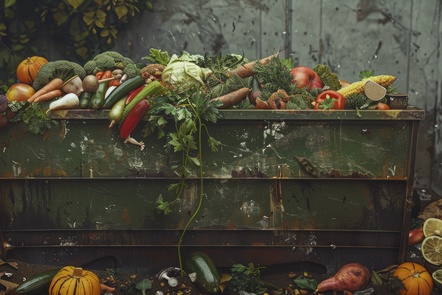
Food Industry Side Streams
Food Industry Side Streams

Quiz
Weekly quiz

Summary
Summary
Who is this accredited by?
The CPD Certification Service was established in 1996 and is the leading independent CPD accreditation institution operating across industry sectors to complement the CPD policies of professional and academic bodies.
When would you like to start?
Start straight away and join a global classroom of learners. If the course hasn’t started yet you’ll see the future date listed below.
Available now
Learning on this course
On every step of the course you can meet other learners, share your ideas and join in with active discussions in the comments.
What will you achieve?
By the end of the course, you‘ll be able to...
- Identify and evaluate suitable biomass feedstocks for different applications and environments, considering agronomic, economic, and environmental factors.
- Explain key industrial biotechnology processes used in biorefining (e.g. fermentation, downstream processing), highlighting their purpose, benefits, limitations, and sustainability implications.
- Assess the challenges and opportunities facing bio-based industries, including policy, market trends, infrastructure, and environmental impact.
- Apply your learning to a real-world context by outlining how your land, business, or sector could engage with biorefining and contribute to the bioeconomy.
Who is the course for?
Ideal for farmers, advisers, entrepreneurs, and anyone curious about using land and biological resources to create sustainable products and move away from fossil fuels.
Who will you learn with?

I'm the Lecturer in Food Science at IBERS Distance Learning. I'm a Physics Graduate with over 15 years' experience in the Food Industry, and a Fellow of the Higher Education Academy.
Who developed the course?

Aberystwyth University
Aberystwyth University has a proud reputation for leading edge research, teaching excellence and an exceptional student experience. It’s a place for the adventurous, the curious and the creative.
What's included?
Aberystwyth University are offering everyone who joins this course a free digital upgrade, so that you can experience the full benefits of studying online for free. This means that you get:
Learning on FutureLearn
Your learning, your rules
- Courses are split into weeks, activities, and steps to help you keep track of your learning
- Learn through a mix of bite-sized videos, long- and short-form articles, audio, and practical activities
- Stay motivated by using the Progress page to keep track of your step completion and assessment scores
Join a global classroom
- Experience the power of social learning, and get inspired by an international network of learners
- Share ideas with your peers and course educators on every step of the course
- Join the conversation by reading, @ing, liking, bookmarking, and replying to comments from others
Map your progress
- As you work through the course, use notifications and the Progress page to guide your learning
- Whenever you’re ready, mark each step as complete, you’re in control
- Complete 90% of course steps and all of the assessments to earn your certificate
Want to know more about learning on FutureLearn? Using FutureLearn
Do you know someone who'd love this course? Tell them about it...
You can use the hashtag #FLBiorefining to talk about this course on social media.
More courses you might like
Learners who joined this course have also enjoyed these courses.


Browse more in Nature & Environment and Business & Management
