Critical Approaches to Film
Explore how film criticism shapes what we watch on this online course from the Film Distributors' Association.

Duration
4 weeksWeekly study
4 hours
Critical Approaches to Film
Other courses you might like
This course isn't running right now. We can email you when it starts again, or check out these other courses you might like.


Browse more in Creative Arts & Media

Learn to understand films from a variety of critical perspectives.
Ever checked a Rotten Tomatoes score or IMDb rating before picking a movie? Or wondered why critics can’t agree on the same film?
This online course takes you on a journey through film criticism and theory, showing how films are evaluated, discussed, and understood as art, entertainment, and cultural products.
Over four weeks, guided by the experts at the Film Distributors’ Association, you’ll explore how film criticism works, from everyday reviews to deeper theoretical approaches.
Discover your favourite film in a new light
You’ll begin by examining the role of film reviews in shaping audience choices.
Through examples from recent releases, you’ll see how ratings, opinions, and discussion influence what we watch, how we interpret films, and even how films perform commercially.
You’ll reflect on your own experiences, understanding the difference between opinion, analysis, and evaluation, and how reviews can guide or mislead audiences.
Unpack key film theories
Next, you’ll explore core film theory concepts such as genre, auteur, formalism, realism, and social realism.
You’ll learn how critics and scholars analyse films as art, entertainment, and cultural products, and how these approaches can reveal hidden meanings, cultural values, and artistic choices.
This point in the course gives you tools to interpret films more deeply, making connections between what you see on screen and broader cultural or artistic contexts.
Explore modern perspectives
Finally, you’ll dive into structuralism, semiotics, feminism, psychoanalytic, and ideological approaches, seeing how these frameworks reveal narrative, representation, and meaning.
Through practical exercises, you’ll apply these theories to films you know, building skills to analyse, compare, and discuss films confidently.
Syllabus
Week 1
Introduction and reviews


Welcome and Introduction
Over the next few weeks we will be exploring the various critical approaches to film, be they film reviews or film theories.

Defining criticism
In this section we look at different approaches to film criticism and they might affect the ways in which we react to films and our definition of what might make a “good” film.

Approaches to film criticism
During the course we will be looking at different types of film criticism. Here we look at three possible approaches.

The role of the film critic
How important are film critics and reviews in the 21st century? What is their purpose? Are they relevant to us in the age on online communication?

Conclusion
Congratulations on getting to the end of Week 1. We hope you’ve enjoyed the course so far.
Week 2
The development of film criticism

Welcome to Week Two
This week we will be looking at the development of approaches to film theory and how they have developed over the last 100 years.

Early approaches to Film
We look at some of the early attempts to develop theories of film.

Realism
We often say that a film is “realistic” but what does that actually mean?

Pause
A few moments to reflect on what we have seen so far.

Auteur theory
Examining the rise of the film director as a key aspect of film theory.

Genre
How important is the concept of genre when looking at films?

Farewell to week two
Well done on getting to the end of week two!
Week 3
The 1960s

Welcome to Week Three
This week we will be focusing on the large scale changes that took place within approaches to film in the late 20th century. Many of these arose from the dramatic political events of the late 1960s and 70s.

“Ism’s”
An introduction to the various theories which emerged in the 1960’s
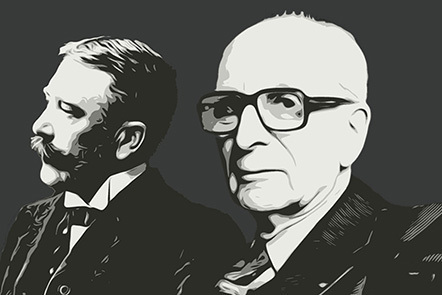
Structuralism
An introduction to the theories around signs and their meanings

Semiotics
Looking at the idea of meaning within signs and symbols and hoiw we might interpret what we see on the screen

Film Language
The impact of structuralism on our understanding of how we make sense of what we see on screen

Narrative
How are film stories constructed? Are there patterns that we can find across different films?

Issues
What are the issues which can be found with structuralist and semiotic approaches to film?

And cut
The end of week three!
Week 4
Beyond Structuralism

Welcome to Week Four
We’ll be looking at a few more “ism’s” as well as considering other issues around representation.

Film as Film
Exploring film as an art form.

Film as a value system
What values and beliefs are communicated in films?

Presenting the world
How are various groups and genders presented in film?

Making sense of the screen
What strategies do we, as film viewers use in order to make sense of what we see on screen?

That’s all folks
Congratulations! You’ve reached the end of the course.
When would you like to start?
Date to be announced
Add to Wishlist to be emailed when new dates are announced
Learning on this course
On every step of the course you can meet other learners, share your ideas and join in with active discussions in the comments.
What will you achieve?
By the end of the course, you‘ll be able to...
- Apply different critical perspectives to interpreting a film, moving beyond personal opinion.
- Identify key stages in the history of film criticism and theory, from early criticism to contemporary theory.
- Explore how critical approaches to cinema have changed in response to cultural, social, and technological shifts.
- 3. Identify major ideas and debates in film theory (e.g., realism, genre, ideology, representation).
- 6. Develop confidence in discussing films critically, connecting historical criticism to their own viewing experiences.
- Investigate cinema as both art and cultural expression, gaining deeper insight into how films shape and reflect society.
Who is the course for?
Ideal for film enthusiasts, casual viewers, and learners at school, college, or university who want to explore film criticism, reviews, and theory.
What software or tools do you need?
This course is best studied using computers, laptops or tablets in order to access various tasks.
Who will you learn with?

Ian is a teacher, author, producer, screenwriter and director and has worked on a number of European projects, including the Framework for Film Education. He has won 2 BAFTA's.
Who developed the course?

Film Distributors' Association
Film Distributors’ Association Ltd. (FDA) is the trade body for theatrical film distributors in the UK - the companies that release films for UK cinema audiences.
Learning on FutureLearn
Your learning, your rules
- Courses are split into weeks, activities, and steps to help you keep track of your learning
- Learn through a mix of bite-sized videos, long- and short-form articles, audio, and practical activities
- Stay motivated by using the Progress page to keep track of your step completion and assessment scores
Join a global classroom
- Experience the power of social learning, and get inspired by an international network of learners
- Share ideas with your peers and course educators on every step of the course
- Join the conversation by reading, @ing, liking, bookmarking, and replying to comments from others
Map your progress
- As you work through the course, use notifications and the Progress page to guide your learning
- Whenever you’re ready, mark each step as complete, you’re in control
- Complete 90% of course steps and all of the assessments to earn your certificate
Want to know more about learning on FutureLearn? Using FutureLearn
Learner reviews
Learner reviews cannot be loaded due to your cookie settings. Please and refresh the page to view this content.
Do you know someone who'd love this course? Tell them about it...
You can use the hashtag #FLfilmcriticism to talk about this course on social media.