This course is part of the Core Cyber Defence & Intelligence Operations ExpertTrack
Essentials of Securing Cloud Operations
Master practical cloud security skills across AWS, Azure, and GCP. Learn to secure cloud operations and maintain compliance.

Duration
4 weeksWeekly study
2 hours100% online
How it worksIncluded in an ExpertTrack
Course 4 of 4
Essentials of Securing Cloud Operations
Master the essentials of cloud security operations
Cloud security can feel overwhelming with so many platforms and configurations to manage. Learn the practical, hands-on skills to secure cloud operations across AWS, Azure, and Google Cloud Platform with this online course. Whether you’re just starting out or building on existing knowledge, you’ll learn the fundamentals, practise real configurations, and gain confidence working with the tools and techniques that keep cloud environments safe and compliant.
Understanding cloud security foundations
Learn to differentiate between provider and customer responsibilities across IaaS, PaaS, and SaaS environments, and explore core infrastructure like virtual machines, containers, and serverless functions.
Cloud security starts with understanding who’s responsible for what from start to finish. Learn to Identify common threats like misconfigurations and data breaches unique to each model, building the foundation for all your security work.
Configuring identity and access controls that actually work
Configure roles, policies, and security groups on AWS, Azure, and Google Cloud through guided labs.
You’ll practise multi-factor authentication, just-in-time access, and monitoring privileged roles. Network controls like VPC firewalls add extra layers of defence, directly reducing your attack surface in real production environments.
Deploying detection and compliance tools
Catch threats before they escalate. You’ll deploy tools like AWS GuardDuty, Azure Defender, and Google Cloud Security Command Centre for automated alerts. Continuous monitoring.
You’ll map your configurations to frameworks like CIS Benchmarks, ISO 27001, and NIST, and integrate logging and SIEM tools for rapid incident response. You’ll walk away ready to produce audit-ready reports that show your compliance posture.
Syllabus
Week 1
Understand Cloud Service Models and Core Infrastructure


Lesson 1: Introduction to Entire Course
Guides learners through securing AWS, Azure, and GCP using native tools. Covers service models, VM hardening, threat detection, and compliance mapping to build an audit-ready cloud environment.

Lesson 2: Understand Cloud Service Models (IaaS, PaaS, SaaS)
Breaks down IaaS, PaaS, and SaaS using cross-cloud examples to show which technical layers are customer-managed and which are provider-managed across each model.

Lesson 3: Classify Compute, Storage, and Networking Resources
Identifies the roles of VMs, databases, object storage, subnets, and firewalls across AWS/Azure/GCP and shows how each resource fits into a secure cloud architecture.

Lesson 4: Apply Shared Responsibility and Set Up IAM Basics
Maps security tasks between provider and customer using the shared-responsibility model and then demonstrates the steps to create a restricted IAM user and enable MFA.
Week 2
Secure a Virtual Infrastructure Stack

Lesson 5: Harden a Virtual Machine Before Use
Selects a trusted OS image, enables automatic patching and logging, replaces passwords with SSH keys, and establishes a secure baseline configuration for a VM.
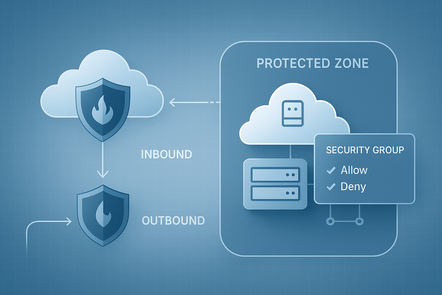
Lesson 6: Control Network Access with Security Groups and Firewalls
Defines inbound/outbound rules, constructs a “web-only” security group limited to ports 80/443, and verifies traffic restrictions using CLI and cloud analysis tools.

Lesson 7: Protect Data in Databases and Storage Buckets
Applies encryption at rest, blocks public access to storage buckets, and configures scheduled backups and snapshots for data durability and compliance.
Week 3
Enable Cloud-Native Detection and Response Tools

Lesson 8: Detect Threats Using Built-In Security Tools
Activates GuardDuty, Azure Defender, or Google SCC and examines sample findings such as port probes, reconnaissance attempts, and anomalous activity.
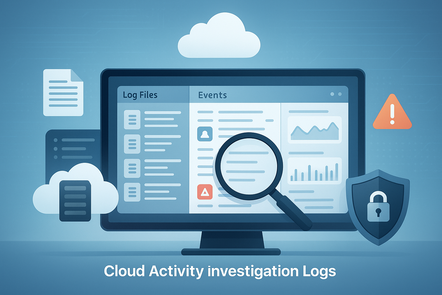
Lesson 9: Investigate Cloud Activity with Logs
Enables platform audit logs, filters for risky API calls such as delete/terminate actions, and exports log data for retention or external analysis.

Lesson 10: Respond to Incidents with Minimal Tools
Performs emergency key revocation, captures a VM snapshot for evidence, and completes a concise incident post-mortem using a structured five-question template.
Week 4
Align Cloud Controls with Compliance Frameworks

Lesson 11: Map Security Controls to CIS, ISO 27001, and NIST CSF
Compares major compliance frameworks and aligns practical cloud controls such as MFA, encryption, and logging with their corresponding CIS, ISO, and NIST requirements.

Lesson 12: Automate Governance with Tags and Config Rules
Implements ownership and cost-tracking tags, generates usage and compliance reports, and deploys an automated rule that flags or blocks public buckets.
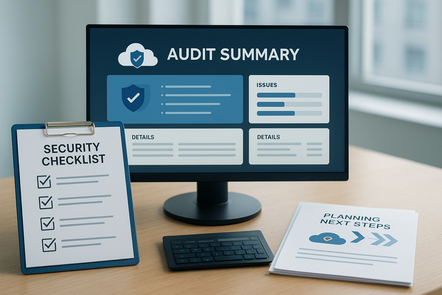
Lesson 13: Conduct a Final Security Review and Plan Next Steps
Runs through a 10-control audit checklist, validates that the lab meets compliance expectations, and outlines available cloud-security certification paths.

Lesson 14: Course Conclusion
Reviews key skills from cloud models to compliance, reinforces the ten core controls applied, and outlines next steps for continued practice and cloud security certification paths.
Prove you're job ready
Highlight the new, job-relevant skills you’ve gained and supplement existing qualifications with a hard-earned, industry-specific digital certificate – plus one for every course within your ExpertTrack.
- Learn the latest in your chosen industry or subject.
- Complete each course and pass assessments.
- Receive certificates validated by the educating organisation.
- Impress employers with learning outcomes you can add to your CV.
- Make your career dreams a reality.
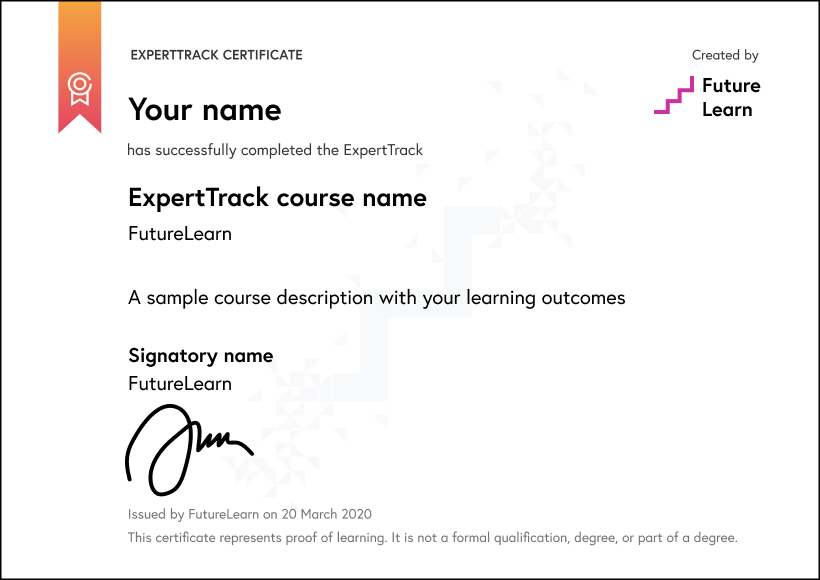
Download a PDF
Learning on this course
On every step of the course you can meet other learners, share your ideas and join in with active discussions in the comments.
What will you achieve?
By the end of the course, you‘ll be able to...
- Differentiate the security responsibilities of the cloud provider vs. the customer across IaaS, PaaS, and SaaS service models.
- Configure identity- and network-based controls—such as IAM roles, security groups, and VPC firewalls—across AWS, Azure, and Google Cloud to enforce least-privilege access.
- Deploy and operationalize cloud-native security services (e.g., AWS GuardDuty, Azure Defender, Google Cloud SCC) to detect threats and manage incident response workflows.
- Map application and infrastructure workloads to compliance frameworks including CIS Benchmarks, ISO/IEC 27001, and the NIST Cybersecurity Framework, producing evidence artifacts for audits.
Who is the course for?
This course is ideal for cloud engineers, DevOps teams, IT security professionals, system administrators, and cloud architects building practical skills for cloud security roles or certifications.
Who will you learn with?
Who developed the course?

Starweaver
Starweaver is a next generation platform that engages your workforce as no other. Combining business and technical skills, Starweaver provides real-time skill building that is in line with your business objectives and strategies, and in your associates day to day tasks and jobs.

Start learning today - free 2-day trial
After your free trial you can:
- Pay $39 per month to keep learning online
- Have complete control over your subscription; you can cancel any time
- Work at your own pace and set your own deadlines at every stage
- Only pay while you’re learning; the subscription will cancel automatically when you finish
- Complete online assessments to test your knowledge and prove your skills
- Earn digital course certificates and a final award that you can share online, with potential employers, and your professional network
- Keep access to the content of courses you complete even after your subscription ends
Learning on FutureLearn
Your learning, your rules
- Courses are split into weeks, activities, and steps to help you keep track of your learning
- Learn through a mix of bite-sized videos, long- and short-form articles, audio, and practical activities
- Stay motivated by using the Progress page to keep track of your step completion and assessment scores
Join a global classroom
- Experience the power of social learning, and get inspired by an international network of learners
- Share ideas with your peers and course educators on every step of the course
- Join the conversation by reading, @ing, liking, bookmarking, and replying to comments from others
Map your progress
- As you work through the course, use notifications and the Progress page to guide your learning
- Whenever you’re ready, mark each step as complete, you’re in control
- Complete 90% of course steps and all of the assessments to earn your certificate
Want to know more about learning on FutureLearn? Using FutureLearn