Integrating Food and Energy Production on Farmland
Discover how farms can produce food and clean energy together. Explore agrivoltaics, biogas, and sustainable farming practices.

Duration
2 weeksWeekly study
3 hoursLanguages
English, Italiano, Español, Français, PortuguêsEnglish, Italiano, Español100% online
How it worksDigital upgrade
Free
Integrating Food and Energy Production on Farmland

This course has been certified by the CPD Certification Service as conforming to continuing professional development principles. Find out more.
Learn how combining renewable energy and farming supports sustainable systems
What if your farm could grow food and produce clean energy at the same time? This course explores the innovative ways farmers are combining crops and livestock with solar panels and biogas systems. You’ll understand how more sustainable and resilient farms can be created.
You’ll see how technologies like agrivoltaics and biogas fit alongside traditional farming, discover what works (and what doesn’t), and understand the real benefits and challenges farmers face when integrating energy production into their operations.
Agrivoltaics and biogas on working farms
Investigate how solar panels and biogas systems coexist with crops and livestock on real farms.
You’ll understand the ecological and technical benefits, explore the challenges, and see how these green energy systems impact the whole farm ecosystem from soil health to food production.
Learning from farmers: real case studies and practical insights
Hear directly from farmers who’ve tried it. You’ll explore real case studies of agrivoltaics and anaerobic digestion in action, learn what policies and support are available, and understand how communities can help make these innovations successful and sustainable in the long term.
Policy, sustainability, and the bigger picture
You’ll explore how combining food and energy production can cut carbon emissions, strengthen rural communities, and build a more resilient future. Learn how policies and regulations shape what’s possible on farms and explore the legislation that influences renewable energy adoption and understand the true sustainability impact.
Syllabus
Week 1
Week 1: What is agrivoltaics and biogas


Welcome
Thank you for joining us on this course. Discover what you'll be learning over the next two weeks.

The practicalities of agrivoltaics and biogas
Learn in detail about agrivoltaics and biogas production. Explore about installation, maintenance and operation of these technologies.

The benefits of using farmland to produce energy
Explore how combining food and energy production supports sustainability across environmental, economic, and social dimensions.

Making a decision
Understand costs involved to make informed decisions about integrating these technologies on farm.

Review
Reflect on what you've learnt this week with a short quiz and summary article.
Week 2
Week 2: Considerations for real-word implementation

Welcome to Week 2
Learn about financial, political, environmental, and societal considerations around integrating and using these technologies.

Financial
Examine the financial implications and support available for agrivoltaics and biogas production on farms.

Regulatory
Explore policies and regulations concerning food and energy production on farmland.

Environmental
Explore potential of agrivoltaics and biogas production in reducing some of the impacts of climate change.

Society
Learn about societal considerations around the adoption of renewable energy technologies.

Decision Making
Check your understanding with our course assessment and find out how to continue your learning.
Who is this accredited by?

EIT Food is Europe’s leading food initiative, working to make the food system more sustainable, healthy and trusted.
The CPD Certification Service was established in 1996 and is the leading independent CPD accreditation institution operating across industry sectors to complement the CPD policies of professional and academic bodies.
When would you like to start?
Start straight away and join a global classroom of learners. If the course hasn’t started yet you’ll see the future date listed below.
Available now
Learning on this course
On every step of the course you can meet other learners, share your ideas and join in with active discussions in the comments.
What will you achieve?
By the end of the course, you‘ll be able to...
- Apply knowledge of renewable energy technologies to agricultural and farm systems
- Appraise the relevance of agrivoltaic and biogas technologies in an arable farming system
- Identify key benefits and unintended consequences of the technologies associated with the integration of food and energy production on farmland
- Analyse information and data to support the integration of food and energy production and reflect on own situation / own farm
- Recognise the importance of achieving sustainability goals (environmental, social and economic) when integrating food and energy production
Who is the course for?
The course is for a general audience, but if you’re a farmer there will be opportunity to reflect on your farming system. It will also be useful for farm advisors, researchers, and policymakers exploring sustainable farming and renewable energy solutions.
Who will you learn with?

I'm a Researcher at the University of Reading with interests in agricultural and environmental sciences, teaching and learning and knowledge exchange.
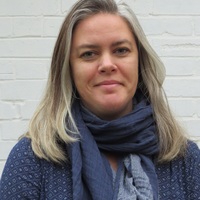
I am an Associate Professor in the School of
Agriculture, Policy and Development at the University of Reading.
My research focuses on co-developing sustainable agricultural systems.

I am an academic with broad interests in agricultural sustainability, the process of change to more sustainable systems and the use of technology.
Who developed the course?

University of Reading
The University of Reading has a reputation for excellence in teaching, research and enterprise.
Value4Farm
The Course was developed in close collaboration with the Value4Farm project. Value4Farm is a Horizon Europe project with 14 partners across Europe.
Endorsers and supporters
funded by

What's included?
University of Reading are offering everyone who joins this course a free digital upgrade, so that you can experience the full benefits of studying online for free. This means that you get:
Learning on FutureLearn
Your learning, your rules
- Courses are split into weeks, activities, and steps to help you keep track of your learning
- Learn through a mix of bite-sized videos, long- and short-form articles, audio, and practical activities
- Stay motivated by using the Progress page to keep track of your step completion and assessment scores
Join a global classroom
- Experience the power of social learning, and get inspired by an international network of learners
- Share ideas with your peers and course educators on every step of the course
- Join the conversation by reading, @ing, liking, bookmarking, and replying to comments from others
Map your progress
- As you work through the course, use notifications and the Progress page to guide your learning
- Whenever you’re ready, mark each step as complete, you’re in control
- Complete 90% of course steps and all of the assessments to earn your certificate
Want to know more about learning on FutureLearn? Using FutureLearn
Learner reviews
Learner reviews cannot be loaded due to your cookie settings. Please and refresh the page to view this content.
Do you know someone who'd love this course? Tell them about it...
More courses you might like
Learners who joined this course have also enjoyed these courses.


Browse more in Nature & Environment
