This course is part of the Advanced Cyber Defence & Offensive Security ExpertTrack
Key Skills for Offensive Cyber Operations
Learn to think like a cyber attacker so you can defend better. Explore offensive techniques, attacker psychology, and red teaming.

Duration
4 weeksWeekly study
2 hoursIncluded in an ExpertTrack
Course 4 of 4
Key Skills for Offensive Cyber Operations

This course has been certified by the CPD Certification Service as conforming to continuing professional development principles. Find out more.
Think like an attacker to build stronger defences in your organisation
Want to understand how cyber attackers really think? The best way to defend your organisation is to understand how attacks actually work.
This course takes you inside the world of offensive cyber operations, combining hands-on technical skills with the psychology behind real attacks.
Over two weeks, you’ll explore the complete cyber attack lifecycle, from initial reconnaissance through to impact analysis. You’ll learn the core offensive techniques that red teams and threat actors use, so you can anticipate and counter them effectively.
Understand how attackers think and why they target you
Get inside the mindset of cyber attackers. You’ll explore what motivates them, learn about different attacker profiles, and use frameworks like MITRE ATT&CK to understand how defenders can anticipate and disrupt adversaries before damage is done.
Get hands-on with offensive techniques and tools
Learn key offensive methods including network exploration, exploitation tactics, and social engineering strategies.
Through practical exercises, you’ll build your skills using industry tools safely and ethically—giving you real experience you can apply to defence.
Prepare for AI-driven and emerging cyber threats
Examine what’s coming next in offensive cyber operations, including automated attacks and the use of large language models. You’ll develop strategies to defend against these advanced and evolving threats, keeping your organisation one step ahead.
You’ll finish with a practical project where you apply reconnaissance, vulnerability assessment, and social engineering analysis to real-world scenarios—building a blueprint for understanding offensive operations grounded in current threats.
Syllabus
Week 1
Foundations & Attacker Mindset


Lesson 1: Course Introduction
Course Introduction

Lesson 2: Introduction to Offensive Cyber Operations
Comprehensive introduction to offensive cybersecurity principles, attack surfaces, vulnerabilities, exploits, and the role of ethical hacking.

Lesson 3: The Human Element in Security
Explores human-centred vulnerabilities that cybercriminals exploit through social engineering attacks and psychological manipulation.

Lesson 4: Understanding the Adversary Landscape
Comprehensive introduction to cyber adversaries, threat actors, their motivations, capabilities, and the evolution of offensive security.
Week 2
The Cyber Attack Life Cycle in Detail

Lesson 5: Initial Stages: Reconnaissance & Planning
Covers the initial phases of cyber-attack methodology, focusing on intelligence gathering and payload preparation techniques.

Lesson 6: Execution: Delivery & Exploitation
Examines how attackers deliver malicious code to target systems, explores common exploitation methods and security weaknesses.

Lesson 7: Post-Exploitation & Impact Assessment
Explores advanced persistent threat tactics, lateral movement, data exfiltration, and the MITRE ATT&CK framework in practice.
Week 3
Core Offensive Techniques & Tools

Lesson 8: Malware and Its Operations
Comprehensive introduction to malware analysis, covering fundamental types, classification systems, and essential tools and techniques.

Lesson 9: Human-Based Attacks: Social Engineering in Depth
Comprehensive examination of social engineering attacks, from phishing to advanced techniques using deepfake technology.

Lesson 10: Network and System-Level Attacks
Covers common network-based cyber-attacks including password attacks, DoS/DDoS attacks, and additional attack vectors.
Week 4
Advanced & Future Offensive Concepts

Lesson 11: Offensive AI Techniques and Challenges
Explores the application of artificial intelligence technologies in offensive cybersecurity operations and emerging AI capabilities.

Lesson 13: Emerging Attack Surfaces & Threat Actors
Explores advanced cybersecurity threats through adversarial attacks on AI systems, dark web infrastructure, and supply chain vulnerabilities.

Lesson 14: Strategic Outlook & Proactive Defence
Explores strategic landscape of offensive cybersecurity operations, security frameworks for LLMs, and proactive defence strategies.

Lesson 15: Course Conclusion
In this final project, you will design an offensive cyber operation blueprint relying on scenario described and knowledge gained via the whole training. By completing this project, you will gain practical experience and confidence
Prove you're job ready
Highlight the new, job-relevant skills you’ve gained and supplement existing qualifications with a hard-earned, industry-specific digital certificate – plus one for every course within your ExpertTrack.
- Learn the latest in your chosen industry or subject.
- Complete each course and pass assessments.
- Receive certificates validated by the educating organisation.
- Impress employers with learning outcomes you can add to your CV.
- Make your career dreams a reality.
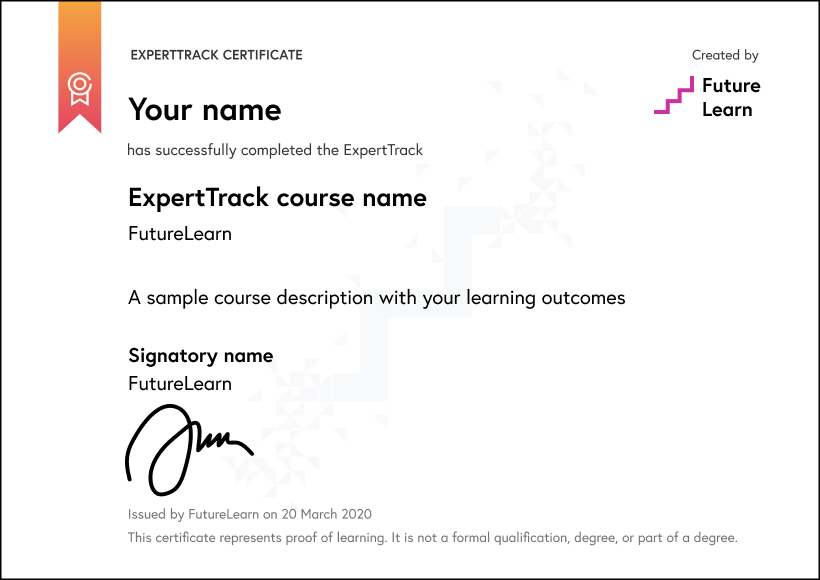
Download a PDF
Who is this accredited by?
The CPD Certification Service was established in 1996 and is the leading independent CPD accreditation institution operating across industry sectors to complement the CPD policies of professional and academic bodies.
Learning on this course
On every step of the course you can meet other learners, share your ideas and join in with active discussions in the comments.
What will you achieve?
By the end of the course, you‘ll be able to...
- Deconstruct offensive cyber architectures and adversarial mindsets, exploring motivations and frameworks to strengthen system defense.
- Analyze the cyber-attack lifecycle from reconnaissance through post-exploitation and impact analysis.
- Implement core offensive techniques and tools, including human-centric social engineering aspects.
- Navigate AI-driven offensive techniques and emerging threats, including automated attack systems and the use of large language models.
Who is the course for?
This course is ideal for IT professionals, junior security analysts, business leaders, and students interested in red teaming or penetration testing—especially in high-stakes sectors like finance, telecoms, and healthcare.
What software or tools do you need?
Basic computer skills and IT concepts (networks, systems). Access to: - Draw.io (free online diagramming tool at app.diagrams.net) - ChatGPT (free version for cybersecurity analysis) - Web browser for accessing security analysis websites: - MITRE ATT&CK Navigator (https://mitre-attack.github.io/attack-navigator/) - Archive.org - WHOIS lookup tools - Netcraft.com All tools are free and web-based - no software installation required.
Who will you learn with?
Who developed the course?

Starweaver
Starweaver is a next generation platform that engages your workforce as no other. Combining business and technical skills, Starweaver provides real-time skill building that is in line with your business objectives and strategies, and in your associates day to day tasks and jobs.

Start learning today - free 2-day trial
After your free trial you can:
- Pay $39 per month to keep learning online
- Have complete control over your subscription; you can cancel any time
- Work at your own pace and set your own deadlines at every stage
- Only pay while you’re learning; the subscription will cancel automatically when you finish
- Complete online assessments to test your knowledge and prove your skills
- Earn digital course certificates and a final award that you can share online, with potential employers, and your professional network
- Keep access to the content of courses you complete even after your subscription ends
Learning on FutureLearn
Your learning, your rules
- Courses are split into weeks, activities, and steps to help you keep track of your learning
- Learn through a mix of bite-sized videos, long- and short-form articles, audio, and practical activities
- Stay motivated by using the Progress page to keep track of your step completion and assessment scores
Join a global classroom
- Experience the power of social learning, and get inspired by an international network of learners
- Share ideas with your peers and course educators on every step of the course
- Join the conversation by reading, @ing, liking, bookmarking, and replying to comments from others
Map your progress
- As you work through the course, use notifications and the Progress page to guide your learning
- Whenever you’re ready, mark each step as complete, you’re in control
- Complete 90% of course steps and all of the assessments to earn your certificate
Want to know more about learning on FutureLearn? Using FutureLearn


