Preventing Arm Lymphedema After Breast Cancer Treatment
Learn evidence-based strategies for early detection and prevention of lymphedema in breast cancer survivors.

Duration
5 weeksWeekly study
5 hoursLanguages
English, Italiano, EspañolEnglish, Italiano, Español
Preventing Arm Lymphedema After Breast Cancer Treatment

This course has been certified by the CPD Certification Service as conforming to continuing professional development principles. Find out more.
Support early prevention of post-treatment arm swelling
Can lymphedema be prevented or detected early enough to change outcomes? For many breast cancer survivors, arm swelling after treatment significantly affects quality of life. Early intervention can make a substantial difference.
On this course, developed by experts from Region Skåne, you’ll gain skills to implement effective lymphedema prevention programmes.
Understand the lymphatic system and treatment impacts
Explore lymphatic system function, anatomy, and physiology, with particular focus on how cancer treatments affect lymphatic flow. You’ll understand the mechanisms by which surgery and radiotherapy can lead to lymphedema.
This foundational knowledge guides clinical decision-making throughout patient care and helps you explain risks clearly to patients.
Implement early detection and treatment protocols
Learn why early intervention matters and how to conduct clinical assessments effectively. You’ll explore evidence-based early treatment approaches and understand the supporting research, including management of breast oedema.
These protocols, when implemented consistently, can significantly improve patient outcomes and quality of life.
Develop comprehensive prevention programmes
Explore practical prevention procedures, supportive aids, patient education approaches, and psychosocial considerations. You’ll learn organisational implementation strategies and how to collaborate effectively across healthcare disciplines.
You’ll walk away with the ability to develop sustainable programmes that deliver lasting improvements in patient care and a strong understanding of implementation challenges.
Syllabus
Week 1
Understanding the Lymphatic System


Welcome to the course
This course aims to provide theoretical and practical knowledge in evidence-based prevention of lymphedema for at-risk patients after treatment for breast cancer.

Foundation of the lymphatic system
By the end of this activity, learners will be better able to understand the structure of the lymphatic system as a transport system and will be able to explain the lymphatic system to a patient in a simple way.

Anatomy of the lymphatic system
By the end of this activity, learners will be able to know about the anatomy of the lymphatic system in the upper extremity

Summary of the week
Review of week 1
Week 2
How does the Lymphatic System work?

Physiology of the lymphatic system
By the end of this activity, learners will be better able to understand the physiology of the lymphatic system

Pathophysiology - Cancer Treatment
By the end of this activity, learners will be better able to understand the pathophysiology behind the development of breast cancer related lymphedema

Summary of the week
Review of week 2
Week 3
Assessing Lymphatic Function
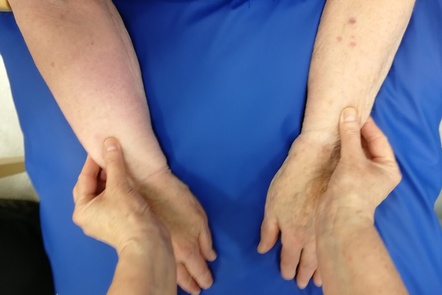
Clinical assessments
Introduction to fundamental principles of clinical assessment, including patient preparation and essential evaluation steps.

Objective measurements
Demonstrates methods for accurately measuring limb volume to monitor swelling and assess progression or improvement.

Summary of the week
This activity encourages learners to consolidate their understanding of the week’s clinical assessment topics.
Week 4
Early Detection and Evidence-Based Treatment

Prevention and early detection
By the end of this activity, learners will be able to identify risk factors, and understand how prevention and surveillance programs may facilitate early diagnosis.

Lymphedema treatment
Early treatment of lymphedema

Summary of the week
Review of the week
Week 5
Implementation in Practice

Patient education and self care
By the end of this activity, learners will have knowledge about the contents of evidensbased patient education the myths found on the internet and elsewhere.

Breast Edema
By the end of this activity, learners will be able to understand how the breast edema develops over time following radiotherapy treatment of the breast, and the effect of different treatments for breast edema.

Implementation tips
By the end of this activity, learners will be aware of how the suveillance, treatment and follow-up as well as patient education can be organized.

Summary of the week
Week review

Final Examination
This final test is designed to consolidate your knowledge and ensure a clear understanding of the course material. Successful completion is required for certificate eligibility. Good luck!
Who is this accredited by?
The CPD Certification Service was established in 1996 and is the leading independent CPD accreditation institution operating across industry sectors to complement the CPD policies of professional and academic bodies.
Learning on this course
On every step of the course you can meet other learners, share your ideas and join in with active discussions in the comments.
What will you achieve?
By the end of the course, you‘ll be able to...
- Explain the etiology, pathophysiology and how cancer treatment can affect the lymphatic system.
- Identify breast cancer patients at risk of developing lymphedema and how to identify early arm lymphedema.
- Describe psychosocial problems and how the health-related quality of life can be affected in a patient with arm lymphedema.
- Describe prevention and implementation procedures, as well as the treatment methods, aids and individualized patient education used for arm lymphedema, and follow-up procedure.
- Explain the importance of prevention and early treatment of arm lymphedema in relation to the individual, other professional categories and the healthcare organization.
Who is the course for?
This course is ideal for doctors, nurses, and physiotherapists who treat breast cancer patients following axillary lymph node dissection and radiotherapy, and want to implement evidence-based prevention programmes.
Who will you learn with?

Associate Professor Karin Johansson is a globally recognized physiotherapist and lymphedema specialist whose long-standing work has helped transform the prevention and treatment of lymphedema.
Who developed the course?

Skåne Care
As the international gateway to Sweden’s public healthcare system, Skåne Care connects global partners with top-quality healthcare solutions and opportunities for professional growth. Skåne Care is part of the Swedish public healthcare system and is governed by the Regional Council of Skåne in southern Sweden.
Learning on FutureLearn
Your learning, your rules
- Courses are split into weeks, activities, and steps to help you keep track of your learning
- Learn through a mix of bite-sized videos, long- and short-form articles, audio, and practical activities
- Stay motivated by using the Progress page to keep track of your step completion and assessment scores
Join a global classroom
- Experience the power of social learning, and get inspired by an international network of learners
- Share ideas with your peers and course educators on every step of the course
- Join the conversation by reading, @ing, liking, bookmarking, and replying to comments from others
Map your progress
- As you work through the course, use notifications and the Progress page to guide your learning
- Whenever you’re ready, mark each step as complete, you’re in control
- Complete 90% of course steps and all of the assessments to earn your certificate
Want to know more about learning on FutureLearn? Using FutureLearn
Do you know someone who'd love this course? Tell them about it...
More courses you might like
Learners who joined this course have also enjoyed these courses.


Browse more in Healthcare & Medicine
