• University of Bergen logo
  • Logo - Bjerknes Centre for Climate Research

Causes of Climate Change

Learn the physical processes behind climate variation around the world to better understand the causes of climate change.

27,759 enrolled on this course

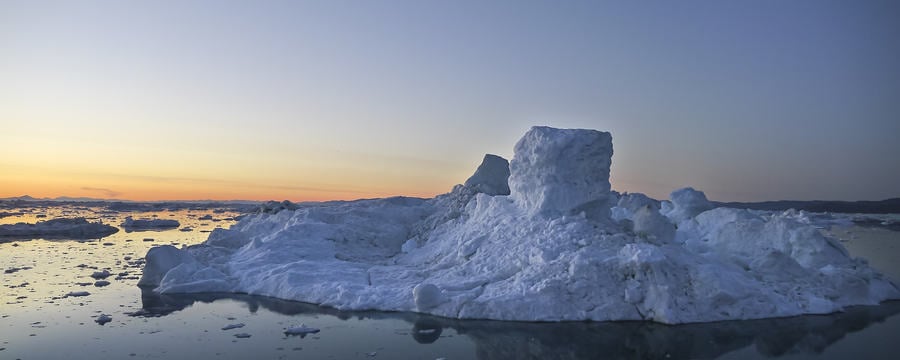
Iceberg melting in sunset
  • Duration

    3 weeks
  • Weekly study

    4 hours
  • 100% online

    How it works
  • Digital upgrade

    Free

Uncover the past, present, and future of the causes of climate change

This free online course provides the basis for understanding the underlying physical processes governing climate variations in the past, present and future.

On this course, you’ll explore the main external forcing mechanisms such as the sun, volcanoes, and changes in greenhouse gasses and aerosols, which can contribute to changing the global energy budget and initiate climate variations.

You’ll also consider the role of internal feedback mechanisms and the energy transport in the atmosphere and ocean, in order to understand regional variations in climate.

You’ll gain an in-depth understanding of the complexities of the climate system, and be able to put the recently observed, man-made changes in climate in the context of past natural changes.

To uncover the true causes of climate change, you’ll learn with experts from The University of Bergen. They host the Bjerknes Centre for Climate Research, the largest centre for natural science-based climate research in Scandinavia.

Download video: standard or HD

Skip to 0 minutes and 15 seconds Did you ever wonder what drives the climate system? Or did you ever wonder why there is such a large contrast in climate between our location here on the west coast of Norway, compared to southern Greenland, which are all at the same latitude?

Skip to 0 minutes and 30 seconds My name is Kerim Hestnes Nisancioglu, I am a professor at the Department of Earth Science at the University of Bergen. Here in Bergen it is not uncommon that it rains up to 3 meters in one year. This is because of the frequent storms coming off the ocean and hitting the mountains surrounding our beautiful city. It is therefore no surprise that modern meteorology was developed here in Bergen. In this course we will try to answer many of the key questions relating to the dynamics of the climate system and what drives it. We will also take you on a brief tour of past changes in climate and their causes, as well as discuss the implications of man made emissions of greenhouse gases.

Skip to 1 minute and 11 seconds My energy source today is this sandwich. Together with professor Asgeir Sorteberg we’ll be guiding you through 6 lectures, including interactive problem sets and background reading. Along the way we will visit heavy snowfall in the mountains surrounding Bergen, as well as calving glaciers on the coast of Greenland. On behalf of the University of Bergen I hope you’ll find this course both stimulating, challenging and fun.

Syllabus

  • Week 1

    Radiative forcing

    • Introduction - who are you, what is your motivation, and how has climate already changed in your surroundings?

      We would like all learners to participate in this discussion so that you get to know each other and learn what climate change means to you. Please present yourselves to the other learners and tell us where you come from.

    • Natural radiative forcing

      In this video you'll learn about the natural drivers of climate change, also called the natural radiative forcing, of climate. In particular, you will learn about the Sun and how it has affected climate over Earth’s recent past.

    • Man-made radiative forcings

      While climate has been rather stable the last few thousands of year we have seen a rapid rise in temperature since the beginning of the industrial age.

    • Natural versus man-made radiative forcing

      What is the relative contribution of natural versus man-made radiative forcing over the past few centuries?

  • Week 2

    Climate feedbacks and heat transport

    • Energy balance/heat transport

      This weeks lesson is about the Earth's energy balance and how the sun’s energy is redistributed on the surface of the Earth.

    • Climate Feedback

      The earth’s temperature change is not only depending on the strength of the radiative forcing, which is due to the complexity of the climate system.

    • Summary: Climate feedbacks and heat transport

      The concept of climate feedbacks is key to understand how sensitive the earth is to changes in a radiative forcing.

  • Week 3

    Past changes in climate and ocean heat uptake

    • Records of past changes in climate

      This week you'll learn about past changes in climate and Ocean heat uptake

    • Ocean heat Uptake

      To understand how fast the climate system is responding to radiative forcing, we have to understand the role of the effective heat capacity of the ocean and how heat is transported from the ocean surface and into the deep ocean.

    • Sum up week 3: Records of past changes in climate - natural changes in climate of the past

      Direct meteorological measurements of properties such as temperature, wind and ocean currents only exist for the past two centuries. To reconstruct climate for periods older than this, we rely on climate proxies.

When would you like to start?

Start straight away and join a global classroom of learners. If the course hasn’t started yet you’ll see the future date listed below.

  • Available now

Learning on this course

On every step of the course you can meet other learners, share your ideas and join in with active discussions in the comments.

What will you achieve?

By the end of the course, you‘ll be able to...

  • Reflect on the complexities of the climate system, and be able to put the recently observed, man-made changes in climate in the context of past natural changes.
  • Explain the underlying physical processes governing climate variations in the past, present and future.
  • Describe the role of atmosphere and ocean energy transport and their impact on regional variations in climate.
  • Summarise the main feedback mechanisms in the climate system.
  • Describe the role of ocean heat uptake for the timescales of response to changes in climate forcing.

Who is the course for?

This course is intended for those with an interest in the physical aspects of climate variations and change.

It does not require any previous experience of studying the causes of climate change, but high school level mathematics and physics is recommended.

Who will you learn with?

Professor of Climate Dynamics at the Department of Earth Science at the University of Bergen and the Bjerknes Centre for Climate Research

https://kerim.b.uib.no @nissenjo #FLclimatechange

I am Professor in atmospheric dynamics working at the Geophysical Institute, University of Bergen (GFI) and the Bjerknes Centre for Climate Research (BCCR).

I'm doing my PhD at the University of Bergen, Norway, in paleoceanography. Currently, I am teaching assistant for the related course SDG213 at the University of Bergen.

Hi - I'm a postdoctoral fellow at the Geophysical Institute, University of Bergen. My research is based on climate model projections of sea level rise in the Pacific region.

Who developed the course?

University of Bergen

The University of Bergen (UiB) offers first-class education and cutting-edge research at our location in the city centre of Bergen, Norway.

Bjerknes Centre for Climate Research

What's included?

University of Bergen are offering everyone who joins this course a free digital upgrade, so that you can experience the full benefits of studying online for free. This means that you get:

  • Unlimited access to this course
  • Includes any articles, videos, peer reviews and quizzes
  • Tests to validate your learning
  • A PDF Certificate of Achievement to prove your success when you’re eligible
  • Learning on FutureLearn

    Your learning, your rules

    • Courses are split into weeks, activities, and steps to help you keep track of your learning
    • Learn through a mix of bite-sized videos, long- and short-form articles, audio, and practical activities
    • Stay motivated by using the Progress page to keep track of your step completion and assessment scores

    Join a global classroom

    • Experience the power of social learning, and get inspired by an international network of learners
    • Share ideas with your peers and course educators on every step of the course
    • Join the conversation by reading, @ing, liking, bookmarking, and replying to comments from others

    Map your progress

    • As you work through the course, use notifications and the Progress page to guide your learning
    • Whenever you’re ready, mark each step as complete, you’re in control
    • Complete 90% of course steps and all of the assessments to earn your certificate

    Want to know more about learning on FutureLearn? Using FutureLearn

    Learner reviews

    Learner reviews cannot be loaded due to your cookie settings. Please and refresh the page to view this content.

    Do you know someone who'd love this course? Tell them about it...

    You can use the hashtag #FLclimatechange to talk about this course on social media.