Challenging Wealth and Income Inequality
Explore the concerns about rising wealth and income inequality between different generations in developed countries.

Duration
4 weeksWeekly study
3 hoursLanguages
English, Italiano, Español, Français, PortuguêsEnglish, Italiano, Español100% online
How it worksDigital upgrade
Free
Challenging Wealth and Income Inequality
Have baby boomers had it all? Can we create a fair deal for everyone? Find out
From religious leaders to heads of state, everyone is talking about economic inequality. But what form does this take in different countries? What impact does it have on society? And why does it matter to you?
This online course will explore these growing concerns about wealth and income inequality.
You’ll scrutinise claims that the baby boomer generation has had it all, while social and political changes have left younger generations struggling.
You’ll examine the causes and implications of growing economic inequalities and what individuals, communities and governments can do about them.
Syllabus
Week 1
Inequalities explained


Setting the scene
Explore current debates and trends in income and wealth inequalities in affluent countries.

Why inequality does matter
Understand why it is important to keep inequality in check and its relationship with other aspects of the economy.

The road to inequality
Explore how inequalities are created and can be reinforced from one generation to another or reduced depending on government actions.
Week 2
Pensions

Pensions in crisis
Young or old, everyone seems to be worried about pensions these days. First, you’ll look at the different aims and ways of providing retirement income and why pension systems are under stress.

Sharing national income
Using the circular flow of income diagram, look at how state and private pension schemes work as ways of transferring some national income from workers to those who are retired and who bears the risks and costs under each system.

Problems and solutions: winners and losers
Look at some of the ways in which state and private pension schemes are trying to tackle the pensions crisis and who wins and loses from these changes.
Week 3
Housing

The housing problem
Explore inequalities in access to affordable, secure housing and inequalities in access to the wealth related to home ownership.

Factors driving inequality
Investigate supply and demand for housing using Singapore as an example. Find out how property is used as an investment and the effect that this trend has on house prices.

Solutions to housing inequality
Explore some of the political approaches and policy choices that are available in addressing housing challenges.
Week 4
Individual and collective action

What can I do?
Explore how different individuals and groups could secure their future by planning financially and think about the constraints they face.

What can countries do?
Explore how government and individuals have organised societies to influence directly or indirectly how inequalities perpetuate or are challenged.

Beyond the baby boom
Explore how public policies and market mechanisms can be transformed to enable more sustainable economic activity, less prone to booms and busts and with a longer term vision.
When would you like to start?
Start straight away and join a global classroom of learners. If the course hasn’t started yet you’ll see the future date listed below.
Available now
Learning on this course
On every step of the course you can meet other learners, share your ideas and join in with active discussions in the comments.
What will you achieve?
By the end of the course, you‘ll be able to...
- Apply and make use of evidence to discuss the nature and existence of economic inequality.
- Explain the impact that government policies may have on inequality.
- Discuss the interplay between individuals, communities and the state in addressing inequalities.
- Demonstrate and understand some of the implications of inequality for individuals, society and the wider economy.
- Apply some personal financial planning techniques, particularly with regard to pensions and housing.
Who is the course for?
The course does not assume any prior knowledge of economics and can be enjoyed by anyone interested in social issues.
Who will you learn with?

Senior Lecturer in Economics at the Open University, working on impacts of public policy across various welfare regimes on gender and social inequalities and personal finance within households
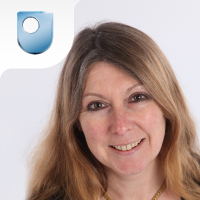
Senior Lecturer in Economics and Personal Finance, The Open University. Also a freelance personal finance researcher, working with many UK consumer-facing organisations and author of over 25 books.
Who developed the course?

The Open University
As the UK’s largest university, The Open University (OU) supports thousands of students to achieve their goals and ambitions via supported distance learning, helping to fit learning around professional and personal life commitments.
Established
1969Location
Milton Keynes, UKWorld ranking
Top 510Source: Times Higher Education World University Rankings 2020
What's included?
The Open University are offering everyone who joins this course a free digital upgrade, so that you can experience the full benefits of studying online for free. This means that you get:
Learning on FutureLearn
Your learning, your rules
- Courses are split into weeks, activities, and steps to help you keep track of your learning
- Learn through a mix of bite-sized videos, long- and short-form articles, audio, and practical activities
- Stay motivated by using the Progress page to keep track of your step completion and assessment scores
Join a global classroom
- Experience the power of social learning, and get inspired by an international network of learners
- Share ideas with your peers and course educators on every step of the course
- Join the conversation by reading, @ing, liking, bookmarking, and replying to comments from others
Map your progress
- As you work through the course, use notifications and the Progress page to guide your learning
- Whenever you’re ready, mark each step as complete, you’re in control
- Complete 90% of course steps and all of the assessments to earn your certificate
Want to know more about learning on FutureLearn? Using FutureLearn
Learner reviews
Learner reviews cannot be loaded due to your cookie settings. Please and refresh the page to view this content.
Get a taste of this course
Find out what this course is like by previewing some of the course steps before you join:
Do you know someone who'd love this course? Tell them about it...
You can use the hashtag #FLInequality18 to talk about this course on social media.
More courses you might like
Learners who joined this course have also enjoyed these courses.


Browse more in Politics & Society
