This course is part of the DevOps Engineering ExpertTrack
Containerization, Orchestration, and Monitoring
Build practical containerization skills to prepare for careers in DevOps, cloud, and platform engineering.

Duration
3 weeksWeekly study
3 hours100% online
How it worksIncluded in an ExpertTrack
Course 3 of 4
Containerization, Orchestration, and Monitoring
Learn containerization and Kubernetes for modern application deployment
Containerization has transformed the way software is developed, deployed, and managed. By packaging applications into portable containers and orchestrating them at scale, organisations can deliver reliable software faster while improving flexibility and resilience.
On this three-week course, you’ll learn how to build, deploy, and manage containerised applications using Docker and Kubernetes. Through practical labs and real-world scenarios, you’ll develop the skills needed to deploy modern applications across production environments.
Build and manage containerised applications with Docker
Docker is the industry standard for creating and managing containerised applications.
This course introduces you to the fundamentals of containerization as you gain hands-on experience using Docker and how its tools simplify the deployment and management of multi-container applications.
Gain essential skills using Kubernetes
As applications grow in complexity, container orchestration becomes essential for managing deployments efficiently and at scale.
You’ll explore Kubernetes architecture and its core components. With an understanding of how Kubernetes automates container orchestration, you’ll gain the practical skills required to manage modern cloud-native applications.
Monitor containerised environments with Prometheus and Grafana
Monitoring and observability are essential for maintaining reliable applications and identifying performance issues before they impact users.
You’ll implement monitoring solutions using Prometheus, Grafana, and Nagios and gain skills in using modern observability practices.
By the end, you’ll be able to deploy, orchestrate, and monitor containerised applications with confidence, using the same technologies relied upon by DevOps teams in production environments.
Syllabus
Week 1
Build and Manage Containerized Applications with Docker


Build a Foundation in Containerization and Docker
This activity begins with containerization concepts and comparisons with virtual machines, then moves into container types, Docker fundamentals, and common use cases for portable application environments.

Manage Docker Containers, Images, and Storage
This activity begins with Docker architecture and the container lifecycle, then moves into port binding, container running modes, image management, storage, and persistent volumes.

Orchestrate and Secure Docker Applications
This activity begins with Docker networking and container security, then moves into multi-container application deployment, Docker Compose, Docker Swarm, persistent storage, and container image distribution.
Week 2
Deploy and Manage Applications with Kubernetes

Build a Foundation in Kubernetes
This activity begins with Kubernetes fundamentals and core concepts, then moves into cluster architecture, kubectl, Minikube, pods, and the deployment of workloads in a local Kubernetes environment.

Deploy and Connect Kubernetes Workloads
This activity begins with Kubernetes services and controllers, then moves into application networking, persistent storage, service exposure, and deployment management.

Scale and Update Kubernetes Applications
This activity begins with rolling updates and rollbacks, then moves into application scaling, configuration management, multi-tier deployment, and canary and blue-green release strategies.
Week 3
Monitor Applications and Centralise Logs

Build a Foundation in Continuous Monitoring and Prometheus
This activity begins with continuous monitoring and its role in DevOps, then moves into Prometheus fundamentals, metric types, and the use of monitoring data to assess application and infrastructure health.

Configure Prometheus for Metrics Collection
This activity begins with Prometheus architecture, then moves into its core components, metrics collection, querying, and the configuration of a functional monitoring environment.

Visualise Metrics and Centralise Application Logs
This activity begins with Grafana and dashboard visualisation, then moves into Loki, Prometheus integration, centralised logging, and log analysis using the ELK Stack.
Prove you're job ready
Highlight the new, job-relevant skills you’ve gained and supplement existing qualifications with a hard-earned, industry-specific digital certificate – plus one for every course within your ExpertTrack.
- Learn the latest in your chosen industry or subject.
- Complete each course and pass assessments.
- Receive certificates validated by the educating organisation.
- Impress employers with learning outcomes you can add to your CV.
- Make your career dreams a reality.
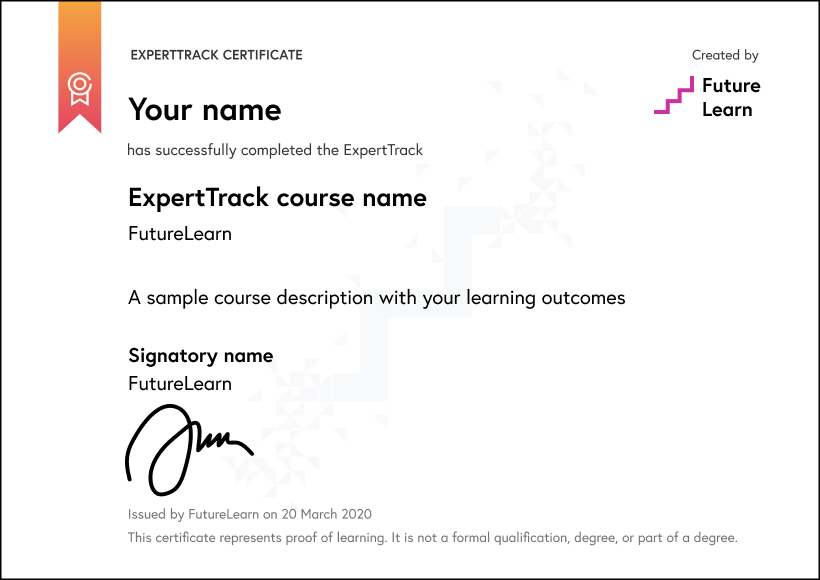
Download a PDF
Learning on this course
On every step of the course you can meet other learners, share your ideas and join in with active discussions in the comments.
What will you achieve?
By the end of the course, you‘ll be able to...
- Explain Docker concepts, architecture, images, storage, and networking.
- Create multi-container applications using Docker Compose and Docker Swarm.
- Perform Kubernetes deployment, service configuration, storage, and scaling tasks.
- Design Kubernetes update, rollback, and deployment strategies.
- Develop monitoring dashboards and centralised logging solutions.
Who is the course for?
This course is designed for professionals who want to work with containerized applications and modern deployment environments. It is suitable for developers, DevOps engineers, and system administrators looking to build skills in Docker, Kubernetes, and monitoring tools.
Prior experience with CI/CD and infrastructure concepts is recommended. The course is ideal for learners aiming to manage containerized workloads, implement orchestration strategies, and monitor system performance in production environments.
What software or tools do you need?
Docker, Kubernetes, Prometheus, Grafana, ELK Stack
Who will you learn with?

Who developed the course?
Edureka
Edureka is a global online learning platform offering industry-focused training in emerging technologies such as Cloud, AI, GenAI, Data Science, DevOps, and Cybersecurity, helping professionals upskill and advance their careers.

Start learning today - free 2-day trial
After your free trial you can:
- Pay $39 per month to keep learning online
- Have complete control over your subscription; you can cancel any time
- Work at your own pace and set your own deadlines at every stage
- Only pay while you’re learning; the subscription will cancel automatically when you finish
- Complete online assessments to test your knowledge and prove your skills
- Earn digital course certificates and a final award that you can share online, with potential employers, and your professional network
- Keep access to the content of courses you complete even after your subscription ends
Learning on FutureLearn
Your learning, your rules
- Courses are split into weeks, activities, and steps to help you keep track of your learning
- Learn through a mix of bite-sized videos, long- and short-form articles, audio, and practical activities
- Stay motivated by using the Progress page to keep track of your step completion and assessment scores
Join a global classroom
- Experience the power of social learning, and get inspired by an international network of learners
- Share ideas with your peers and course educators on every step of the course
- Join the conversation by reading, @ing, liking, bookmarking, and replying to comments from others
Map your progress
- As you work through the course, use notifications and the Progress page to guide your learning
- Whenever you’re ready, mark each step as complete, you’re in control
- Complete 90% of course steps and all of the assessments to earn your certificate
Want to know more about learning on FutureLearn? Using FutureLearn


