Crime Scene to Court: An Introduction to Forensic and Criminal Investigation
Explore how investigators solve crimes, from securing evidence at the scene to presenting findings that shape justice in court.

Duration
4 weeksWeekly study
2 hoursLanguages
English, Italiano, Español, Français, PortuguêsEnglish, Italiano, Español100% online
How it worksDigital upgrade
Free
Crime Scene to Court: An Introduction to Forensic and Criminal Investigation
Discover how forensic science and investigation bring criminals to justice
Ever wondered how investigators piece together clues at a crime scene? Or how that evidence makes its way to the courtroom? This course takes you behind the scenes of real forensic science and criminal investigations with no experience needed! Just bring your curiosity with you.
You’ll discover how forensic scientists and police officers work together to uncover the story hidden in every crime scene. From securing the scene to analysing evidence and presenting it in court, you’ll follow the complete investigative journey and see how it shapes judicial outcomes.
From crime scene to lab: master forensic techniques in action
Get hands-on with the techniques investigators actually use including fingerprinting and DNA analysis. You’ll find those tiny traces of evidence that crack cases wide open. You’ll see how these methods protect the integrity of investigations and help connect suspects, victims, and locations in the criminal justice process.
Think like a detective investigating strategies and ethics
Step into a detective’s shoes and explore how they interview witnesses, navigate tough ethical decisions, and follow the procedures that keep investigations fair and lawful.
You’ll understand police custody protocols and why proper record-keeping matters in every investigation.
From evidence to verdict: how forensic science shapes justice
See how forensic evidence comes to life in the courtroom. You’ll learn how trials work, who does what, and how the evidence you’ve studied can make or break a case.
Discover the roles that magistrates, juries, and legal teams play in the English and Welsh courts.
Syllabus
Week 1
Introduction to Forensic Investigation
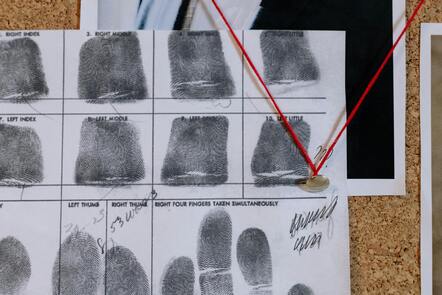

Introduction to the course and a background into forensics
In this activity, we welcome you to the course and give you a chance to get to know some of your fellow learners. We will also investigate what the term forensics really means as well as introducing you to some basic principles.
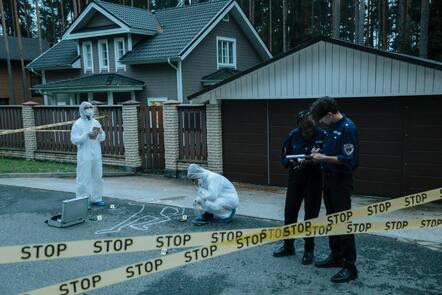
Introduction to the role of the CSI and forensic techniques
We will investigate the role of the crime scene investigator – what they do at a crime scene and why.

DNA – Deoxyribonucleic acid
This activity will explore the history and application of forensic DNA technologies.

Fingerprints
This activity will explore the application of fingerprint examination and analysis as well as covering some basic terminology.

Further evidence types
In this activity, we will explore comparison evidence of footwear tyre and tool marks, explaining how a specific item can be matched to the mark or impression left at the scene.

Review
We will revisit the scene task from the start of the lesson to discuss the evidence types seen, as well as applying some learning in relation to a packaging exercise.
Week 2
The Role of the Detective
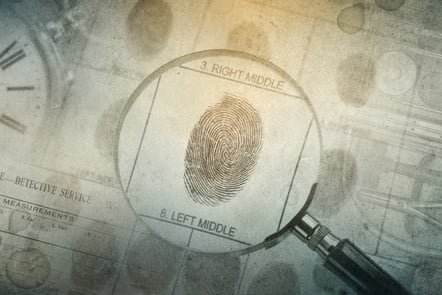
The history of the police detective
To get started, we will explore how the position of the detective evolved into the professional, highly trained role that it is today.

Media Portrayal through the years
Through the years, the public image of ‘The Detective’ has been heavily influenced by the media. We will now look at the various versions presented to the public.

Training to be in the Criminal Investigation Department
Now we will look at the modern-day approach to training and professionalisation of the role of the detective.

Detectives and the suspect interview.
Often seen in the media now, both from reality series and in fiction, the interview of a suspect is seen as a psychological battle between the detective and the suspect, sparring to get to the truth of what happened.
Week 3
Police Custody

Exploring Police Custody: Your First Step into Policing Studies
One of the most important, and often least understood, areas of policing is police custody. This is where law, human rights, welfare, and investigative practice all come together.

Searches in Police Custody
It is important to understand why searches are such a crucial part of the custody process.

Young & Vulnerable People
We’ll focus on how the custody process changes when the detainee is a child or a vulnerable person. These groups require additional safeguards because of their age, understanding, or personal circumstances.

Final Reflections
You’ve now taken your first steps into understanding police custody.
Week 4
The Anatomy of a Trial

Why do we have laws and an overview of the court system
In this section we will explore the fundamental principles of the criminal justice system and the functions of the various courts within England and Wales.

The age of criminal responsibility and the role of the Crown Prosecution Service
This activity will review the current laws around when an individual can be tried and found guilty of a criminal offence. Following this, the role of the Crown Prosecution Service is covered in detail.

The Courtroom Drama
In this activity we will identify and challenge some common misconceptions when it comes to a court room. We will cover what you can expect and the order a case will generally follow.

The role of the jury and the importance of communication
This activity will look at the importance of the jury deliberation and how a verdict is reached.

Miscarriages of justice and the role of the Criminal Cases Review Commission (CCRC)
Here we will investigate some cases where the conviction has been found to be unsafe.

Lesson evaluation
This activity includes a short quiz on this lessons content and a reflection on the course as a whole.
When would you like to start?
Start straight away and join a global classroom of learners. If the course hasn’t started yet you’ll see the future date listed below.
Available now
Learning on this course
On every step of the course you can meet other learners, share your ideas and join in with active discussions in the comments.
What will you achieve?
By the end of the course, you‘ll be able to...
- Demonstrate a clear knowledge of a range of different evidence types commonly found at crime scenes and their application to criminal investigations.
- Identify the key aspects of the role of the detective and the fundamental principals of a police investigation.
- Explore the legal requirements in place for the searching, detention, and interviewing of a suspect in police custody.
- Investigate the hierarchy and functions of the various criminal courts in England and Wales.
Who is the course for?
This course is ideal for anyone curious about forensic science, criminal justice, or policing whether you’re exploring career options, love true crime, or simply want to understand how investigations really work from scene to courtroom.
Who will you learn with?
Currently works as a lecturer for Arden University. Previously having worked as a forensic DNA examiner and analyst. As well as many years as a CSI (crime scene investigator).

A former Police Officer and experienced teacher, trainer and Lecturer who has worked at all levels of education from primary upwards!

Sarah, a former police officer with 21 years’ service, now lectures in policing and investigation. She specialises in counter-terrorism, investigative practice, and police education.
Who developed the course?

Arden University
Arden University has a proud heritage in providing flexible and accessible higher education. We’ve grown and evolved from our beginnings in 1990 as the chosen online learning partner for universities across Britain, to offer a new kind of learning experience, providing both online and blended learning degree courses that meet the changing needs of modern life.
What's included?
Arden University are offering everyone who joins this course a free digital upgrade, so that you can experience the full benefits of studying online for free. This means that you get:
Learning on FutureLearn
Your learning, your rules
- Courses are split into weeks, activities, and steps to help you keep track of your learning
- Learn through a mix of bite-sized videos, long- and short-form articles, audio, and practical activities
- Stay motivated by using the Progress page to keep track of your step completion and assessment scores
Join a global classroom
- Experience the power of social learning, and get inspired by an international network of learners
- Share ideas with your peers and course educators on every step of the course
- Join the conversation by reading, @ing, liking, bookmarking, and replying to comments from others
Map your progress
- As you work through the course, use notifications and the Progress page to guide your learning
- Whenever you’re ready, mark each step as complete, you’re in control
- Complete 90% of course steps and all of the assessments to earn your certificate
Want to know more about learning on FutureLearn? Using FutureLearn
Learner reviews
Learner reviews cannot be loaded due to your cookie settings. Please and refresh the page to view this content.
Do you know someone who'd love this course? Tell them about it...
More courses you might like
Learners who joined this course have also enjoyed these courses.


Browse more in Law and Science, Engineering & Maths
