A Global Journey Through Play: Traditional Folk Games
Discover how traditional folk games worldwide reveal culture, community values, and creative design through the power of play.

Duration
4 weeksWeekly study
3 hoursLanguages
English, Italiano, Español, Français, PortuguêsEnglish, Italiano100% online
How it works
A Global Journey Through Play: Traditional Folk Games

This course has been certified by the CPD Certification Service as conforming to continuing professional development principles. Find out more.
Explore what traditional games reveal about culture and creativity
Traditional folk games carry stories, social rules, and cultural meanings that are easy to overlook in our digital age.
On this four week course, you’ll discover how traditional games work, what they mean to communities, and how they can inspire contemporary creative practice and cultural preservation.
Understand the cultural and structural elements of folk games
You’ll learn to identify what makes a folk game distinct, examining how rules, roles, materials, and spaces create particular experiences of cooperation, competition, and imagination.
Through case studies from diverse cultures, you’ll explore structured folk games and examine distinctive Chinese folk games linked to festivals, seasonal rituals, and regional customs. You’ll interpret how these games express cultural values, social relationships, and community identities across different contexts.
Connect traditional play to modern design and education
Discover how knowledge of folk games can inform creative practice, educational approaches, and heritage work. You’ll generate design ideas inspired by traditional play, learning to translate game mechanics, narratives, and aesthetics into contemporary games or interactive experiences.
You’ll also consider how documenting and revitalizing folk games supports cultural preservation, intergenerational connection, and cross-cultural understanding in communities worldwide.
Develop practical tools for game analysis and creative application
Learn methods for analyzing games systematically, from mapping rules and player interactions to recording cultural meanings and oral histories. By the end of the course, you’ll be able to describe folk games with clarity, and use traditional play as inspiration for creative projects, educational programs, or cultural heritage initiatives.
Syllabus
Week 1
What Is a Folk Game?


Section 1:Course Introduction
This week introduces the core question that guides the whole course: What is a folk game?

Section 2: Understanding Folk Games
Understand folk games from the perspectives of concept, scope and characteristics

Section 3: Origins of Folk Games
Folk games originated from daily life, community rituals and common social activities, and are one of the oldest forms of games in human history.

Section 4: Types of Folk Games
Classification helps us notice both variety and pattern. By grouping games according to their form or function, we begin to see what different societies value — strength, skill, rhythm, chance, imagination, cooperation, or ritual.

Section 5: Assessment
Test your understanding of core concepts: what makes something a game, the definition and types of folk games, their origins, and how they differ across cultures.
Week 2
Structured Folk Games

Section 1: Why Structure Matters in Folk Games
Folk game mechanics are tradition-rooted: simple rules, physical interaction, or luck-based dynamics. They stress community bonding, cultural inheritance, and easy participation.

Section 2: An Overview of Structured Folk Games
This section explains why board and card games are ideal examples of structured folk games. Their clear rules and repeatable actions help reveal how structure shapes play and interaction.

Section 3: Board Games as Structured Systems
Board games translate real social and cosmic order into a miniature space of movement. They are maps of fairness, time, and fate. Across cultures, the board becomes a world in itself: ordered, bounded, and balanced.

Section 4: Card and Tile Games — Structure through Patterns and Symbols
Card and tile games may appear simple: draw, match, discard, repeat. Yet beneath this rhythm lies one of humanity’s most enduring ways of thinking — to find pattern within chance.

Section 5: Summary & Reflection
Rules are never only about play.They are miniature philosophies—models of how people imagine fairness, control, and relation.Each structure reveals not only how we play but how we think about life itself.

Section 6: Assessment
Check your knowledge of structured folk games, including board, card, and tile games. Review game mechanics, core categories, and the cultural logic behind game structures.
Week 3
Folk Games with Chinese Cultural Traditions

Section 1: Understanding Play as Cultural Expression
Play reflects the values, stories, and traditions of a community. Through simple actions and shared rules, people express identity, pass on cultural memory, and connect across generations. Play becomes a living form of culture.

Section 2: Thinking Through Play — Wisdom and Strategy
Chinese traditional intellectual games use strategy and logic to develop clear thinking. Games like Go and Chinese chess reflect deep cultural values and show how learning and play have long been linked in China.

Section 3: Playing Together — Social Meaning and Aesthetic Experience
Chinese traditional social games add fun to festivals and gatherings. Drinking and tea games, along with graceful pastimes like floating cups or pitching arrows, build shared joy and polite interaction.

Section 4: Playing with Time — Seasonal Rhythm and Festival Life
Seasonal and Festival Games are tied to seasonal rhythms, agricultural cycles, or traditional festivals. Their playtime, meaning, and social function are defined by specific times of the year.

Section 5: Assessment
Check your understanding of Chinese folk games this week, and review key ideas before moving on.
Week 4
From folk to design
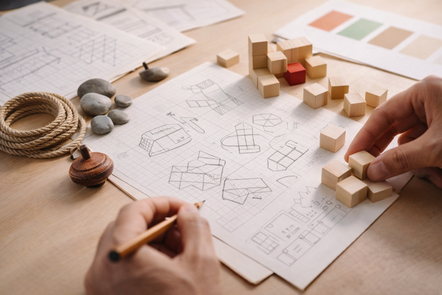
Section 1: Introduction — From Folk Play to Design
Folk games aren’t gone in modern times—some are kept alive as a living cultural resource, while others have evolved into new cultural forms as the world changes.

Section 2: Folk Games in Transition — From Tradition to Modern Life
Folk games aren’t gone in modern times—some are kept alive as a living cultural resource, while others have evolved into new cultural forms as the world changes.
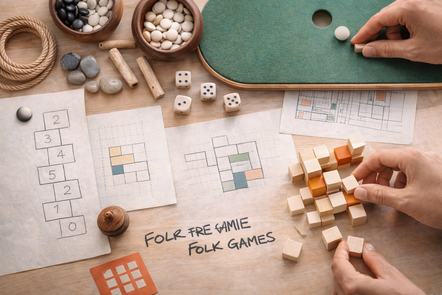
Section 3: Designing with Folk Games — Tradition as Creative Resource
By examining how folk games express values like cooperation, rhythm, and creativity, you will explore how they can be reimagined today and see how cultural heritage inspires modern design thinking.

Section 4: Reflection — Openness, Participation, and Design Thinking
Reflect on how openness and participation shape design. Consider how folk games welcome new players and ideas, and how this principle applies to your own creative work.

Section 5: Assessment
Evaluate your understanding of how folk games continue into modern life. Learn how traditional play inspires design, new games, sports, and creative applications today.
Who is this accredited by?
The CPD Certification Service was established in 1996 and is the leading independent CPD accreditation institution operating across industry sectors to complement the CPD policies of professional and academic bodies.
When would you like to start?
Start straight away and join a global classroom of learners. If the course hasn’t started yet you’ll see the future date listed below.
Available now
Learning on this course
On every step of the course you can meet other learners, share your ideas and join in with active discussions in the comments.
What will you achieve?
By the end of the course, you‘ll be able to...
- Explain what folk games are, and how they differ from other forms of play, using clear examples from different cultures.
- Discuss how rules and structures shape play, and how folk game mechanics express cultural values and social relationships.
- Reflect on how traditional folk games continue into modern life, and explore how their ideas can inspire contemporary design and creative practice.
Who is the course for?
This course is ideal for game designers, educators, cultural researchers, heritage professionals, and anyone interested in how traditional play connects to culture, creativity, and community across different societies.
Who will you learn with?
Who developed the course?

Communication University of China
The Communication University of China (CUC) is one of the China’s key universities included in 211 Project and “985 Project Innovation Platform” under the Double First-Class Initiative, which is directly administered by the Ministry of Education. CUC was the first communication university founded in 1954 . In August 2004, it was renamed from Beijing Broadcasting Institute to Communication University of China.
| Best ValueBest Value - learn more, save more! | |||
Ways to learn | Buy this course | Subscribe & save | Start learning today |
|---|---|---|---|
| Choose the best way to learn for you! | $79/one-off payment | $244.99 for a whole year Automatically renews | Free |
| Fulfill your current learning need | Develop skills to further your career | Try this course - with limits | |
| Access to this course | tick | tick | Limited to 4 weeks |
| Access to 1,000+ courses | cross | tick | cross |
| Learn at your own pace | tick | tick | cross |
| Discuss your learning in comments | tick | tick | tick |
| Certificate when you're eligible | Printed and digital | Digital only | cross |
Cancel for free anytime |
Ways to learn
Choose the best way to learn for you!
Subscribe & save
$244.99 for a whole year
Automatically renews
Develop skills to further your career
- Access to this course
- Access to 1,000+ courses
- Learn at your own pace
- Discuss your learning in comments
- Digital certificate when you're eligible
Cancel for free anytime
Buy this course
$79/one-off payment
Fulfill your current learning need
- Access to this course
- Learn at your own pace
- Discuss your learning in comments
- Printed and digital certificate when you’re eligible
Start learning today
Free
Try this course - with limits
- Limited to 4 weeks
Find out more about certificates, Unlimited or buying a course (Upgrades) Sale price available until 2 November 2026 at 23:59 (UTC). T&Cs apply. | |||
Find out more about certificates, Unlimited or buying a course (Upgrades)
Sale price available until 2 November 2026 at 23:59 (UTC). T&Cs apply.
Learning on FutureLearn
Your learning, your rules
- Courses are split into weeks, activities, and steps to help you keep track of your learning
- Learn through a mix of bite-sized videos, long- and short-form articles, audio, and practical activities
- Stay motivated by using the Progress page to keep track of your step completion and assessment scores
Join a global classroom
- Experience the power of social learning, and get inspired by an international network of learners
- Share ideas with your peers and course educators on every step of the course
- Join the conversation by reading, @ing, liking, bookmarking, and replying to comments from others
Map your progress
- As you work through the course, use notifications and the Progress page to guide your learning
- Whenever you’re ready, mark each step as complete, you’re in control
- Complete 90% of course steps and all of the assessments to earn your certificate
Want to know more about learning on FutureLearn? Using FutureLearn
Do you know someone who'd love this course? Tell them about it...
More courses you might like
Learners who joined this course have also enjoyed these courses.


Browse more in Creative Arts & Media and History
