Integrated Ocean Planning: Marine Protected Areas, Multi-Use & Business Pathways
Explore how ocean planning and MPAs drive innovation, and develop skills for sustainable marine business and policy.

Duration
4 weeksWeekly study
4 hoursLanguages
English, Italiano, Español, Français, PortuguêsEnglish, Italiano, Español100% online
How it worksDigital upgrade
Free
Integrated Ocean Planning: Marine Protected Areas, Multi-Use & Business Pathways

This course has been certified by the CPD Certification Service as conforming to continuing professional development principles. Find out more.
Navigate ocean planning, conservation, and blue economy pathways
Develop your expertise in marine protected areas (MPAs), integrated ocean management, and the emerging blue economy.
This online course connects policy, practice, and sustainability, showing how marine conservation and economic opportunity can go hand in hand.
Dive into ocean planning and marine protected areas
This chapter summarises the principles of marine spatial planning and the role of MPAs in conserving ocean ecosystems. You will learn how multi-use strategies and stakeholder collaboration create a balance between environmental protection and sustainable development. But you will also see how global and European approaches to maritime spatial planning uncover spatial conflicts and identify opportunities to integrate diverse ocean uses effectively.
This foundation will give you the knowledge to approach ocean management with both a strategic and practical lens.
Develop business and innovation skills in the blue economy
You’ll discover how conservation and commercial success can align. Using real-world pilot cases and successful blue economy initiatives, you’ll explore business models that turn ocean protection into viable opportunities. You’ll develop entrepreneurial mindset by practising business plan design, funding strategies, and identifying professional roles in marine multi-use sectors.
Harness MPAs for governance, value creation & sustainable careers
You’ll wrap things up by focusing on leadership and applied management. Understand how MPAs can function as governance tools, sources of ecosystem services, and platforms for sustainable business.
We hope these insights and confidence will support you in taking the next step in your professional journey.
Syllabus
Week 1
Exploring human activity at sea
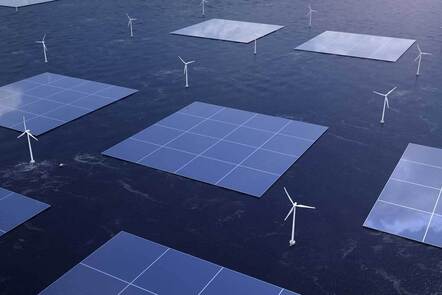

Getting started
This activity introduces you to the course structure, team, and navigation. Explore key articles, introduce yourself to fellow learners, and learn how to engage with the content effectively for a smoother learning experience.

Ocean uses - Maritime Spatial Planning (MSP)
This session examines various approaches to maritime spatial planning (MSP), including how different strategies allocate marine space for a range of activities such as energy production, conservation, shipping, and fisheries.

Introduction to Ocean Multi-use
This session explains the concept of ocean multi-use and the types of existing use combinations, focusing on entrepreneurial elements.

Introduction to Marine Protected Areas (MPAs)
This session will delve into Marine Protected Area (MPA) creation and management by explaining the existing MPA processes and showcasing their benefits, as well as challenges in their successful conservation and management.
Week 2
Multi-Use and the Business Model

Ocean Multi-Use pilots as potential business cases
This section provides guidance on developing business plans for MU activities, considering not only economic activities (e.g., offshore wind and aquaculture) but also those that may not result in direct economic benefits.

Multi-use from a business perspective
In this activity, we explore business planning from a multi-use perspective, covering topics such as business models, funding, and investment strategies.

The diverse field of vocational pathways in Ocean Multi-use
This session showcases vocational profiles in ocean multi-use and helps the students identify their possible role within an ocean multi-use project.
Week 3
MPAs as Governance Tools: Conservation outcomes and socio-economic impacts

MPAs in Action: From global goals to regional implementation
This session explores global and European perspectives of MPAs by introducing committed conservation targets and guidelines, discussing the current status of MPAs coverage worldwide and explaining how we can make MPAs count.

Europe’s marine conservation journey: From local laws to global impact
This section provides an overview of how the EU is working to protect marine biodiversity through laws, protected area networks like Natura 2000, and ambitious 2030 targets.

Blue Corridors and Marine Conservation Areas
This section introduces Ecological (Blue) Corridors and Blue Parks, key pathways and protected areas vital for linking marine habitats, enabling the migration of marine species, and maintaining healthy oceans.

Inside Marine Protection: Strategies, tools and obstacles
This session provides hands-on guidance on how to improve MPA management by introducing diverse tools that can support the effective implementation of MPAs and examining challenges MPAs commonly face.

MPAs and society: Economic and social dimensions
This session covers the socio-economic impacts of MPAs and their sustainability, showing how MSP can support them through case studies featuring sustainable use, stakeholder cooperation, and citizen engagement.
Week 4
Integrating Ecosystem Services and Business Strategies for MPAs

Ecosystem Services in marine environments
This section explores the concept of ecosystem services, the benefits people receive from healthy natural system and their central role in marine conservation and management. And how MPAs and MSPs help support these services.

Nature-inclusive design of blue economy sectors
In this session, we look at the critical relationship between the Blue Economy and the health of marine ecosystems – and how different sectors must balance economic growth with environmental responsibility.

The business of Marine Protected Area management
This session explores the MPAs from an entrepreneurial point of view, including financial management and planning.

Leading for Conservation: What it means to be an Marine Protected Area manager
This session outlines the vocational profile of MPA managers, including the expected knowledge, competencies, and essential skills.
Who is this accredited by?
The CPD Certification Service was established in 1996 and is the leading independent CPD accreditation institution operating across industry sectors to complement the CPD policies of professional and academic bodies.
When would you like to start?
Start straight away and join a global classroom of learners. If the course hasn’t started yet you’ll see the future date listed below.
Available now
Learning on this course
On every step of the course you can meet other learners, share your ideas and join in with active discussions in the comments.
What will you achieve?
By the end of the course, you‘ll be able to...
- Develop foundational knowledge of Marine Protected Areas (MPAs), maritime spatial planning (MSP), and ocean multi-use as key elements of sustainable ocean governance.
- Practice analysing real-world MSP and multi-use cases to explore how ocean space can be managed effectively for conservation and economic activities.
- Explore the role of MPAs in regional and global strategies and assess their effectiveness in delivering both ecological protection and socio-economic benefits.
- Evaluate business tools and planning strategies to develop financially viable and sustainable MPA management approaches, including ecosystem service valuation and blended finance.
- Identify responsibilities of MPA managers and explore career pathways by engaging in simulations, stakeholder exercises, and roleplay activities.
Who is the course for?
This course is ideal for students, graduates, entrepreneurs, and professionals in aquaculture, blue economy, marine policy, or sustainability, looking to advance skills in business, innovation, and integrated ocean management.
Who will you learn with?

I hold a Master's in Sea-Human Relations and work at SUBMARINER on EU projects balancing marine conservation, policy, MPAs, and human activities.

I am a marine scientist with a background in marine policy, MPA management & effectiveness. I work on EU-wide projects related to MPAs and MSP and am part of the IUCN WCPA.

I am a project manager and policy advisor on marine conservation in the EU and non-EU contexts, with specific experience in Marine Protected Areas collaborative designation and effective management.

I am the founder of Umoyalife & project manager for Blue Economy initiatives with a background in sustainable business management and environmental economics. The ocean is my beloved paradise.
Who developed the course?
SUBMARINER Network for Blue Growth
The SUBMARINER Network is the cooperation platform for actors and initiatives across the Baltic Sea Region and beyond. Promoting innovative approaches for the sustainable use of marine resources.
Blue Bio Techpreneurs
The EU co-funded Blue Bio Techpreneurs project aims to foster innovation, entrepreneurship, and skill development in the blue bioeconomy.
Blue4All and MSP4BIO
MSP4BIO and Blue4All are working towards nature-inclusive spatial planning and effective marine conservation.
ULTFARMS
ULTFARMS is designed to optimise the production of low-trophic Aquaculture (LTA) systems in harsh offshore conditions and low-salinity environments.
What's included?
SUBMARINER Network for Blue Growth are offering everyone who joins this course a free digital upgrade, so that you can experience the full benefits of studying online for free. This means that you get:
Learning on FutureLearn
Your learning, your rules
- Courses are split into weeks, activities, and steps to help you keep track of your learning
- Learn through a mix of bite-sized videos, long- and short-form articles, audio, and practical activities
- Stay motivated by using the Progress page to keep track of your step completion and assessment scores
Join a global classroom
- Experience the power of social learning, and get inspired by an international network of learners
- Share ideas with your peers and course educators on every step of the course
- Join the conversation by reading, @ing, liking, bookmarking, and replying to comments from others
Map your progress
- As you work through the course, use notifications and the Progress page to guide your learning
- Whenever you’re ready, mark each step as complete, you’re in control
- Complete 90% of course steps and all of the assessments to earn your certificate
Want to know more about learning on FutureLearn? Using FutureLearn
Do you know someone who'd love this course? Tell them about it...
More courses you might like
Learners who joined this course have also enjoyed these courses.


Browse more in Business & Management and Science, Engineering & Maths
