
Skip to 0 minutes and 9 seconds Hi, I’m Wendy Palmer, the Director of Lifelong Learning Practice Every day our learners are studying Health sciences, business, engineering, education, and many other disciplines. They’re building knowledge, understanding key concepts, and completing meaningful tasks At the same time, they’re also developing transferable or durable skills If a learner is working on a history research project, they’re not just learning about the topic They’re researching sources, analyzing evidence, evaluating different perspectives, and communicating their ideas through a well-supported argument But we don’t always make that second layer visible. Learners complete assessments, projects, and placements, and receive grades or feedback. The output of learning is recognized and assessed, but the skills and capability developed through the process remain hidden.
Skip to 1 minute and 3 seconds Much of what learners are capable of doing is implicit. So when they need to explain what they can do, whether that’s for further study or applying for jobs, they often fall back on describing what they completed rather than talking about their skills and capability. Yet most higher education institutions intentionally design learning experiences to develop durable and transferable skills like teamwork, collaboration, critical thinking, and problem-solving But this is what we sometimes refer to as the hidden curriculum. Learners are developing these skills, but they don’t always know they are.
Skip to 1 minute and 40 seconds As a result, they don’t recognize them or know how to talk about them in a way that others can understand and use But by supporting learners to see these hidden skills, “I completed a design project,” can become, “I tested different approaches, identified why some weren’t working, and refined my design based on the results. I can now apply a structured approach to solving complex problems.” The task hasn’t changed, but the skills have been made explicit
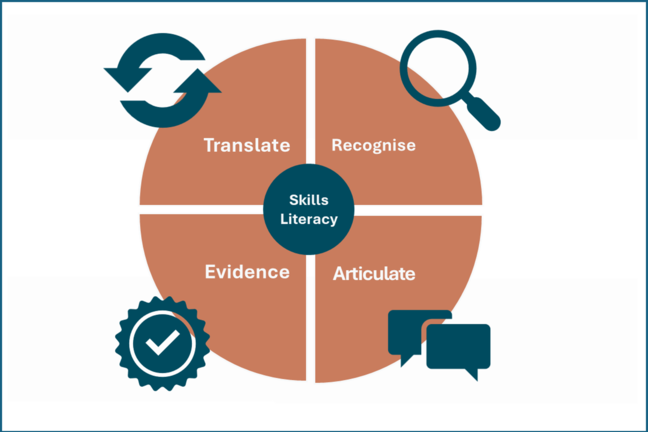
Skip to 2 minutes and 12 seconds And that’s the start of skills literacy. Learners begin to recognize what they can do, articulate it with more confidence, build evidence, and use their skills across different contexts, across subjects, and beyond education In this course, you’ll explore simple ways to surface the hidden skills. Whether you’re an educator, learning designer, careers professional, or academic leader, this course explores practical ways to help learners recognize and communicate what they can do and what they’re capable of. We look forward to seeing you in the course.