Assessment for Learning in STEM Teaching
Get to grips with Assessment for Learning with one of three courses for teachers from the National STEM Learning Centre.

Duration
6 weeksWeekly study
3 hours
Assessment for Learning in STEM Teaching
Other courses you might like
This course isn't running right now. We can email you when it starts again, or check out these other courses you might like.


Browse more in Science, Engineering & Maths and Teaching

Why join the course?
Assessment for Learning (AfL) is a term that’s widely used in education, but applied in ways that are variable in their effectiveness. This free online course - designed for STEM teachers in primary and secondary schools, and sixth form and further education colleges - will help you understand and use it more effectively.
Understand Assessment for Learning in theory and practice
Through this course, you’ll understand:
- the theory and science behind effective Assessment for Learning;
- how to use Assessment for Learning to elicit evidence about what’s going on in your learners’ minds;
- how to use this evidence formatively with your learners in your laboratory and classroom;
- and how to write, judge and use the hinge questions that are central to Assessment for Learning in STEM.
Enjoy your teaching more
As the course progresses, you’ll be encouraged to try things out in your laboratory and classroom; actively reflect on what you discover in the process; and share your experience as part of the course discussions.
You’ll also be invited to read some of the scientific literature about Assessment for Learning. Your learners will gain as a result - and you’ll enjoy your teaching more.
Learn with Dylan Wiliam, Christine Harrison and Andrea Mapplebeck
This course has been developed by the National STEM Learning Centre. It gives you the opportunity to learn with three leading experts in STEM education and assessment:
- Dylan Wiliam: Emeritus Professor of Educational Assessment at University College London and author of Embedded Formative Assessment;
- Christine Harrison: Senior Lecturer in Science Education at King’s College London, past Chair of the Association for Science Education and former secondary school teacher;
- Andrea Mapplebeck: Educational Consultant, Formative Education Ltd and former secondary school teacher.
Continue learning with the STEM Teaching program
This course is one of three in the STEM Teaching program - a suite of high-impact professional development from the National STEM Learning Centre. Completing the program will enable you to master different elements of STEM teaching and earn a FutureLearn Award as evidence of your continuing professional development (CPD).
About the National STEM Learning Centre
The National STEM Learning Centre provides world-class professional development activities and resources to support the teaching of STEM (science, technology, engineering and mathematics) subjects. The Centre is a purpose-built, state of the art facility based at the University of York backed by an unrivalled team of experts in the fields of education and STEM.
What topics will you cover?
Week 1: The main principles of Assessment for Learning
- About Assessment for Learning
Week 2: Intentional dialogue
- Teaching in a formative way
- Digging deeper
Week 3: Hinge-point questions
- Hinge-point questions - an overview
- Hinge-point questions - the ‘nitty gritty’
- Writing and critiquing hinge-point questions
Week 4: Questioning as a source of evidence
- Kinds of evidence
- Hinge-point questions revisited
Week 5: Acting on the evidence
- Evidence from what learners say
- Evidence from hinge-point questions
- Finding out what your learners make of your use of questions
Week 6: Your formative classroom - evolving your practice
- What your students think
- What excellent formative practice involves
- Vignettes to develop your own thinking
Learning on this course
On every step of the course you can meet other learners, share your ideas and join in with active discussions in the comments.
What will you achieve?
By the end of the course, you‘ll be able to...
- Identify the main principles of Assessment for Learning
- Assess some of the research literature about Assessment for Learning
- Reflect on the role of intentional dialogue in supporting teaching in a formative way
- Explain the key characteristics of a hinge-point question
- Improve ability to create hinge-point questions through a peer review design and evaluation process
- Contribute to a crowd-sourced repository of hinge-point questions
- Collaborate with peers, educators and mentors to try out activities and share thinking in order to help shift practice
- Evaluate a range of practical ideas that can be used to elicit evidence from students
- Collect and analyse evidence from students on changes implemented in the classroom in order to critically reflect on own practice in order to prioritise next steps in own development
Who is the course for?
This course is designed for English-speaking teachers of STEM subjects in primary and secondary schools, and sixth form and FE colleges. It’s also relevant to trainee teachers; teacher trainers; those thinking about a career in STEM teaching; and developers of STEM-related course materials.
It is a CPD course for people who, in the main, have a degree level qualification, or who are in the process of obtaining one.
Who will you learn with?
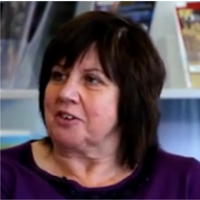

Reader in Science Education and Chair of ASE 2014-2015. Lead UK Researcher on Assessment for Learning. Research interests in Inquiry-learning, professional learning and CPD.

Former physics teacher & leader, now supporting educators to develop teaching. Commissioned by National STEM Learning Centre to work with Dylan Wiliam & Chris Harrison to design & support AfL courses.

Former school teacher, academic, and university administrator, now working with teachers and leaders around the world to improve educational outcomes for young people.
Who developed the course?
National STEM Learning Centre
The National STEM Learning Centre provides world-class professional development activities and resources to support the teaching of STEM (science, technology, engineering and mathematics) subjects.
Learning on FutureLearn
Your learning, your rules
- Courses are split into weeks, activities, and steps to help you keep track of your learning
- Learn through a mix of bite-sized videos, long- and short-form articles, audio, and practical activities
- Stay motivated by using the Progress page to keep track of your step completion and assessment scores
Join a global classroom
- Experience the power of social learning, and get inspired by an international network of learners
- Share ideas with your peers and course educators on every step of the course
- Join the conversation by reading, @ing, liking, bookmarking, and replying to comments from others
Map your progress
- As you work through the course, use notifications and the Progress page to guide your learning
- Whenever you’re ready, mark each step as complete, you’re in control
- Complete 90% of course steps and all of the assessments to earn your certificate
Want to know more about learning on FutureLearn? Using FutureLearn
Get a taste of this course
Find out what this course is like by previewing some of the course steps before you join:

Do you know someone who'd love this course? Tell them about it...
You can use the hashtag #FLstemAfL to talk about this course on social media.