• University of Groningen logo

Improving Your Study Techniques

Improve your study skills and get better results by learning to use the 'three-step study model'.

69,100 enrolled on this course

Students studying together
  • Duration

    4 weeks
  • Weekly study

    2 hours
  • 100% online

    How it works
  • Digital upgrade

    Free

Develop effective study skills for life

Learning is a fundamental part of life; many of us continue studying even when we leave formal education. This means good study skills are vital for all of us. Many, however, lack these skills and struggle to study effectively.

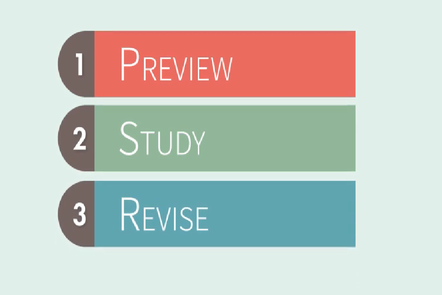
This course aims to change that. Through the course you will learn to become a better student by learning to apply the ‘three-step model’ of studying: previewing, summarising and revising. You will consider your use of time and learn how to make a realistic study plan. You will also learn how to tackle procrastination, deal with stress and keep motivated while studying.

Download video: standard or HD

Skip to 0 minutes and 8 seconds Reading books, making notes, watching videos, going to class– these are all things we associate with studying. But after a day of hard work, you sometimes wonder what you actually learned. I’ve read the same text for the third time. And I’m still not even sure if I know what it says, let alone that I can even remember it for the exam. It can also be that you just do not get around to studying because your schedule is full or you lack the skills to plan ahead. In this free online course Improving Your Study Techniques, you will practise with learning skills you will be able to use for the rest of your life.

Skip to 0 minutes and 49 seconds Regardless, whether you are a full-time student or someone who studies incidentally for professional development, this course will help you find out what works best for you and your brain when it comes to studying effectively. During four weeks, you will be supported by experienced student trainers from the University of Groningen Student Service Centre, who will introduce you to a step-wise approach, including previewing, summarising, revision, and time management but also show you how to deal with stress, the tendency to procrastinate, and how to keep motivated. You will also meet our three students, who will give practical tips and share their experiences, giving you an insight into different approaches to studying. So if you want to improve your study skills, join us.
Syllabus

  • Week 1

    How to get off to a good start?

    • Introduction

      A course overview and explanation of key concepts.

    • Prepare your study session - set your conditions

      Set yourself up for optimal learning.

    • Step 1 of the three-step model - previewing

      Practise the most important step of the preparation: previewing.

    • How to monitor your time?

      Identify your own time wasters and analyse your use of time.

    • Conclusions

      Summary of the topics discussed in Week 1.

  • Week 2

    Summarising and planning

    • Welcome to Week 2

      Introduction to the topics of this week: summarising and planning.

    • Study: how to make a good summary?

      Getting most out of your study session. The Topic Comment method of making a summary.

    • Do I spend my time effectively?

      Monitoring and improving your time-management.

    • How to make a long term plan?

      Getting the bigger picture.

    • Conclusions

      A case to test your knowledge about planning.

  • Week 3

    The power of revision

    • Welcome to Week 3

      Reflection on planning and an introduction to this week's topics.

    • How to get the most out of your lectures?

      Three lecturers of the University of Groningen give their opinion.

    • Revision: how to remember what you have learned?

      The power of revision and how to revise most effectively.

    • How to do exams?

      Tips on how to be effective during two common types of exams.

    • How to make a smart week plan?

      Motivate yourself by setting clear day- by-day goals.

    • Conclusions

      This activity will give a short summary of the topics that where covered in Week 3.

  • Week 4

    Procrastination, stress and motivation

    • Welcome to Week 4

      Explanation of the topics of this week.

    • How to tackle procrastination?

      Learn theory about procrastination and how to deal with your tendencies to postpone.

    • How to handle stress

      How can you control your stress levels?

    • How to stay motivated

      How to get through the hard moments.

    • Conclusions

      Wrap-up of the course.

When would you like to start?

Start straight away and join a global classroom of learners. If the course hasn’t started yet you’ll see the future date listed below.

  • Available now

Learning on this course

On every step of the course you can meet other learners, share your ideas and join in with active discussions in the comments.

What will you achieve?

By the end of the course, you‘ll be able to...

  • Identify the most important topics of a text
  • Develop a clear and useful summary of a text
  • Apply effective revision methods
  • Design a study plan that really works for you
  • Reflect on your tendency to procrastinate
  • Explore stress reduction
  • Reflect on your study motivation

Who is the course for?

This course for anyone currently studying including full-time students and people studying for professional or personal development. It might also be useful to anyone involved in the learning process, for example teachers, student advisors and family.

Who will you learn with?

Trainer/psychologist. The main topics in which I train students are study techniques, time-management, bullet journaling, speed reading, academic writing and tackling procrastination.

Trainer/Career counselor of the University of Groningen. The main topics in which I train students are study techniques, time-management, fear of failure, academic writing and study/career choices.

Who developed the course?

University of Groningen

The University of Groningen (UG) is a broad and international university that covers all fields of academia and technology. The UG is deeply rooted in the Northern Netherlands and has grown into an open academic community of 37,500 students and 6,000 staff members.

What's included?

University of Groningen are offering everyone who joins this course a free digital upgrade, so that you can experience the full benefits of studying online for free. This means that you get:

  • Unlimited access to this course
  • Includes any articles, videos, peer reviews and quizzes
  • A PDF Certificate of Achievement to prove your success when you’re eligible
  • Learning on FutureLearn

    Your learning, your rules

    • Courses are split into weeks, activities, and steps to help you keep track of your learning
    • Learn through a mix of bite-sized videos, long- and short-form articles, audio, and practical activities
    • Stay motivated by using the Progress page to keep track of your step completion and assessment scores

    Join a global classroom

    • Experience the power of social learning, and get inspired by an international network of learners
    • Share ideas with your peers and course educators on every step of the course
    • Join the conversation by reading, @ing, liking, bookmarking, and replying to comments from others

    Map your progress

    • As you work through the course, use notifications and the Progress page to guide your learning
    • Whenever you’re ready, mark each step as complete, you’re in control
    • Complete 90% of course steps and all of the assessments to earn your certificate

    Want to know more about learning on FutureLearn? Using FutureLearn

    Learner reviews

    Learner reviews cannot be loaded due to your cookie settings. Please and refresh the page to view this content.

    Get a taste of this course

    Find out what this course is like by previewing some of the course steps before you join:

    Do you know someone who'd love this course? Tell them about it...

    You can use the hashtag #FLstudytechniques to talk about this course on social media.