Moisture-Safe Homes: Understanding and Managing Condensation, Damp, and Mould
Understand the causes and risks of moisture in buildings to improve housing assessment, management, and policy.
Duration
3 weeksWeekly study
3 hoursLanguages
English, Italiano, Español, Français, PortuguêsEnglish, Italiano100% online
How it works
Moisture-Safe Homes: Understanding and Managing Condensation, Damp, and Mould

This course has been certified by the CPD Certification Service as conforming to continuing professional development principles. Find out more.
Learn to prevent and manage condensation, damp, and mould
This three-week course provides a comprehensive overview of the theory, science and policy guidance relating to Condensation, Damp, and Mould (CDM).
Guided by world-leading researchers and industry experts from the UK Centre for Moisture in Buildings at UCL, you’ll explore the risks associated with excess moisture, investigate the causes of CDM, and learn practical approaches to mitigating its impacts.
Understand risks associated with excess moisture
The course begins with an overview of the risks associated with CDM. You’ll explore the consequences of excess moisture for buildings and their occupants including impacts on building fabric, indoor air quality and wellbeing
Investigate the causes of CDM
This part of the course explores the underlying causes of CDM. You’ll examine moisture in the context of UK housing including how building design, construction types, and changes over time influence moisture behaviour.
You’ll learn how traditional and modern homes manage (or fail to manage) moisture, and how factors such as ventilation, heating, occupancy, and building defects contribute to CDM. This module equips you with the knowledge needed to identify sources of moisture, diagnose causes accurates and understand their implications for building performance and occupant health.
Learn what you can do to combat CDM and protect public health
By the end of this course, you’ll be equipped with practical approaches to address CDM. You’ll learn how assessment, diagnosis, prevention, and remediation work together to reduce moisture risks and protect both buildings and public health.
The course also highlights the importance of resident engagement and education, supporting you to take informed, proactive steps to prevent CDM and respond appropriately when it occurs.
Syllabus
Week 1
Risk associated with moisture excess


Welcome to the course
Get an overview of the course aims and structure, meet the teaching team, and introduce yourself to other learners to share your background and expectations.

Why are we learning about CDM?
Explore why CDM is a serious housing and health issue, how Awaab Ishak’s case changed policy, and reflect on whether damp can ever be seen as a ‘lifestyle’ problem.
The issue is moisture imbalance
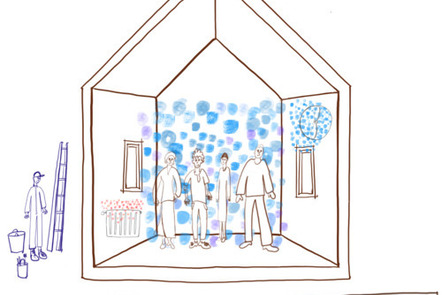
Learn what moisture balance means, where indoor moisture comes from, and use a moisture balance calculator to explore how design, use and defects affect conditions in homes.

The effect of moisture imbalance
Discover how excessive moisture damages building materials, reduces insulation performance and creates conditions for dust mites, wood rot and mould growth.

Mould and health
Examine how mould affects physical and mental health, from allergies and infections to stress and depression, and discuss your own experiences of mould and its impacts.

Summary
Review the key ideas from Week 1 on moisture balance, damage and health, and look ahead to how we will diagnose different types of damp and condensation in Week 2.

Glossary
Use this glossary to look up essential terms related to condensation, damp, and mould. Each definition provides a clear explanation and points you to where the concept is introduced in the course.
Week 2
Causes of condensation, damp, and mould (CDM)

Welcome to Week 2
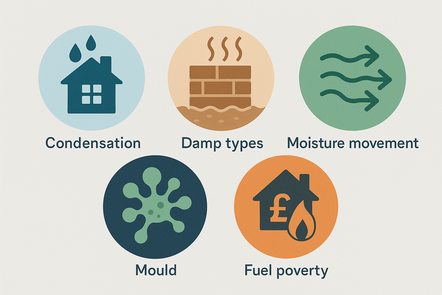
Get an overview of Week 2, exploring the causes of condensation, damp and mould, and how building conditions, ventilation, heating and fuel poverty shape moisture problems.

Understanding surface condensation
Learn how surface condensation forms when moist air meets cold surfaces, why buildings with cold spots are at risk, and how insulation, ventilation and humidity interact.

Indentifying damp in buildings
Explore how to recognise damp, understand its causes, and distinguish between condensation, penetrating damp and rising damp to support accurate diagnosis.
Mould in buildings
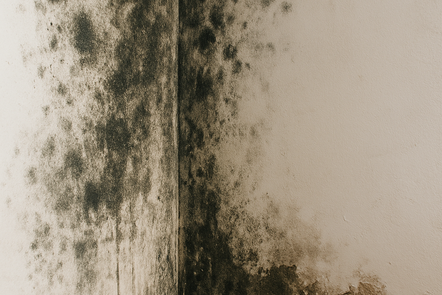
Understand how mould grows indoors, the environmental and biological factors that influence it, and why moisture control is essential for long-term prevention.

Water: the critical factor
Discover why moisture in materials, not just air humidity, controls mould risk, and how surface conditions, substrates and thermal bridges influence water activity.

How fuel poverty contributes to damp and mould
Examine how cold homes, poor insulation and high energy costs increase condensation and mould risk, and how fuel poverty links to health and housing inequality.

Tools for assessing fuel poverty
Explore how SAP ratings, EPC bands and tools like the Affordable Warmth Matrix help housing providers identify vulnerable homes and plan effective retrofit action.
Summary Week 2
Review the week’s key insights on condensation, moisture behaviour and fuel poverty, and reflect on how these concepts support diagnosing and preventing mould.
Week 3
Conquering condensation, damp, and mould: effective mitigation strategies

Welcome to Week 3
Get an overview of this week’s focus on practical responses to condensation, damp, and mould, from soft behaviour-focused measures to hard technical interventions and case studies.

Damp and mould: National context and regulation
Explore how damp and mould moved from “it’s lifestyle” to a legal and regulatory priority, and reflect on what a “zero-tolerance” approach means in real housing contexts.

Initial actions
Look at regulators’ findings, energy advice, and support for residents. Consider how early actions, good data, and tailored guidance can prevent CDM and build trust.

Design and fabric solutions
Examine how insulation, efficient heating and well-designed ventilation work together to control moisture, prevent condensation, and maintain healthy indoor environments.

Case study: Peabody’s Thamesmead CDM Strategy
Study Peabody’s evidence-led strategy at Thamesmead, from risk assessment to tiered interventions, and draw lessons for tackling CDM in complex, hard-to-treat estates.

Summary week and final discussion Week 3
Review the week’s key ideas and interventions, then discuss how you could apply a risk-led, ventilation-aware approach to CDM in the homes and communities you work with.
Who is this accredited by?
The CPD Certification Service was established in 1996 and is the leading independent CPD accreditation institution operating across industry sectors to complement the CPD policies of professional and academic bodies.
When would you like to start?
Start straight away and join a global classroom of learners. If the course hasn’t started yet you’ll see the future date listed below.
Available now
Learning on this course
On every step of the course you can meet other learners, share your ideas and join in with active discussions in the comments.
What will you achieve?
By the end of the course, you‘ll be able to...
- Explain the key concepts of condensation, damp, and mould (CDM) and recognise how building design, construction, and occupancy contribute to moisture problems in housing.
- Evaluate how moisture behaves within buildings, including how it moves, accumulates, and leads to different forms of damp, and identify the resulting impacts on building fabric and occupant health.
- Interpret indoor environmental conditions, including temperature, humidity, and ventilation, and use tools such as the psychrometric chart to assess condensation risk.
- Assess the effectiveness of interventions, including ventilation, insulation, heating, and retrofit measures, and understand how these influence moisture balance and mould prevention.
- Describe the wider social, regulatory, and behavioural context, including the role of laws, standards, energy advice, and resident engagement in managing CDM risks.
- Apply knowledge to real-world scenarios, using case studies and practical examples to identify appropriate solutions for preventing and managing damp and mould in homes.
Who is the course for?
This course is designed for both residents and professionals involved in housing and the built environment.
It is particularly relevant for officers working in UK local councils, housing associations, and HMOs, as well as private landlords and residents. The course will also be valuable for surveyors, consultants advising housing providers or government organisations, and building professionals such as architects and engineers.
Who will you learn with?

UCL academic focused on environmental monitoring and measurements. Researcher in indoor moisture conditions, including moisture production, buffering, and ventilation.

Technical Director of UKCMB and UCL academic specialising in building physics-moisture. Author of guidance on moisture in buildings and trainer in moisture risk, retrofit and hygrothermal simulations.

UCL Professor and Academic Director of UKCMB. Building scientist researching health impacts of buildings, indoor environments, mould, humidity, and building performance.

Retired energy and sustainability consultant specialising in buildings and housing, especially retrofit. Honorary Senior Research Fellow at UCl, working with the UK Centre for Moisture in Buildings.

I am an independent Building Performance Specialist with over three decades’ experience evaluating how buildings perform in practice in terms of energy use, indoor environment and comfort.
Who developed the course?

UCL (University College London)
UCL was founded in 1826. It was the first English university established after Oxford and Cambridge, and the first to open up university education to those previously excluded from it.
| Unlock nowUpgrade and unlock this entire course now | |||
Ways to learn | Subscribe & save | Buy this course | Start learning today |
|---|---|---|---|
| Choose the best way to learn for you! | $349.99 for one year Automatically renews | $54/one-off payment | Free |
| Develop skills to further your career | Fulfill your current learning need | Try this course - with limits | |
| Access to this course | tick | tick | Limited to 3 weeks |
| Access to 1,000+ courses | tick | cross | cross |
| Learn at your own pace | tick | tick | cross |
| Discuss your learning in comments | tick | tick | tick |
| Tests to check your learning | tick | tick | cross |
| Certificate when you're eligible | Digital only | Printed and digital | cross |
Cancel for free anytime |
Ways to learn
Choose the best way to learn for you!
Buy this course
$54/one-off payment
Fulfill your current learning need
- Access to this course
- Learn at your own pace
- Discuss your learning in comments
- Tests to boost your learning
- Printed and digital certificate when you’re eligible
Subscribe & save
$349.99 for one year
Automatically renews
Develop skills to further your career
- Access to this course
- Access to 1,000+ courses
- Learn at your own pace
- Discuss your learning in comments
- Tests to boost your learning
- Digital certificate when you're eligible
Cancel for free anytime
Start learning today
Free
Try this course - with limits
- Limited to 3 weeks
Find out more about certificates, Unlimited or buying a course (Upgrades) | |||
Find out more about certificates, Unlimited or buying a course (Upgrades)
Learning on FutureLearn
Your learning, your rules
- Courses are split into weeks, activities, and steps to help you keep track of your learning
- Learn through a mix of bite-sized videos, long- and short-form articles, audio, and practical activities
- Stay motivated by using the Progress page to keep track of your step completion and assessment scores
Join a global classroom
- Experience the power of social learning, and get inspired by an international network of learners
- Share ideas with your peers and course educators on every step of the course
- Join the conversation by reading, @ing, liking, bookmarking, and replying to comments from others
Map your progress
- As you work through the course, use notifications and the Progress page to guide your learning
- Whenever you’re ready, mark each step as complete, you’re in control
- Complete 90% of course steps and all of the assessments to earn your certificate
Want to know more about learning on FutureLearn? Using FutureLearn
Get a taste of this course
Find out what this course is like by previewing some of the course steps before you join:

Do you know someone who'd love this course? Tell them about it...
More courses you might like
Learners who joined this course have also enjoyed these courses.


Browse more in Science, Engineering & Maths
