Mini Medical School: Introduction to Medical Science
Discover the science underpinning modern medical practice today and how to maintain and promote good physical and mental health.

Duration
3 weeksWeekly study
2 hoursLanguages
English, Italiano, Español, Français, PortuguêsEnglish, Italiano, Español100% online
How it worksDigital upgrade
Free
Mini Medical School: Introduction to Medical Science

This course has been certified by the CPD Certification Service as conforming to continuing professional development principles. Find out more.
Master the basics of medicine with the University of Colorado School of Medicine
This three-week course offers you a fascinating and informative introduction to modern medicine.
Whether you’d like to better communicate with healthcare professionals, you’re considering a career in medicine, or you’re keen to separate medical fact from fiction in the COVID-19 era, this course will equip you with the up-to-date medical knowledge you need.
Access the latest medical science and wellness teaching
Understanding medicine and your own health is becoming a necessity in a time when anti-science disinformation is burgeoning.
On this course, you’ll study the broad spectrum of topics you’d encounter at medical school, including anatomy, physiology, body systems, cell biology, molecular biology, and genetics.
Learn key medical concepts and demystify medical jargon
You’ll be introduced to technical medical jargon and concepts explained in everyday language. Although you won’t know all of the associated medical jargon, you’ll understand the underlying medical concepts, and will build the confidence to ask your doctor to communicate with you in everyday language.
Learn about medicine to make more informed healthcare decisions
As medicine gets to be more expensive and technical, it’s likely you’ll need to be a healthcare advocate for yourself or those close to you.
This course will empower you with the medical information you need to make good decisions about your health and the health of those around you.
Study with Mini Medical School founder, Dr JJ Cohen
Lead educator and immunologist, Dr JJ Cohen, founded the Mini Medical School in 1989. You’ll learn from his unique approach and study a program attended by over 25,000 learners.
With a U.S. National Glaser Award for outstanding medical school teaching, Dr Cohen also holds honorary degrees from Sherbrooke and McGill University.
Syllabus
Week 1
Anatomy and Physiology


Welcome to Mini Medical School
Dr. John Cohen of the University of Colorado Medical School introduces his self-authored series called MiniMed School.

Cardiovascular Physiology 1
Cardiovascular Physiology 1: The heart is a pump. More exactly, it is 4 pumps in a row. It does an amazing amount of work-never resting.

Cardiovascular Physiology 2
Cardiovascular Physiology 2: Electrical activity, heart failure and good care of the heart.

Energy Metabolism
How is what you eat converted to energy to make your body run?

Respiratory Physiology 1
How do our lungs fill and empty? We will dive into the structure of our Respiratory System and how our food stays out of the lungs!

Respiratory Physiology 2
While the lungs are wonderful and do so may beneficial things for our bodies, they are also quite easily damaged. We will talk about several lung-related conditions and how they can be controlled or treated.

Renal Physiology 1
What do the kidneys do?

Renal Physiology 2
Let's look at the micro level of the kidney!

End of Week 1
For those of you taking the course at a deeper level, here are questions that cover the topics discussed throughout the first week. of MiniMed! Good luck!
Week 2
Body Systems

Digestive System
Your digestive system from start to finish

Musculoskeletal 1
Our scaffold and how we move.

Musculoskeletal 2
Looking at the cellular level of our bones and muscles.

Hematopoietic 1
Blood, the body's highway.

Hematopoietic 2
More about blood!

The Nervous System
An introduction to the structure and function of the control center of the body

The Senses
Traditionally, we think of the 5 senses. But, there are many more senses. For example, do you know what are you doing when you use your proprioception sense? Learn more in the video. Try out the pencil trick and comment below!

End of Week 2
Here are a few questions that cover the topics discussed throughout MiniMed Week 2. This test is designed to test those who are taking this course at a deeper level.
Week 3
Cellular & Molecular Biology & Genetics

Introduction to Cellular & Molecular Biology & Genetics
Overview of the content in your last week of MiniMed Course 1 covers Life and the Size of Things, Cell anatomy, Proteins, DNA-RNA-Protein, Metosis, Meiosis and Sex, and Heredity.

Life and the Size of Things
How large are the cells of our body? How different are they from each other?

The Anatomy of the Cell
What does the inside of a cell look like? How does it work?

Proteins
Proteins are created in cells.

DNA to RNA to Protein
How does the human body make the proteins we need?
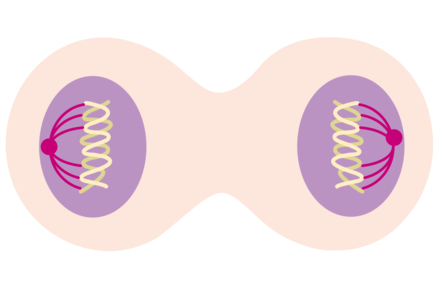
Mitosis
How cells divide

Meiosis & Sex
Genetics and why babies don't look exactly like a parent
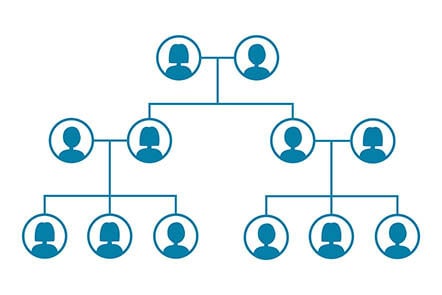
Heredity
Chromosomes and mitochondria
End of Week 3
Here are questions that cover the topics discussed throughout MiniMed Week 3. Are you now better prepared to meet with and talk to medical professionals? We hope so!
Who is this accredited by?
The CPD Certification Service was established in 1996 and is the leading independent CPD accreditation institution operating across industry sectors to complement the CPD policies of professional and academic bodies.
When would you like to start?
Start straight away and join a global classroom of learners. If the course hasn’t started yet you’ll see the future date listed below.
Available now
Learning on this course
On every step of the course you can meet other learners, share your ideas and join in with active discussions in the comments.
What will you achieve?
By the end of the course, you‘ll be able to...
- Explore how to talk productively with a health care provider by asking for conversations in everyday language.
- Discuss how to make well-informed decisions about illness, wellness, and life-style choices.
- Investigate reliable and up-to-date medical information to assist making better health decisions in the future.
- Identify different anatomical and physiological processes and associated diseases.
- Summarize the symptoms of diseases that impact the anatomical and physiological health of a patient.
- Reflect on the information gained in this course and how it will impact your interaction with medical professionals in the future.
Who is the course for?
This course is designed for anyone who’d like to know more about how their body works, and how to keep it working well.
This may include individuals with specific health concerns, anyone thinking about a career in healthcare and medicine, pre-med or pre-nursing students, those in nursing training programmes, home-schoolers, current or retired healthcare professionals looking to refresh their skills, and medical librarians.
Who will you learn with?
Who developed the course?

University of Colorado
The University of Colorado is a recognized leader in higher education on the national and global stage. We collaborate to meet the diverse needs of our students and communities. We promote innovation, encourage discovery and support the extension of knowledge in ways unique to the state of Colorado and beyond.
What's included?
University of Colorado are offering everyone who joins this course a free digital upgrade, so that you can experience the full benefits of studying online for free. This means that you get:
Learning on FutureLearn
Your learning, your rules
- Courses are split into weeks, activities, and steps to help you keep track of your learning
- Learn through a mix of bite-sized videos, long- and short-form articles, audio, and practical activities
- Stay motivated by using the Progress page to keep track of your step completion and assessment scores
Join a global classroom
- Experience the power of social learning, and get inspired by an international network of learners
- Share ideas with your peers and course educators on every step of the course
- Join the conversation by reading, @ing, liking, bookmarking, and replying to comments from others
Map your progress
- As you work through the course, use notifications and the Progress page to guide your learning
- Whenever you’re ready, mark each step as complete, you’re in control
- Complete 90% of course steps and all of the assessments to earn your certificate
Want to know more about learning on FutureLearn? Using FutureLearn
Learner reviews
Learner reviews cannot be loaded due to your cookie settings. Please and refresh the page to view this content.
Do you know someone who'd love this course? Tell them about it...
More courses you might like
Learners who joined this course have also enjoyed these courses.


Browse more in Healthcare & Medicine
