• The Open University

World War 1: Trauma, Memory, Controversy

Explore the traumatic effects of WW1 on soldiers and civilians. Discover how we remember and debate the history of this war.

29,627 enrolled on this course

  • Duration

    4 weeks
  • Weekly study

    3 hours
  • 100% online

    How it works
  • Digital upgrade

    Free

Why join the course?

More than a hundred years after it ended, the First World War has lost none of its fascination. It was a war of unprecedented scale and brutality, with countless casualties. It also left a poisonous legacy for the twentieth century and beyond. Many of the issues that were left unresolved in 1918 would lead to another world war in 1939.

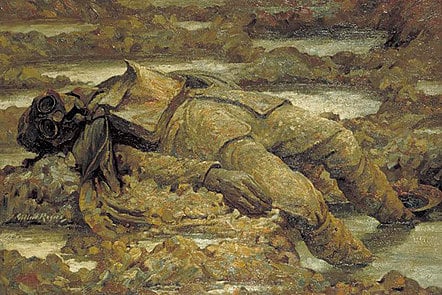
In this free online course, you will study the social, cultural, medical and diplomatic history of the First World War. Topics range from physical and mental trauma suffered by combatants to the traumatic experiences of civilians in wartime.

We will investigate the difficulties historians face in establishing accurate figures for war losses. We will explore expressions of grief and trauma through art and literature. We will ask why some nations remember the dead with poppies and why there are certain sites of remembrance that we still turn to today. And we will explore the contested origins of the First World War.

While studying this course, you will learn to conduct your own research into First World War casualty statistics and explore different sources to help you evaluate their usefulness and accuracy. And you will be able to discuss your thoughts with other learners on an online platform (if you choose to do so).

Welcome to our course.

Download video: standard or HD

Skip to 0 minutes and 2 seconds ANNIKA MOMBAUER: Welcome to World War 1– trauma, memory, controversy. I’m Annika and I’m your guide as we study the impact of the First World War. You will study and explore the trauma suffered by soldiers and civilians alike. This course will help you understand and contextualise the brutality of this war. And to empathise with those who suffered as a result of it. We will ask, what is remembered of this war? And explore its long-term consequences. How do the outcomes still affect us today? And why is there still a controversy about why it started? We begin our explorations by focusing on the physical and mental casualties of the war. Then we will explore how this war affected the lives of civilians.

Skip to 1 minute and 1 second After the war, people dealt with what had happened in different ways. We’ll study how writers and artists attempted to come to terms with the experience. And finally, we’ll explore the long controversy around the question, why did the war break out in the first place? Over the next four weeks, some renowned historians will share their research and analysis with you. And you’ll discover the devastating impact of the war on individuals and on whole societies. While this might seem like a sobering learning experience, it’s also a moving story that’s lost none of its fascination more than a century after it began.
Syllabus

  • Week 1

    Physical and mental casualties

    • Physical casualties

      Start to explore the nature of physical injuries and casualties in the First World War. Learn how to carry out historical research using a variety of sources.

    • Shell shock and mental trauma

      Discover the phenomenon of shell shock and how it was regarded during the First World War.

  • Week 2

    Civilian war experiences

    • Atrocities

      This week we will first look at the excesses of war committed by invading and occupying armies against civilians. We will also ask how governments used propaganda to provide a moral justification for the war effort.

    • Hunger

      In the second half of this week you will discover how blockades and poor harvests lead to starvation on home fronts. And why not try our delicious wartime recipe, baked cow udder?

  • Week 3

    Trauma, grief and bereavement

    • Grief in art and literature

      Learn about how grief was expressed by artists, authors and poets, both during and after the war.

    • From shell shock to PTSD

      Discover how attitudes towards shell shock have changed since the war, in light of the Second World War and wars in Korea, Vietnam, Afghanistan and Iraq.

  • Week 4

    The origins of the war

    • From crisis to wartime: what caused the outbreak of war in 1914?

      Find out about the diplomatic origins of the First World War.

    • The Armistice and Versailles: what happened after the First World War?

      Not everyone was happy when the war was over. This section looks at what happened when the guns fell silent, and when the victors met in Paris to decide the losers’ fates.

    • Responding to Versailles: what happened after the First World War?

      Germans felt unjustly punished for allegedly having started the war. They were united in their rejection of the Versailles Treaty and determined to revise it by all means necessary.

When would you like to start?

Start straight away and join a global classroom of learners. If the course hasn’t started yet you’ll see the future date listed below.

  • Available now

Learning on this course

On every step of the course you can meet other learners, share your ideas and join in with active discussions in the comments.

What will you achieve?

By the end of the course, you‘ll be able to...

  • Investigate casualty statistics and conduct your own research into war losses
  • Evaluate visual and poetic historical sources to understand how the First World War affected art and culture
  • Discuss your thoughts with other learners on our online platform
  • Explore various types of physical and mental trauma suffered by those who experienced the war
  • Assess the difficulties historians face in establishing accurate figures about war losses
  • Interpret historical propaganda and eyewitness accounts to understand the civilian experience of war
  • Reflect on the causes of the First World War

Who is the course for?

This course is suitable for anyone with an interest in finding out about the effects of the First World War (1914–1918) on societies. It is not necessary to have prior knowledge of the subject. Teachers might particularly benefit from studying this course.

Who will you learn with?

Lead Educator: World War One: Trauma, Memory, Controversy.
Professor in History at the Open University, UK.

Who developed the course?

The Open University

As the UK’s largest university, The Open University (OU) supports thousands of students to achieve their goals and ambitions via supported distance learning, helping to fit learning around professional and personal life commitments.

  • Established

    1969
  • Location

    Milton Keynes, UK
  • World ranking

    Top 510Source: Times Higher Education World University Rankings 2020

What's included?

The Open University are offering everyone who joins this course a free digital upgrade, so that you can experience the full benefits of studying online for free. This means that you get:

  • Unlimited access to this course
  • Includes any articles, videos, peer reviews and quizzes
  • Tests to validate your learning
  • A PDF Certificate of Achievement to prove your success when you’re eligible
  • Learning on FutureLearn

    Your learning, your rules

    • Courses are split into weeks, activities, and steps to help you keep track of your learning
    • Learn through a mix of bite-sized videos, long- and short-form articles, audio, and practical activities
    • Stay motivated by using the Progress page to keep track of your step completion and assessment scores

    Join a global classroom

    • Experience the power of social learning, and get inspired by an international network of learners
    • Share ideas with your peers and course educators on every step of the course
    • Join the conversation by reading, @ing, liking, bookmarking, and replying to comments from others

    Map your progress

    • As you work through the course, use notifications and the Progress page to guide your learning
    • Whenever you’re ready, mark each step as complete, you’re in control
    • Complete 90% of course steps and all of the assessments to earn your certificate

    Want to know more about learning on FutureLearn? Using FutureLearn

    Learner reviews

    Learner reviews cannot be loaded due to your cookie settings. Please and refresh the page to view this content.

    Do you know someone who'd love this course? Tell them about it...

    You can use the hashtag #FLTraumaMemory to talk about this course on social media.