
Intertwined men and animals
The pages of the Book of Kells are filled with the tangled, contorted bodies of literally thousands of men, lions, birds and snakes. Used to form the initial letters of words at the start of significant sections of texts, or to fill decorative frames, or the backgrounds of the most ornate pages, these intricate and imaginative drawings have captured the imaginations of viewers of the manuscript perhaps more than any other aspect of it.
But what do they mean?
Although described by some scholars as ‘drolleries’ or marginalia, these small drawings are used as a form of punctuation, drawing attention to particular passages in the text. In some cases they may have had a more direct link with the text. For example, on fol. 253v, the phrase that concludes the parable of Jesus Christ and the Steward (Luke 16:13).
No slave can serve two masters; for a slave will either hate the one and love the other, or be devoted to the one and despise the other. You cannot serve God and wealth.
You cannot serve both God and money
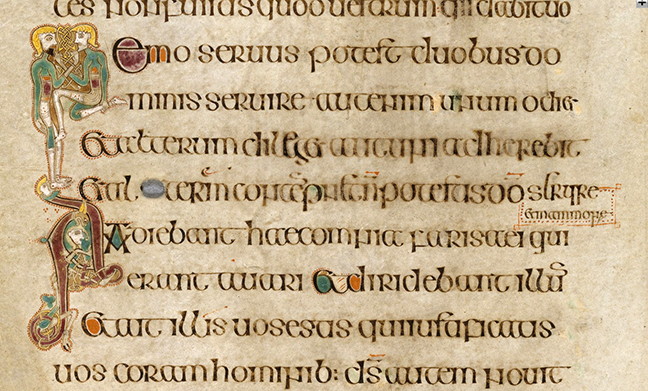 Fig 1. Detail from Folio 253v © The Board of Trinity College, University of Dublin.
[[34 Then Jesus said, “Father, forgive them; for they do not know what they are doing.”]][a] And they cast lots to divide his clothing. 35 And the people stood by, watching; but the leaders scoffed at him, saying, “He saved others; let him save himself if he is the Messiah[b] of God, his chosen one!” 36 The soldiers also mocked him, coming up and offering him sour wine, 37 and saying, “If you are the King of the Jews, save yourself!” 38 There was also an inscription over him,[c] “This is the King of the Jews.” 39 One of the criminals who were hanged there kept deriding [d] him and saying, “Are you not the Messiah? [e] Save yourself and us!”
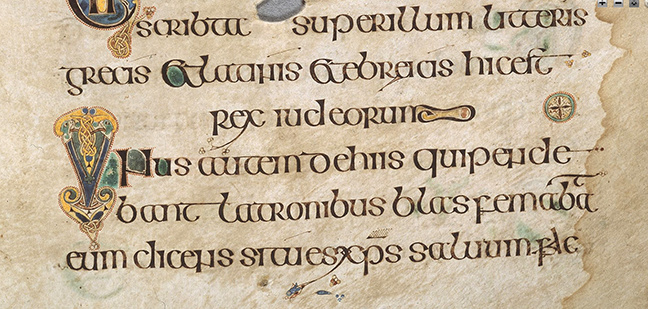 Fig 2. Detail from Folio 283r © The Board of Trinity College, University of Dublin.
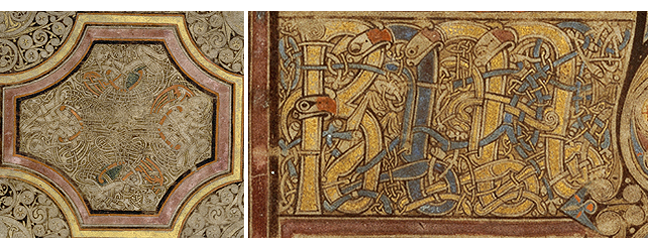 Fig 3. Entangled men making up part of the design on the cross page fol. 33r. © The Board of Trinity College, University of Dublin. Fig 4. Lions making up some of the letters of the opening of the Gospel of John fol. 292r. © The Board of Trinity College, University of Dublin.
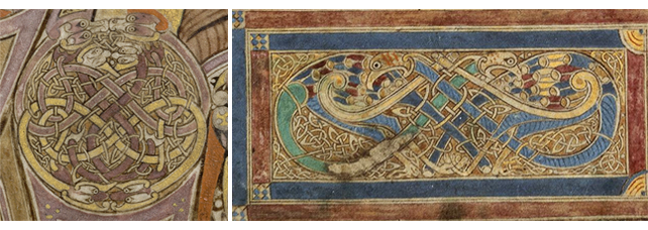 Fig 5. Snakes forming the top of the letter ‘I’ at the opening of the Gospel of Matthew fol. 29r. © The Board of Trinity College, University of Dublin. Fig 6. Peacocks forming a panel at the bottom of the genealogies in the Gospel of Luke fol. 202r. © The Board of Trinity College, University of Dublin.
‘ornaments shaped like worms, teeming on the borders of ecclesiastical vestments; they announce the Antichrist and are introduced by his guile and through his ministers in the monasteries to induce lechery, deprivation, shameful deeds, and disgust for study and prayer’.
In the comments section below:
- Find another example of these intertwined men and/or animals in the Book of Kells.
- What do you think it might mean?
The Book of Kells: Exploring an Irish Medieval Masterpiece


The Book of Kells: Exploring an Irish Medieval Masterpiece





