From evidence to action: building better programmes for children associated with armed forces and armed groups
Learn how to design, implement, review, and support programming for children associated with armed forces and armed groups with the Alliance for Child Protection in Humanitarian Action and the CAAFAG Task Force.
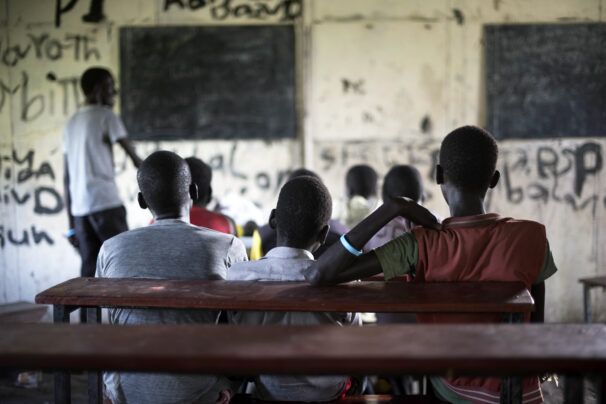
Credit: Plan International South Sudan
Children associated with armed forces and armed groups (CAAFAG) face complex and diverse challenges. Their pathways into association, experiences during conflict, and needs for recovery vary significantly across contexts. This means that effective programming cannot rely on assumptions or one-size-fits-all approaches. It must be grounded in evidence, informed by children’s perspectives, and adapted to local reality.
To support practitioners working in these challenging contexts, the Alliance for Child Protection in Humanitarian Action and the CAAFAG Task Force have developed a six-week online course on programme design for CAAFAG. The course is translated in French, Spanish, Portuguese, and Italian and guides learners through the entire project cycle, from understanding CAAFAG and conducting context analyses to designing prevention, release, and reintegration programmes, monitoring results, and evaluating impact.
The importance of starting with evidence
Quality programme design begins with a thorough context analysis. Before deciding what interventions to implement, practitioners need to understand what is happening, why it’s happening, who is affected, and what existing strengths and resources already exist within communities.
A robust context analysis explores questions such as:
- What factors place girls and boys at risk of recruitment?
- How are children released and identified?
- What challenges do children face when returning to their communities?
- How do gender norms, safety concerns, and access to resources influence children’s experiences?
Turning information into meaningful action
Collecting information is only the beginning. The next challenge is transforming evidence into a programme that can create meaningful change.
The CAAFAG Programme Development Toolkit proposes a structured design process that helps practitioners move from analysis to action. Using the data collected during the context analysis, practitioners can identify priorities, develop objectives and outcomes, and design interventions that address the specific needs of children and their families.



Prevention begins long before recruitment
One of the most important messages emerging from current evidence is that preventing recruitment requires action across multiple levels.
Effective prevention programmes address identified risk factors while strengthening protective factors. They support communities to protect children, strengthen family and community capacities, and involve multiple sectors such as education, health, livelihoods, social protection, and child protection.
Designing safe pathways out of armed groups
Programme design is equally important when facilitating release and identification.
Children leave armed groups through many different pathways. Some are formally released through negotiated processes, while others escape, are abandoned, or return through informal routes. Understanding these different pathways is essential for designing responses that are safe, rights-based, and accessible to all children, including girls who often remain invisible in release processes.
Designing for long-term reintegration and impact
Perhaps one of the greatest challenges in CAAFAG programming is supporting children after they leave armed forces or armed groups.
Reintegration is not an event. It is a long-term process through which children transition from military life into meaningful civilian roles and identities. For many children, this journey involves rebuilding family relationships, returning to education, strengthening livelihoods, addressing health and psychosocial needs, and finding acceptance within their communities.
The course introduces practitioners to evidence-based approaches to reintegration, including case management, community-based reintegration, non-targeted programming, and multi-sectoral collaboration. Learners explore how communities, schools, health services, livelihoods actors, child protection practitioners and governments all have a role to play in creating an environment where children can successfully rebuild their lives.
Measuring what really matters
Designing a programme is only the beginning. An equally important question is whether a programme is achieving meaningful change for children.
Too often, programmes measure activities rather than outcomes. Knowing how many children attended a training session or received support is important, but it does not tell us whether children are safer, better integrated, or less vulnerable to re-recruitment.
The course introduces learners to monitoring frameworks that distinguish between programme outputs and outcomes. Participants learn how to develop indicators that measure real changes in children’s lives and how to build performance measurement frameworks that support adaptive programming.
Protecting children throughout implementation
Quality programme design must always be accompanied by quality implementation.
Working with children associated with armed forces and armed groups involves handling highly sensitive information and supporting children who may have experienced significant violence, trauma, stigma, or exclusion.
The course dedicates significant attention to child safeguarding, referral pathways, protection from sexual exploitation and abuse, confidential data management, and feedback mechanisms that enable children and communities to safely raise concerns. Practitioners learn how to ensure that programmes do no harm and how to create safe environments where children’s voices can be heard.
Investing in the people who deliver programmes
Even the strongest programme design will struggle to succeed without skilled and well-supported staff.
CAAFAG programming requires specialised competencies in child protection, community engagement, case management, safeguarding, monitoring, and coordination. It also often takes place in highly stressful and insecure environments.
For this reason, the course highlights the critical role of human resources in programme quality. Learners explore issues such as recruitment, supervision, mentoring, staff development, competency frameworks, and staff wellbeing. They also examine practical approaches to preventing burnout and supporting teams who work with children affected by conflict and violence.
Learning from experience to strengthen the evidence base
Although considerable progress has been made in supporting children affected by armed conflict, important evidence gaps remain.
Questions such as which approaches are most effective in preventing recruitment, what contributes to sustainable reintegration, or how communities best support children after release continue to require further research and learning.
Investing in better outcomes for children
Children associated with armed forces and armed groups deserve programmes that are informed by evidence, grounded in their lived realities, and designed to respond to the complexities of conflict, protection, and recovery.
The Programme Design for CAAFAG online course takes practitioners beyond theory. It provides a comprehensive pathway through the entire programme cycle, from understanding recruitment dynamics and conducting context analyses to designing interventions, monitoring outcomes, safeguarding participants, managing staff, and evaluating impact.
In a field where children’s lives and futures are at stake, stronger programme design is not simply a technical skill. It is a vital investment in ensuring that boys and girls affected by armed conflict can access protection, rebuild their lives, and realise their full potential.
The Alliance for Child Protection in Humanitarian Action is a global, interagency group who set standards and provide technical support to ensure that efforts to protect children from violence and exploitation are of high quality and effective.