Home / Healthcare & Medicine / Dentistry / Assessing and Managing Developing Dentition / Managing an increased overjet with a removable appliance

Managing an increased overjet with a removable appliance
What sort of removable appliance can we use to manage an increased overjet
Simple Removable Orthodontic Appliance for Retracting Teeth with Large Overjets
Introduction
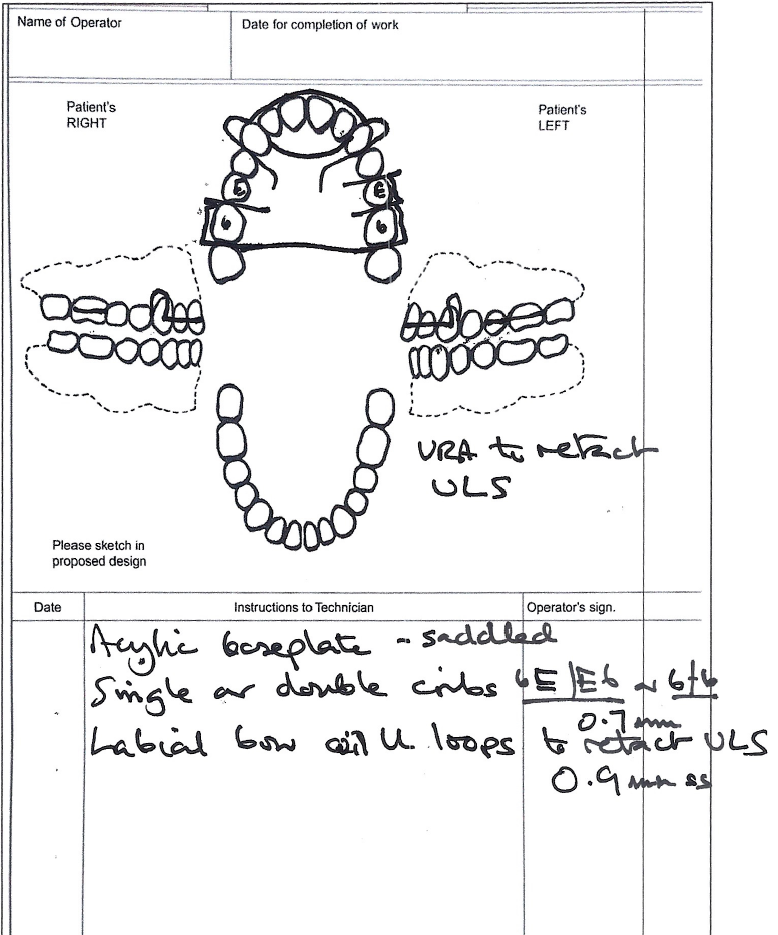
One effective and simple removable orthodontic appliance for retracting teeth with a large overjet is the Hawley retainer. Click on the link to see an example of the instructions to the laboratory Hawley Retainer. This appliance is widely used in orthodontics for various purposes, including the correction of overjets.
Design and Components
The Hawley Retainer consists of:
- Acrylic Base: Custom-fitted to the roof of the mouth (palate) or the inside of the lower teeth.
- Cribs / Adam’s Clasps: Single (around the upper first permanent molars) or double (around the upper first permanent molars and second primary molars) to help retain the appliance. Usually 0.7mm wire diameter.
- Labial bow: A metal wire that runs across the front teeth, helping to guide them into the correct position. It can also contain coiled ‘U’ loops to retract the upper labial segment. Usually 0.9mm wire diameter.
Mechanism of Action
The Hawley Retainer works by:
- Applying Gentle Pressure: The metal wire applies gentle pressure to the teeth, gradually moving them back into alignment.
- Maintaining Space: The acrylic base helps maintain the space created by the movement of the teeth.
Usage
Patients typically wear the Hawley Retainer for most of the day, including during sleep. They can take it out during eating, toothbrushing, contact sports and swimming. Regular follow-ups with the orthodontist are necessary to adjust the appliance and monitor progress.
Benefits
- Removable: Easy to take out for cleaning and eating.
- Effective: Provides effective retraction of teeth with a large overjet.
- Comfortable
This article is from the online course:
Assessing and Managing Developing Dentition
Created by

This article is from the free online
Assessing and Managing Developing Dentition