
Two Italian Case Studies: Monitoring Coastal Waters for Climate Adaptation
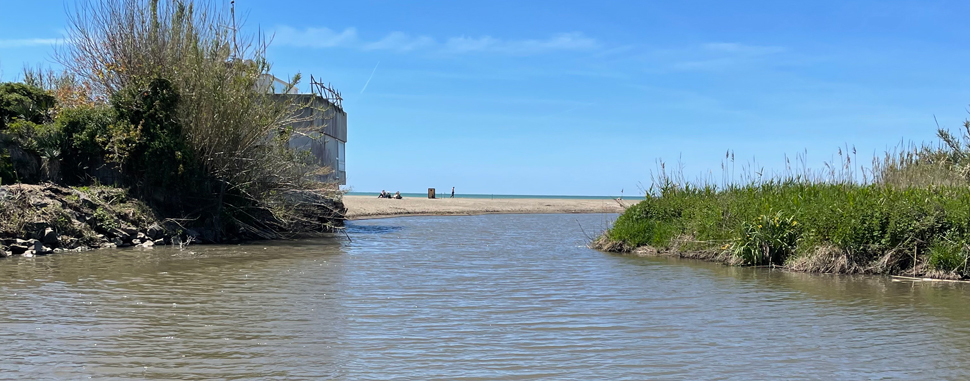
Healthy coastal waters are essential for people, wildlife and local communities. But as climate change alters rainfall patterns, water temperatures and pollution pathways, understanding how pathogens move through rivers and coastal environments is becoming increasingly important.
In BlueAdapt, researchers from the Istituto Superiore di Sanità (ISS) in Italy are investigating these challenges through two complementary case studies. Together, they demonstrate how environmental monitoring can support climate adaptation and protect public health.
Following pathogens from river to sea
The first case study takes place along the Arrone River in central Italy, which flows from Lake Bracciano to the Tyrrhenian Sea. The river is influenced by agricultural activities and wastewater treatment plants, making it an ideal location to study waterborne pathogens.
Researchers are evaluating different water sampling methods, including innovative artificial plastic substrate samplers that can improve the detection of microorganisms where traditional sampling methods may be less effective. By monitoring the river from its source to the sea, the team aims to better understand the presence of pathogens and antimicrobial-resistant strains.
Reliable sampling is a critical first step in assessing risks to both human and animal health, particularly as climate change and water scarcity may increase pathogen concentrations.
Learn more: Sampling methods along the Arrone River .
Understanding antimicrobial resistance in coastal waters
The second case study focuses on Lake Paola (Lake Sabaudia), a coastal brackish lake in the Lazio region. Here, researchers are investigating how environmental conditions and climate change may influence the spread of waterborne pathogens and antimicrobial resistance (AMR). The project examines the antibiotic-resistant profiles of pathogens and develops tools to better understand how people may be exposed through different environmental pathways.
This work contributes to a growing body of evidence on how warming waters and pollution can influence the spread of pathogens, helping policymakers and public health authorities prepare for future risks.
Learn more: The Spread of Antimicrobial-Resistant Pathogens .
Why these studies matter
Although these case studies investigate different environments, they share a common goal: improving our understanding of how climate change affects water quality and public health.
By strengthening environmental monitoring and developing better methods to identify and track pathogens, BlueAdapt is helping build the scientific evidence needed to support climate adaptation, reduce health risks and inform future decision-making across Europe’s coastal regions.
Climate Change, Coastal Waters and Health: Risks and Solutions

Climate Change, Coastal Waters and Health: Risks and Solutions





