
Drivers, changes and impacts

Why does this matter? Is 1°C or 2°C or even 5°C really such a big deal? Let’s find out! What does a rising temperature mean for our planet?
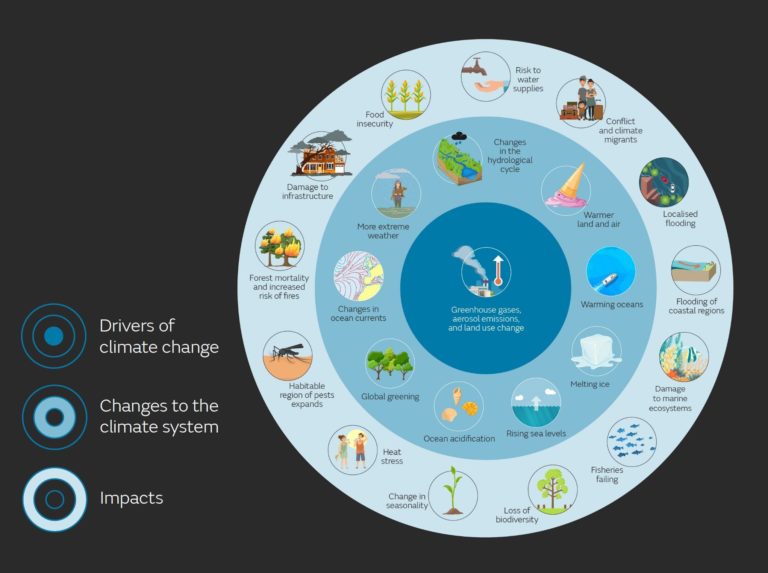
Review the diagram below. The centre shows what is driving climate change, the inner ring shows examples of changes that are happening to the climate system, and the outer ring shows examples of the impacts that those changes are causing. You can read more about the drivers, changes and impacts below.
 Contains public sector information licensed under the Open Government Licence v3.0. (Click to expand)
Drivers of climate change
Human activity, such as the burning of fossil fuels and deforestation, lead to an increase in greenhouse gases in the atmosphere. Remember the Tetris cubes that were piling up? This leads to a rise in global temperatures. The higher the global temperatures, the more changes are triggered in the global climate system.
Changes to the climate system
These changes include: the melting of sea ice, ocean acidification, increase in sea levels, changes in ocean circulation, as well as more frequent and more intense extreme weather events. These changes to the climate will have wide-spread impacts on natural and socio-economic systems.
Impacts
Changes such as rising sea levels can lead to flooding of coastal regions, damage to infrastructure (like bridges, roads and power grids), climate migrants, and a risk to drinking water supply. Higher temperatures on land can lead to: the introduction of new pests that can affect human and crop health, increased heat stress, and food insecurity from crop failures.





