
A short history towards today’s physical activity recommendations
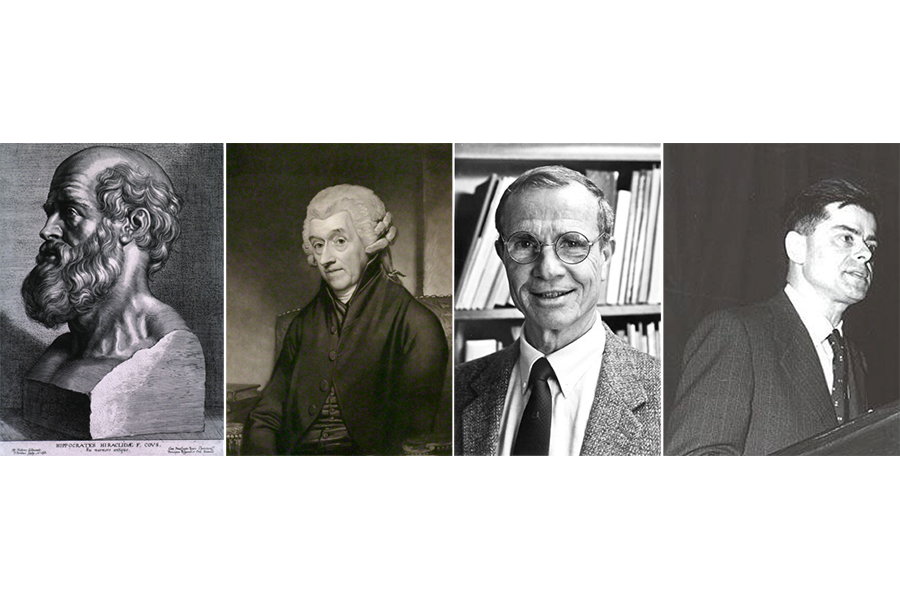
Hippocrates, known as the “Father of Western Medicine”, has been credited with the theory that diseases are caused naturally, and not by gods. For a man born in approximately 460 BC, this theory was not an obvious one. Fittingly, he is also credited with the quote “Walking is a man’s best medicine”.
We now know the importance of walking or other forms of exercise for the prevention and treatment of disease. However, it took centuries for this information to be proven and become an integral part of patient health.
The early years
In approximately 1772, Dr William Heberden (an English physician lauded for his detailed observations and descriptions of angina pectoris) noted a case of a patent whose angina improved by chopping wood half an hour per day. Despite this early evidence, total bed rest and mobility restrictions remained the order of the day for patients with acute coronary events. Bed rest and lack of mobility undoubtedly increased morbidity and mortality, however when James Bryan Herrick described the symptoms of myocardial infarction in 1912, patients became even more likely to be prescribed a sedentary lifestyle after a cardiac event as there was a fear that exertion would lead to an myocardial infarction.
In the 1930s, six weeks of bed rest was prescribed to patients with acute coronary events. In the 1940s patients were permitted to sit out on a chair, and with time, short walks of up to five minutes were permitted four weeks after a coronary event.
Little by little it was recognised that mobilisation helped prevent the complications of bed rest while not increasing the risk of coronary events.
Formal evidence
- He compared two groups of workers, the bus conductors who were active all day walking up and down the buses collecting tickets from the passengers, and the bus drivers who spent long hours being inactive while driving.
- Morris found that the active bus conductors had significantly lower rates of CHD than the less active drivers. Although these findings may seem quite straightforward now, they were quite revolutionary at the time.
- In 1962 he founded the landmark College Alumni Health Study, which used periodic questionnaires to chronicle over several decades the physical-activity levels, illnesses and deaths and personal characteristics of more than 50,000 people who had graduated from either Harvard University or the University of Pennsylvania.
1970s: The first guidelines
- This position provided the specific parameters of frequency, intensity and duration of exercise required by adults to acquire or maintain cardiovascular fitness and body composition.
- The general belief at the time was that exercise for fitness needed to be of vigorous intensity and performed in bouts of at least 20 minutes duration, and that exercise that did not meet these criteria would be of limited or no value.
1990s: Shift to improving health related outcomes
-
In light of the mounting evidence that a sedentary lifestyle significantly increased the risk of Coronary Heart Disease (CHD) mortality and morbidity, the American Heart Association (AHA) made a sedentary lifestyle its 4th major CHD risk factor, joining cigarette smoking, hypertension and hypercholesterolemia in 1992.
-
The following year the Centers for Disease Control and Prevention (CDC), in collaboration with the ACSM, began work which would provide the specific recommendations about the parameters of physical activity that should be performed to promote good health. It took two years of work before the release in 1995 of the CDC and ACSM joint report entitled ‘Physical Activity and Public Health’ with the recommendation that ‘every adult should accumulate 30 minutes or more of moderate intensity physical activity on most, preferably all days of the week’.
Since 1995, the common recommendation has been that adults obtain at least 30 minutes of moderate-intensity physical activity on 5 or more days a week, for a total of at least 150 minutes a week.
Exercise Prescription for the Prevention and Treatment of Disease


Exercise Prescription for the Prevention and Treatment of Disease





