In the Human Bone Lab
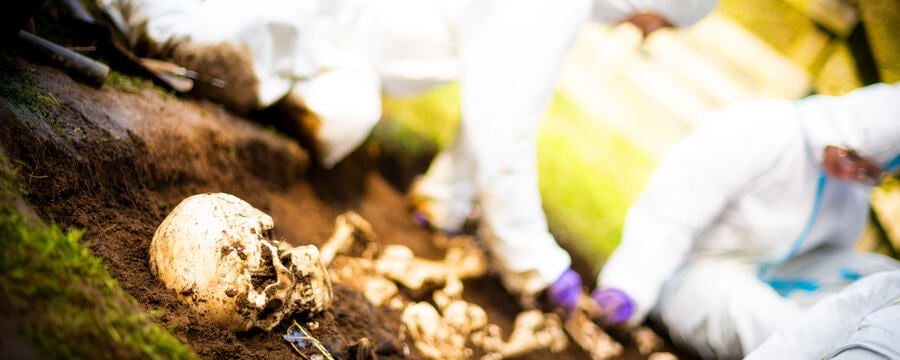
Now that we have located, recorded and recovered a body, we need to do a more in-depth analysis of the skeletal remains to establish identity and potential cause of death. This is usually best done in a laboratory setting, where there is access to good lighting and reference materials. In this video, I will introduce you to the different methods that we use to create an osteological profile from either forensic or archaeological skeletal remains.
Throughout this week, we’ll be looking at how to determine sex from skeletal remains, how to estimate age-at-death from infant and juvenile remains as well as adult skeletal remains and how to estimate stature. All of these traits can provide information crucial to providing an accurate identification.
Although we will generate this osteoprofile in a lab, away from the burial context, the accuracy and reliability of the osteoprofile profile always depend on the burial context, as well as the preservation and completeness of the skeletal remains. For example, in mass graves, you might get a number of individuals buried within a grave and during decomposition, the skeletons may become commingled and this can complicate analysis.