What are international education initiatives?
Here, we will look at the range of contemporary international educational initiatives that seek to engage teachers and learners. In particular, the Sustainable Development Goals (SDGs) provide an important set of global targets for the international community to achieve by 2030.
These include 17 wide-reaching goals relating to education, hunger, poverty, inequality, gender, sustainability and peace.
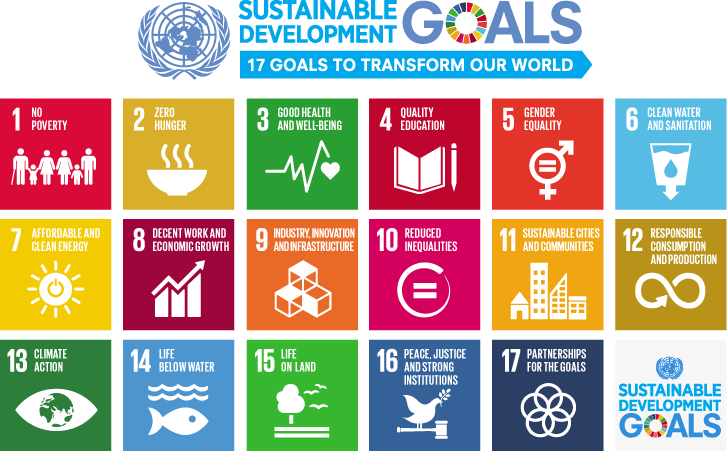
Of particular interest is Goal 4.7 which states:
By 2030, ensure that all learners acquire the knowledge and skills needed to promote sustainable development, including, among others, through education for sustainable development and sustainable lifestyles, human rights, gender equality, promotion of a culture of peace and non-violence, global citizenship and appreciation of cultural diversity and of culture’s contribution to sustainable development.
For the first time, this means that global education and global citizenship education are formally embedded within global targets and, as such, should also be embedded within national and local educational aims and practices.
While many educators would agree that integrating global education and learning is a laudable goal, research suggests that global education is often not addressed within initial teacher education and teachers’ continuing professional development (see Bourn, Hunt and Bamber 2017). As a result, teachers often either unaware of global education or feel insufficiently prepared to include it in their practice. A number of international organisations, and particularly UNESCO, have created guides and resources to support educators with these concerns. You might like to look at some examples of these. In this next step of the MOOC we will consider how these might be useful to your practice:
UNESCO Global citizenship education: topics and learning objectives
UNESCO Preparing teachers for global citizenship education: a template
UNESCO Schools in action, global citizens for sustainable development: a guide for teachers
UNESCO Education for the Sustainable Development Goals
Oxfam (2015) Global Citizenship in the Classroom: A guide for teachers. Oxford: Oxfam GB.
Further Reading: