
Useful Evidence – Maya and Daniel
In previous steps, we explored how reflection can help learners recognise and articulate capability. In this activity, we take that a step further.
The goal is not simply visibility. It is usability.
The way learning is described influences whether it can be understood, recognised, and used in other contexts. A good reflection does more than describe an activity. It provides evidence of capability.
Marcus is a career and employability advisor. He regularly works with learners preparing for placements, building portfolios, applying for opportunities, and transitioning into professional roles.
Today, he is reviewing reflections from Maya and Daniel.
Both reflections were developed using prompts provided by their educators to help learners think about decisions, challenges, actions, and learning rather than simply describing a completed task.
Maya
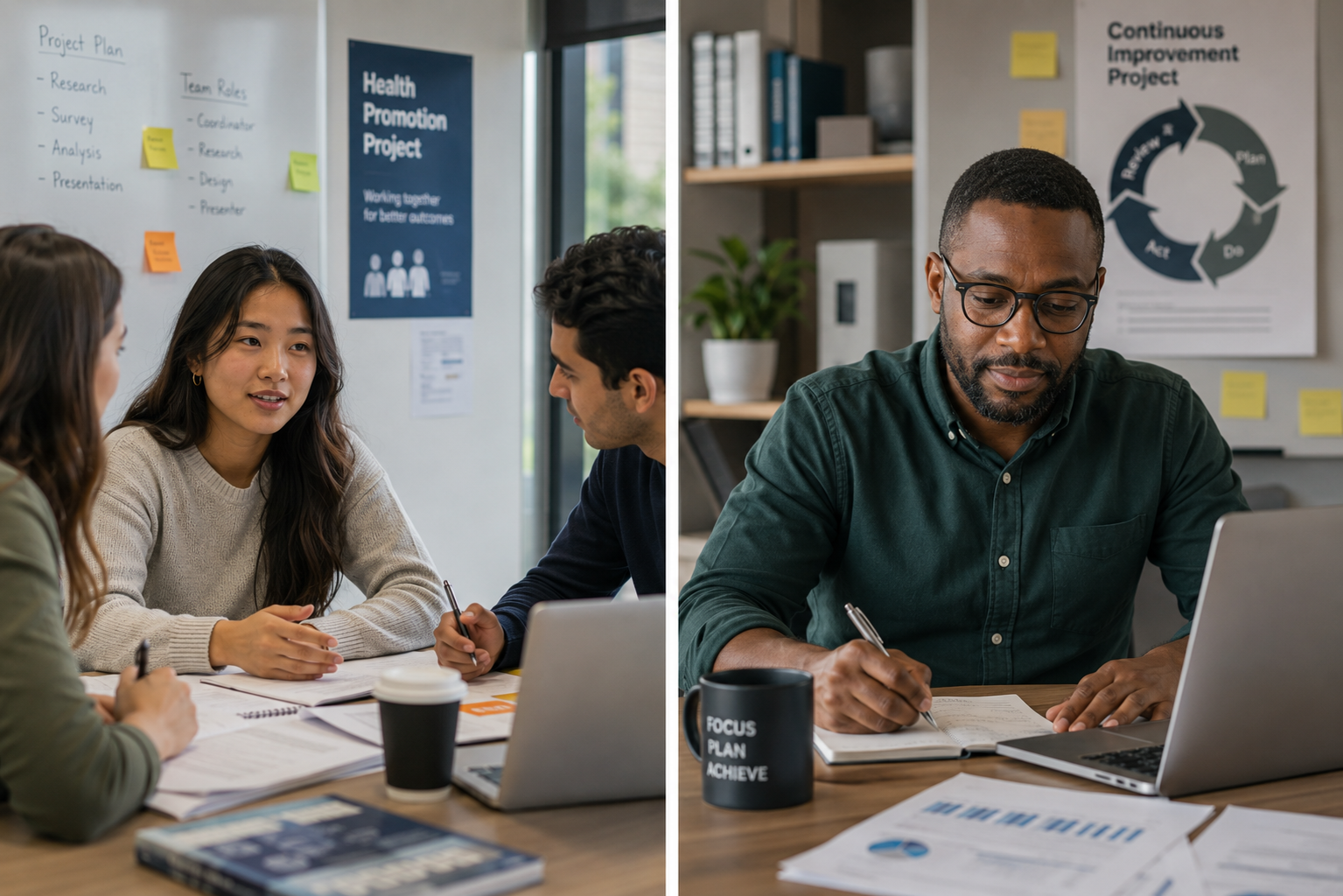
Maya is applying for a community health placement.
As part of the application process, she has been asked to provide examples of skills and experiences that demonstrate her readiness for professional practice.
One of the reflections she shares relates to a group health promotion project.
During our health promotion project, I coordinated feedback from team members and helped organise the final recommendations. When different opinions emerged, I facilitated discussion and helped the group reach agreement on a shared approach. Through the project, I developed confidence communicating ideas, incorporating feedback, and presenting recommendations to others.
- communication
- collaboration
- leadership
- adaptability
Daniel
I analysed operational data and gathered feedback from staff to identify the causes of delays in stock movement. When the first process change did not achieve the expected results, I reviewed the evidence, adjusted the approach, and tested an alternative solution. Through this project, I strengthened my ability to use data to inform decisions, evaluate workplace processes, and communicate recommendations to stakeholders.
Again, Marcus sees more than a completed project.
The reflection provides evidence of:
- problem solving
- data-informed decision making
- professional judgement
- communication
It helps him understand not only what Daniel worked on, but how he approached the challenge and what capability he demonstrated in the process.
What Marcus Sees
As Marcus reviews these reflections, he notices a common pattern.
Neither Maya nor Daniel simply describe what they completed.
Instead, they describe:
- the decisions they made
- the actions they took
- how they responded to challenges
- what they learned
- what they can now do
This is what makes the reflections useful.
They provide evidence that can support placement applications, portfolios, professional conversations, and future opportunities.
From Reflection to Recognition
When learners can explain how they approached a task, adapted their thinking, worked with others, or applied their knowledge, they make capability visible in ways that others can understand and recognise.
The reflection becomes more than a record of learning, it becomes evidence of capability.
Personal Reflection
Thinking about your own context, where do learners need to provide evidence of what they can do?
You might consider:
- placement applications
- professional portfolios
- reflective assessments
- capstone projects
- graduate employment applications
- performance and development conversations
- recognition of prior learning processes
How might reflection help learners build evidence that is useful beyond the assessment itself?
Lifelong Learning: Developing Transferable Skills in Higher Education
Lifelong Learning: Developing Transferable Skills in Higher Education





