
How Can You Improve Your Network Picture?
Network pictures are personal, dynamic, and incomplete. Therefore, there is no such thing as a ‘correct’ network picture. You can make your network picture more insightful by considering five dimensions: positioning, boundaries, activities-resources-actors, directionality, and strength. In this way, your network picture becomes a more valuable tool in your decision-making process (Henneberg, Mouzas & Naudé, 2006).
Positioning 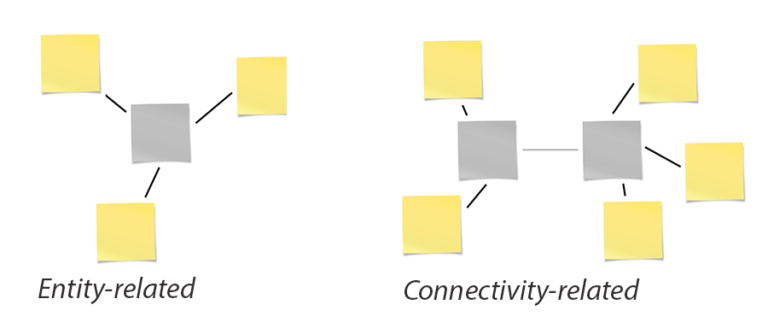 Positioning refers to the perspective you will be using to create your network picture. You can (a) focus on your startup and its business relationships (entity-related perspective) or (b) focus on a focal relationship and its connections (connectivity-related perspective). The decision to use a certain perspective depends on your reason to make a network picture, e.g. do you want to better understand your partners’ value to your startup? Or do you aim to find new potential partners?
Boundaries 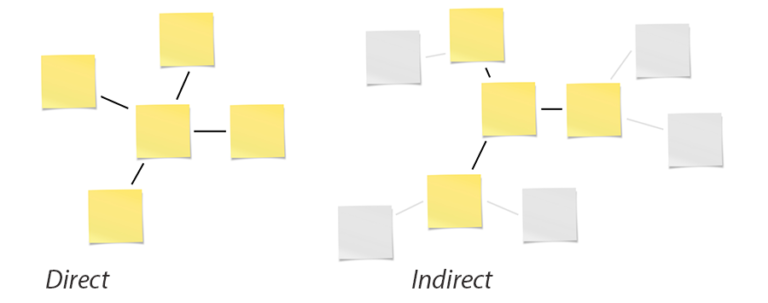 Boundaries involve where you decide to ‘cut-off’ your network picture. You can include only the people, businesses, and organizations with which you directly collaborate, but you can also include your partners’ relevant business relationships. The decision between including direct or indirect relationships depends on the purpose of your network picture, e.g. do you aim to further develop your product or service? Or do you seek new business opportunities?
Activities-Resources-Actors  Your initial network picture probably includes actors, i.e. the people, businesses, and organizations you collaborate with. To make a network picture more meaningful, you can additionally integrate the resources and activities that are exchanged in your business relationships: Resources include the human, intellectual, financial, and physical things that you transfer; and activities are the tasks, projects, or work that you perform together.
Directionality 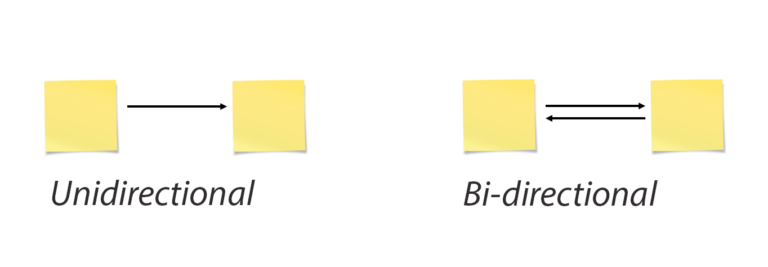 Directionality refers to the flow of resources and activities in your business relationships. This can be only one-way – from your startup to a partner or the other way around (unidirectional) – or two-way – from your startup to your partner and back (bidirectional). The inclusion of directionality makes your network picture more valuable because it provides insight into the interdependence among actors and therefore a relationship’s durability.
Strength 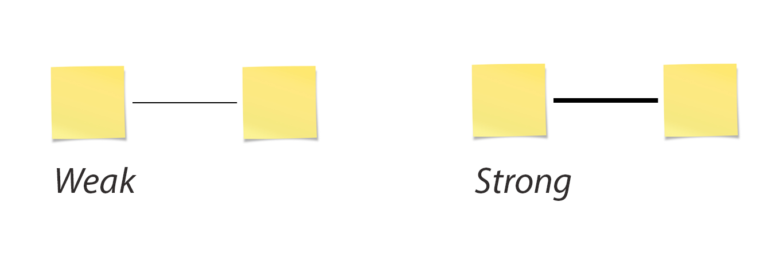 Relationship strength is determined based on communication frequency and time horizon. A relationship is considered weak if it is focused on a short-term one-off resource or activity exchange through occasional communication; and strong if it represents an ongoing longer-term resources or activity exchange based on regular communication. The inclusion of relationship strength will support you in deciding whether you invest the right amount of effort in a certain relationship.
Reference
Henneberg, S. C., Mouzas, S., & Naudé, P. (2006). Network pictures: concepts and representations. European Journal of Marketing, 40(3/4), 408-429.
Technology Entrepreneurship: How to Start a New Venture


Technology Entrepreneurship: How to Start a New Venture





