
The mind-body problem
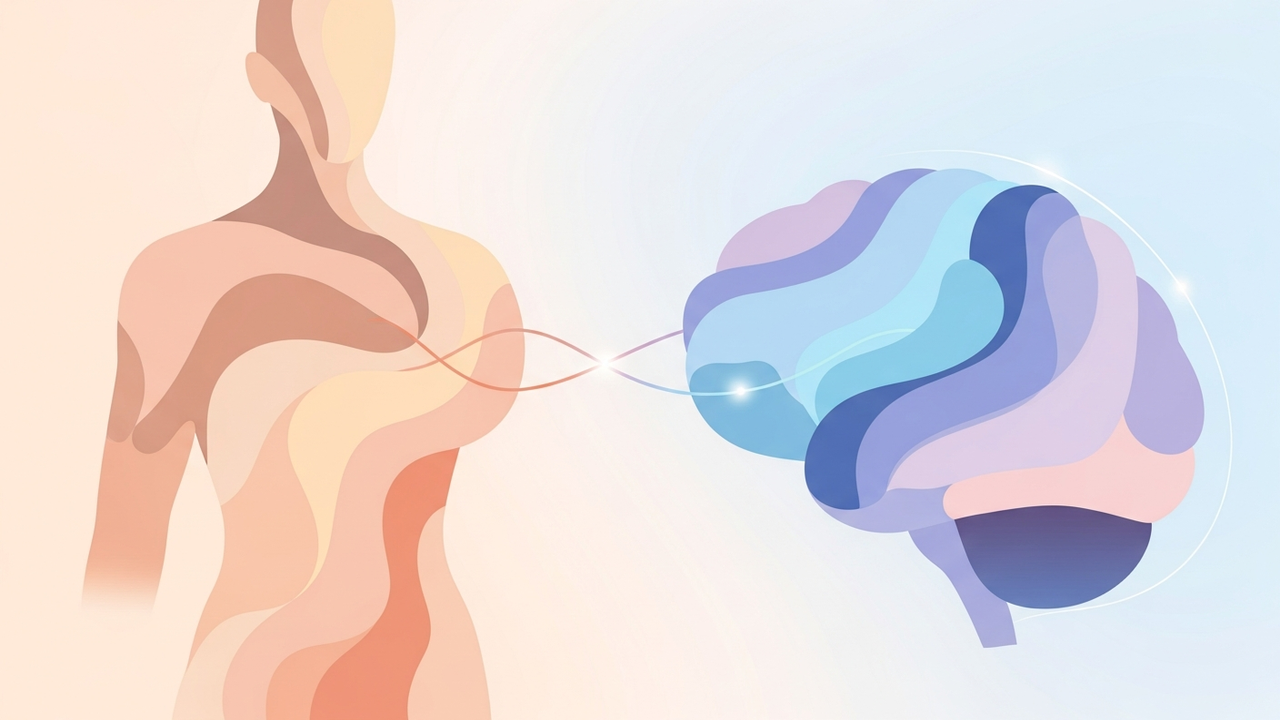
In the late 19th century, psychology grew out of two traditions: philosophers had long been interested in the mind, whereas a new breed of experimental scientists began to measure mental performance in laboratory settings.
To this day, the work of psychologists using experimental methods continues to inform understandings of age-old philosophical debates. In this article, we will explore one of these debates: the ‘mind-body’ problem.
Dualism
In the 17th century, French philosopher, mathematician and scientist René Descartes famously proposed that the mind and body were two fundamentally different substances.
The body, which includes the brain of course, occupied a specific area in space, and had properties such as height, length, weight etc. By contrast, the mind – our thought and conscious experience – had no such physical dimensions.
Separating the mind and body in this way was known as Dualism. It aligned well with the dominant religious views at the time.
Monism and neuroscience
Dualism leads to some curious problems. Most fundamentally, how do our mental and physical states interact?
For example, if you have a thought, then how does this change the activity of your physical brain, and vice versa? Today, most neuroscientists accept a form of ‘monism’ (or ‘oneness’) which proposes that the activity of the mind and brain are linked.
Neuroscience has given us techniques that allow us to study these phenomena. For example, as early as the 1950s, American Canadian neurosurgeon Wilder Penfield conducted experiments in which he was able to show that touching an exposed part of the outer surface of the brain with an electrode was able to stimulate a very exact and vivid memory in the conscious experience of a participant – for example, meeting a friend for the first time. To us, this sounds unexceptional, but at the time it was a revelation in terms of understanding how the mind and body worked in unison.
Consciousness and AI
Despite the logic of monism, the way our experience of consciousness operates is still somewhat mysterious to the scientific and philosophical community. For a start, why do we need to experience consciousness at all? This is known as the ‘hard problem’ of consciousness, the easy problem being to explain how consciousness ‘works’ in terms of brain processes.
The development of artificial intelligence has heightened this interest in consciousness. As we begin to build machines out of computer hardware that function as minds, it is intuitive to speculate whether they might be capable of conscious experience. If they are not, then why do humans experience consciousness?
A famous ‘thought experiment’ proposed by the British philosopher Derek Parfitt asks this: if somebody was able to operate on your brain and replace your neurons, one at a time, with a synthetic substance then at what point would you lose the capacity to be conscious? If you did not, then it must follow that it is possible to ‘make’ a conscious machine.
The mind-body problem in mental health
One area of everyday experience which reminds us of the mind-body problem is that of mental disorders. American psychiatrist Stephen Hyman has written about a tendency people have to ‘reify’ or ‘make real’ the labels that we use to describe mental conditions such as ‘anxiety’ or ‘obsessive compulsive disorder’.
Rather than arguing that the distress people feel is not genuine, he is reminding us that the clusters of symptoms that make up disorders are only descriptions that have been created and agreed upon, for the most part, by experts. This is why there are biological tests for bodily conditions such as heart failure, diabetes, or cancer but such tests remain elusive in the case of mental disorders.
While there are a range of markers which have been associated with a condition such as depression, they are not consistently present, and cannot discriminate depression from other mental disorders. This leads doctors to believe that depression is not a ‘real’ entity in quite the same way that diabetes, or a fractured arm is; indeed there may be many types of depression with different causes, presentations, and preferred treatment options.
What this example shows us is that there is still a kind of dualism at play – the current state of our neuroscientific knowledge does not allow us to fully explain mental phenomena. The example also shows us the relative complexity of mental phenomena cannot be explained purely in physical terms – we need the ‘mind’ as well as the ‘body’.
Discussion
Here’s another thought experiment:
Some films and TV shows feature a novel way of transporting people between planets and spacecraft.
The person’s atoms are disassembled, beamed through space, then reassembled at the other end.
Today, ideas like this are pure science fiction. But such means of travel might one day be possible.
The question is this: If you were dematerialised in this way, would the person who is rematerialised still be ‘you’?
Share your thoughts in the comments below.
Thoughts, feelings and behaviour: An introduction to psychology


Thoughts, feelings and behaviour: An introduction to psychology





