Monotherapy and combination therapy

Monotherapy refers to the use of a single agent to treat an infection or disease, whereas combination therapy describes the use of multiple drugs simultaneously.
Antibiotic combination therapy will typically use two antibiotics with differing mechanisms of action. Aminoglycosides can be used clinically as monotherapy and as part of combination therapy regimens. Both approaches will be explored in this step.
Monotherapy (use as a single agent)
Current clinical trial data only supports the use of aminoglycoside monotherapy, including gentamicin, for the treatment of infections arising from the urinary tract, including pyelonephritis and sepsis of a urinary source.
A review and meta-analysis of the literature by Vidal et al. in 2007 showed aminoglycosides were equally effective in treating UTIs but were not as effective in removing pathogenic bacteria at the end of therapy, compared to alternative antibiotics. However, there is not yet enough evidence to support the single use in other types of infection.
The remainder of this step will examine the use of aminoglycoside combination therapy.
Combination therapy
The use of aminoglycoside combination therapy is an important clinical strategy in the treatment of severe or systemic infections and may be adopted when aminoglycosides are used for empirical therapy of serious undiagnosed infections.
The image below presents several strategies for aminoglycoside combination therapy: 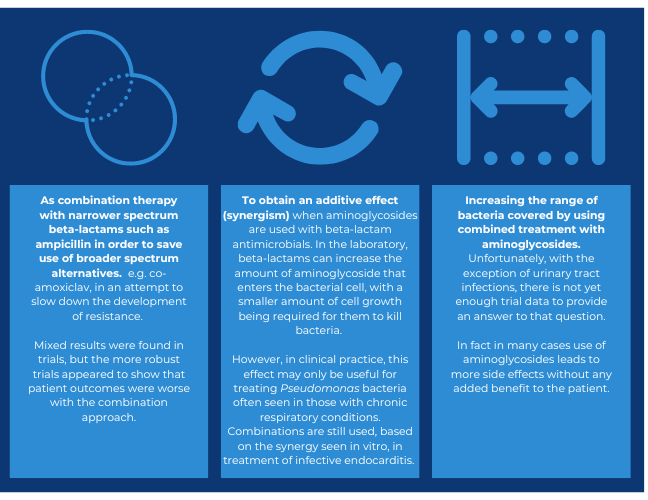
If you require a screen reader-compatible version this is available as a PDF
Next, we will cover how a synergistic effect is obtained using aminoglycosides and beta-lactams.
Aminoglycosides plus beta-lactam synergy
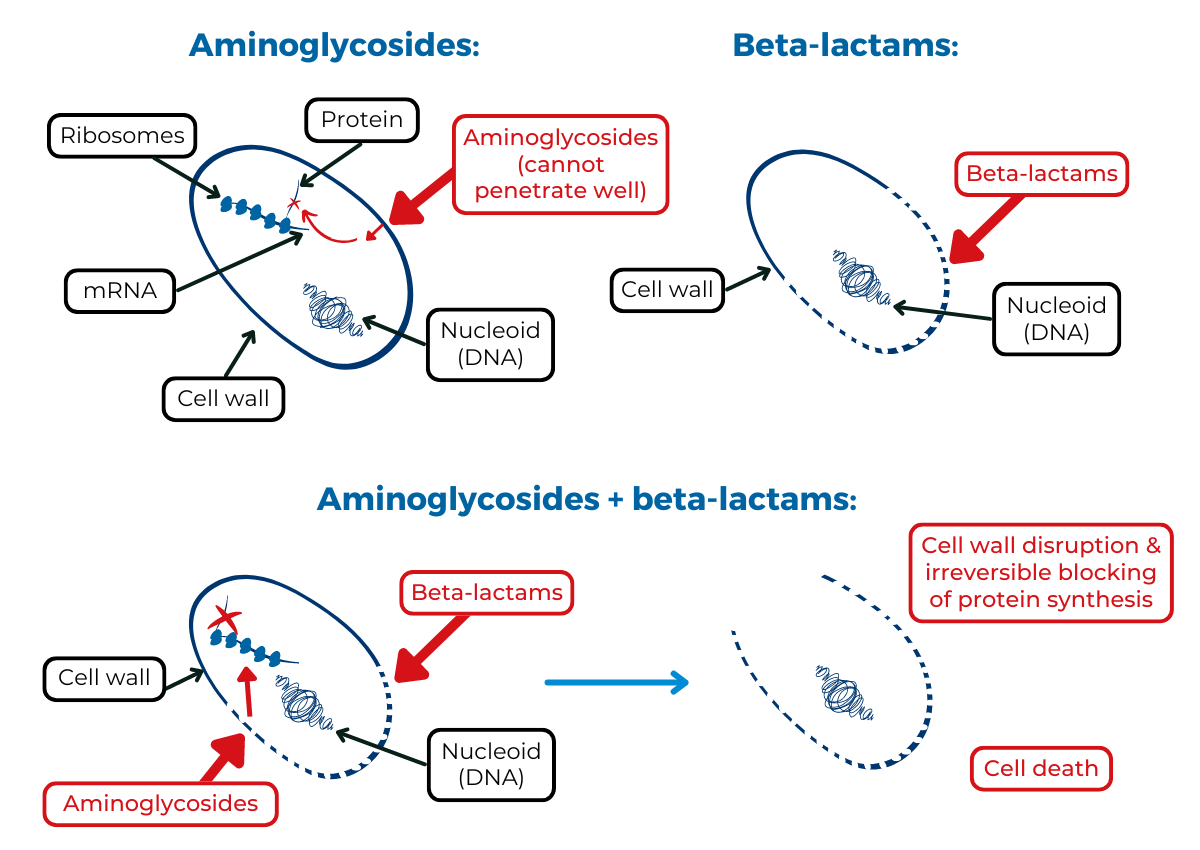
A common combination involves using aminoglycosides in conjunction with a beta-lactam. In vitro studies have shown synergy between the two types of antibiotic. The beta-lactams destabilise the cell wall by binding Penicillin-binding proteins (PBPs). This allows for the passage of aminoglycosides into the periplasmic space where they bind ribosomes, inhibiting protein synthesis.
If you require a screen reader-compatible version this is available as a PDF.
Aminoglycoside & beta-lactams mechanism of action and synergy. Click here to take a closer look.
Pros and cons
The use of aminoglycosides as part of combination therapy has several potential benefits and drawbacks outlined in the image below.
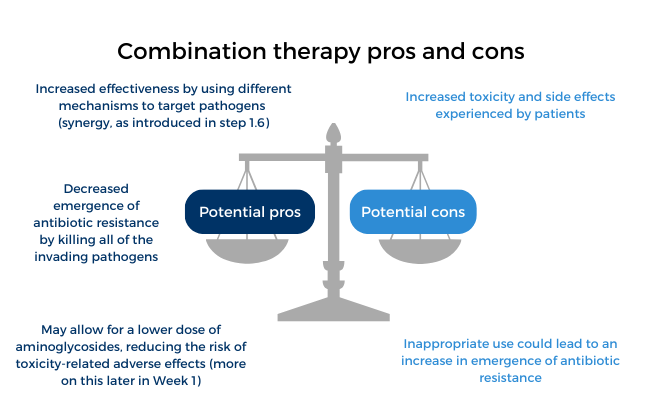
Therefore, the use of combination therapy is a mixed picture, and it should only be used when necessary, taking into account the clinical picture of the patient and whether the combination therapy is likely to be fully effective; however specific sites of infection or disease severity for which a combination therapy involving aminoglycosides would be an advantage has not yet been proven.
Despite this, combined usage is still often seen as the best treatment in clinical practice in the UK and is promoted for the treatment of some resistant bacteria.
Clinical applications
Combination therapy is often used to cover Gram-negative organisms, including MDR organisms.
Combination therapy with gentamicin is frequently used to treat invasive enterococcal infections (such as endocarditis) not exhibiting high-level aminoglycoside resistance and sometimes for serious infections due to certain streptococci. However, even in some of these cases (as with enterococcal endocarditis), the toxicity associated with prolonged aminoglycoside duration has led to the preferred use of other combination regimens.
Other uses of aminoglycosides in combination therapy include treating drug-resistant tuberculosis and certain non-tuberculous mycobacterial infections (in combination with other anti-mycobacterial agents). They are also used for definitive combination treatment of severe infections due to organisms such as Brucella spp. and Listeria monocytogenes.
Cystic fibrosis (CF)
A full review of the literature showed no advantage above using a single penicillin-like antimicrobial (beta-lactam).
However, the CF Trust guideline still recommends combination therapy with 2 antibiotics, with a different mechanism of action for Pseudomonas aeruginosa:
In the next step, you will learn about the use of aminoglycosides in prophylaxis.
Optimise Aminoglycoside Use in Clinical Practice


Optimise Aminoglycoside Use in Clinical Practice