
Operational oceanography and the ocean value chain
The ocean covers more than 70% of our planet, regulates our climate, feeds hundreds of millions of people, and underpins a vast range of economic activity. Yet for most of human history, the ocean has remained largely unpredictable. This step introduces the discipline that is changing that — operational oceanography — and explains why it matters.
Why is the ocean important?
The ocean is central to life on Earth, which is why the United Nations has dedicated Sustainable Development Goal 14 — Life Below Water to its conservation and sustainable use. Achieving this goal depends not only on protecting marine ecosystems, but on our ability to observe, understand, and predict ocean conditions.
This is where operational oceanography comes in.
The UN Decade of the Ocean: vision and mission
Proclaimed by the United Nations General Assembly in 2017, the UN Decade of Ocean Science for Sustainable Development (2021–2030) — known as the Ocean Decade — seeks to reverse the decline of the ocean system and unlock new opportunities for sustainable development.
The vision of the Ocean Decade is simple but ambitious:
“The science we need for the ocean we want.”
Coordinated by UNESCO’s Intergovernmental Oceanographic Commission (IOC), the Ocean Decade brings together scientists and stakeholders worldwide to strengthen ocean science, observations, technology, and capacity development (Ryabinin et al., 2019). It is built around six societal outcomes — a Clean Ocean, a Healthy and Resilient Ocean, a Predicted Ocean, a Safe Ocean, a Sustainably Harvested and Productive Ocean, and a Transparent and Accessible Ocean.
This course contributes directly to that vision of a Predicted Ocean — a society able to understand and forecast ocean conditions and their impacts.
Operational oceanography
Operational oceanography is the scientific discipline focused on the systematic observation and forecasting of ocean conditions, using data from multiple sources to support decision-making in marine industries and environmental management.
It combines three core elements: ocean observations, numerical modelling, and data assimilation. Together, these generate ocean data that is validated and transformed into the services and products that society relies on.
Operational oceanography pillars
Operational oceanography rests on three pillars:
- Ocean observations — the systematic collection of data on the ocean’s physical, chemical, and biological properties, coordinated globally through the Global Ocean Observing System (GOOS). Related platforms include OceanOPS and the Global Sea Level Observing System (GLOSS).
- Numerical modelling — the use of mathematical equations and computational techniques to simulate and predict ocean dynamics, including currents, temperature, and salinity (Talley et al., 2011; Alvarez Fanjul et al., 2022; Bell et al., 2025).
- Data assimilation — the mathematical discipline that combines model output with real observations to produce the most accurate possible estimate of the ocean’s state, used both to initialise forecasts and to reconstruct the past (Martin et al., 2025; Alvarez Fanjul et al., 2022).
Ocean forecasting value chain: why it matters
Operational oceanography is best understood as a value chain — a concept developed by the Expert Team on Operational Ocean Forecasting Systems (ETOOFS). This value chain links scientific observations and predictions to societal benefit, connecting scientists, operational centres, service providers, and end-users.
Forecasting systems create value not simply by producing data, but by translating that data into action — reducing risk, improving efficiency, and supporting sustainability. Upstream observations feed into core marine services, which intermediate users transform into downstream services tailored for policymakers, businesses, and citizens (Alvarez Fanjul et al., 2022).
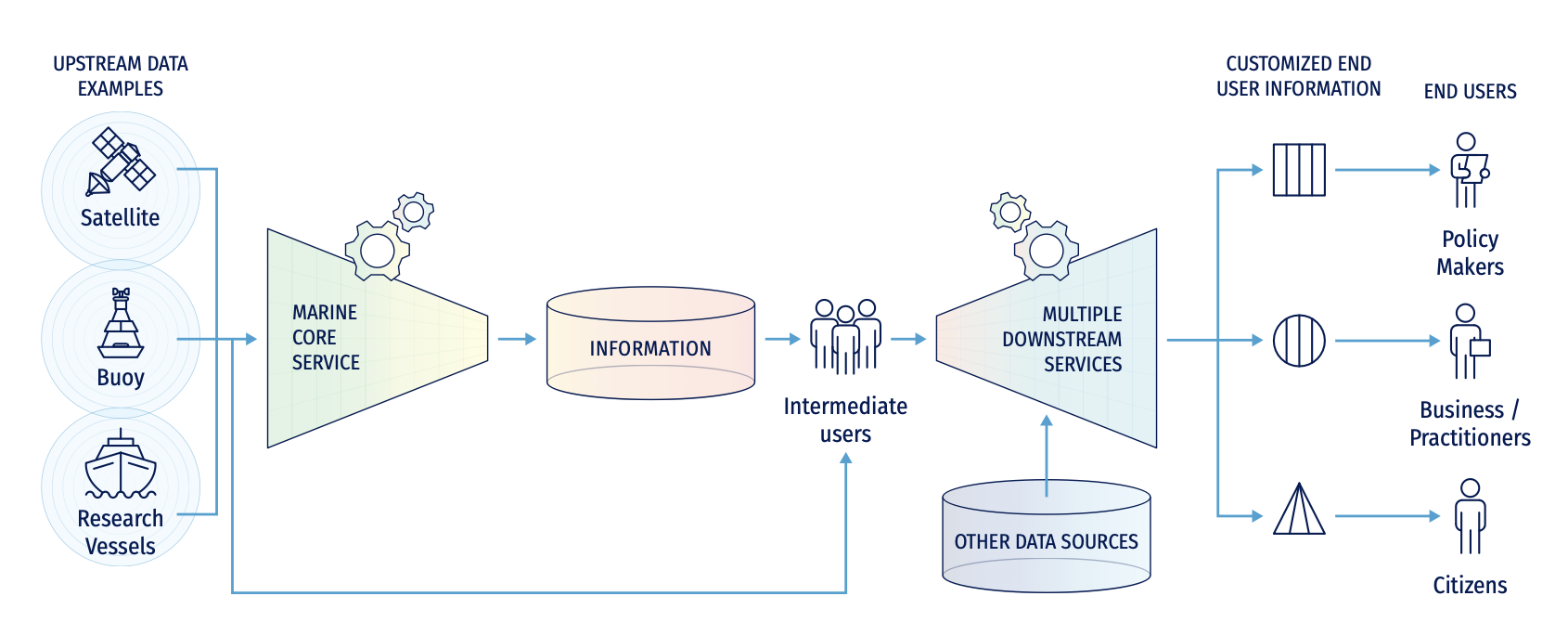
Figure 1. The Ocean Value Chain (source: Alvarez Fanjul et al., 2022)
What does an operational ocean forecasting system produce?
Operational ocean forecasting systems generate several types of ocean data product:
- Analysis — a best-fit snapshot of the ocean’s current state, combining a model with all available observations.
- Reanalysis — a long-term, consistent reconstruction of past ocean conditions, corrected using the best available historical observations.
- Hindcast — a forecast produced after an event has already happened, used to test how accurately the system could have predicted it.
- Forecast — a genuine prediction of future ocean conditions, typically ranging from one to fifteen days ahead.
These products describe variables such as currents, temperature, salinity, sea level, and waves — known as Essential Ocean Variables (EOVs) — as well as higher-value products such as coastal flooding risk indicators or harmful algal bloom forecasts. EOVs are the minimum set of variables, measured in a sustained and cost-effective way, needed to assess ocean state and variability and to support applications of societal benefit (Martín Míguez et al., 2026).
Services built on this data already operate around the world:
- The Copernicus Marine Service — Europe’s free, open-access ocean information service, supporting applications from marine protection to renewable ocean energy
- The NOAA Sea Level Rise Viewer, visualising coastal flooding impacts
- OCIMS, South Africa’s National Oceans and Coastal Information Management System, supporting fisheries and aquaculture and coastal operations
Key takeaways
- The ocean is essential to life and to the global economy, and forecasting it is central to achieving a sustainable relationship between society and the ocean
- The UN Decade of Ocean Science frames international cooperation around the goal of a Predicted Ocean
- Operational oceanography combines observations, numerical models, and data assimilation to produce reliable ocean information
- The ocean forecasting value chain transforms raw data into real-world decisions and services
- Operational systems produce a range of products — analyses, reanalyses, hindcasts, and forecasts — that support sectors from fisheries to maritime safety
References
- Talley, L. D., Pickard, G. L., Emery, W. J., and Swift, J. H. (2011). Descriptive Physical Oceanography: An Introduction (6th ed.). Academic Press, Elsevier. https://doi.org/10.1016/C2009-0-24322-4
- Ryabinin, V., Barbière, J., Haugan, P., et al. (2019). The UN Decade of Ocean Science for Sustainable Development. Frontiers in Marine Science, 6, 470. https://doi.org/10.3389/fmars.2019.00470
- Alvarez Fanjul, E., Ciliberti, S., and Bahurel, P. (Eds.) (2022). Implementing Operational Ocean Monitoring and Forecasting Systems. IOC-UNESCO, GOOS Report No. 275. Available at: https://www.unoceanprediction.org/en/resources/etoofs-guide
- Martin, M. J., et al. (2025). Data assimilation schemes for ocean forecasting: state of the art. State of the Planet, 5-opsr, 9. https://doi.org/10.5194/sp-5-opsr-9-2025
- Bell, M. J., et al. (2025). Numerical models for simulating ocean physics. State of the Planet, 5-opsr, 10. https://doi.org/10.5194/sp-5-opsr-10-2025
- Martín Míguez, B., et al. (2026). Ocean products and Essential Ocean Variables from operational forecasting systems. (In press / forthcoming — confirm full citation with the author.)







