
Welcome to the course
| Hello, I’m Takahiro Sasaki, and together with Satoko Tokunaga, I’ll be your guide through this course. |  |
Let’s begin with a short video, where I’ll introduce you to some intriguing questions inspired by old Japanese books.
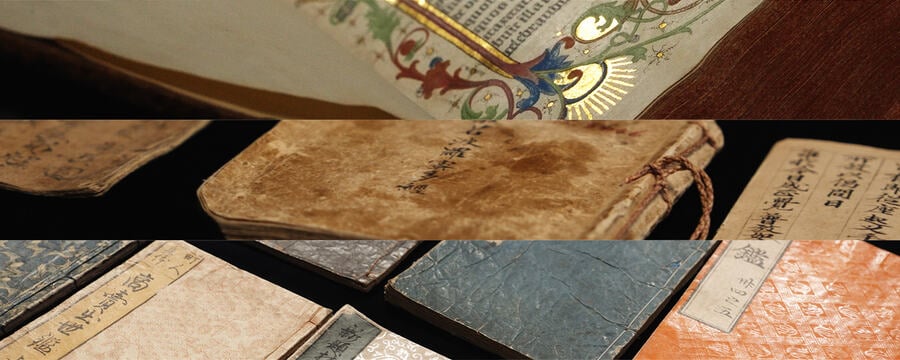
As you’ve seen, old books can reveal far more than the words written on their pages. Their shape, paper, bindings, covers, colours, and even the way they feel in your hands can all tell us something about their history.
Book featured in the video:
- Ise monogatari 伊勢物語. 15th or 16th century, private collection
A three-week journey
Over the next three weeks, you’ll explore the codex — the page-turning book that has captivated readers for centuries through sight, touch, sound, and texture. Together, we’ll travel across different cultures and traditions, comparing books from the East and the West, with the Dunhuang manuscripts as an important point of reference. Along the way, you’ll encounter remarkable books and manuscripts held by Keio University, the British Library, and the University of Cambridge, as well as insights from the Dunhuang Academy and other scholars.
By looking closely at these books as physical objects, you’ll discover that every book has more than one story to tell.
Week 1 — What is a codex?
In Week 1, you’ll explore what makes a codex a codex. Travelling across Japan, Dunhuang, Korea, Europe, the Greek and Islamicate worlds, and Southeast Asia, you’ll discover how differently books have been shaped, bound, and made across cultures — and what their bindings can tell us about their origins and history.
Week 2 — What do books reveal?
In Week 2, you’ll look more closely at books as physical objects. You’ll explore how their shape, paper, covers, illustrations, and pigments can reveal clues about where and how they were made — and discover some surprising stories hidden inside their covers.
Week 3 — Humans and the codex
In Week 3, you’ll turn to the relationship between people and books. You’ll explore how books have been collected, handled, and experienced, and how scholars use both traditional methods and new technologies, including AI, to uncover their histories. Finally, you’ll reflect on your own relationship with books and what they mean to you.
Meet our team
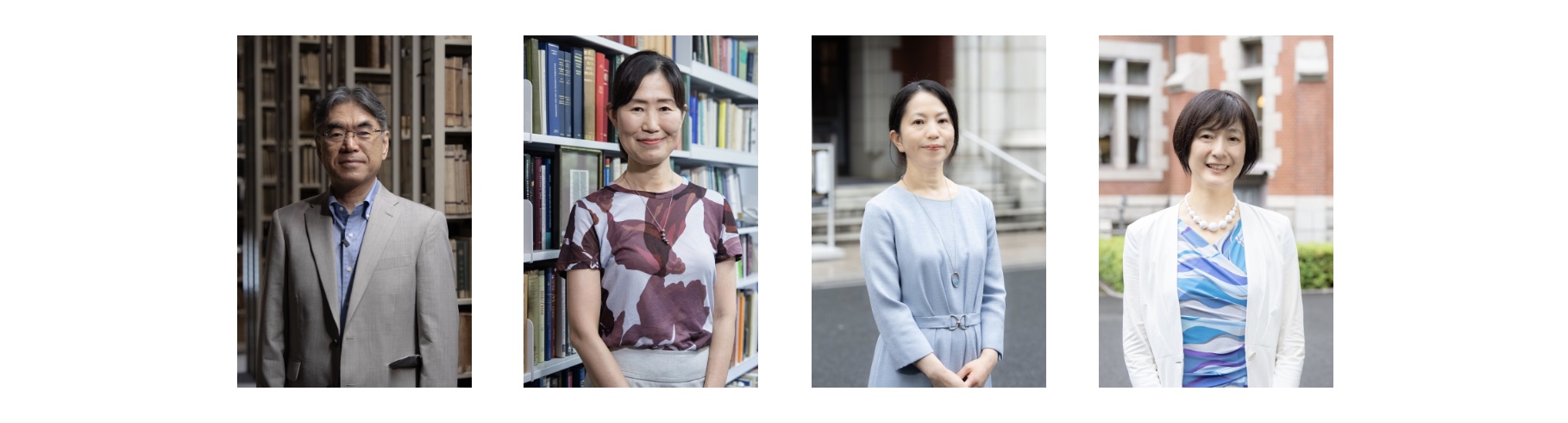
Your guides throughout the course will be Takahiro Sasaki and Satoko Tokunaga, joined by Mari Agata and Mayumi Ikeda from Keio University.
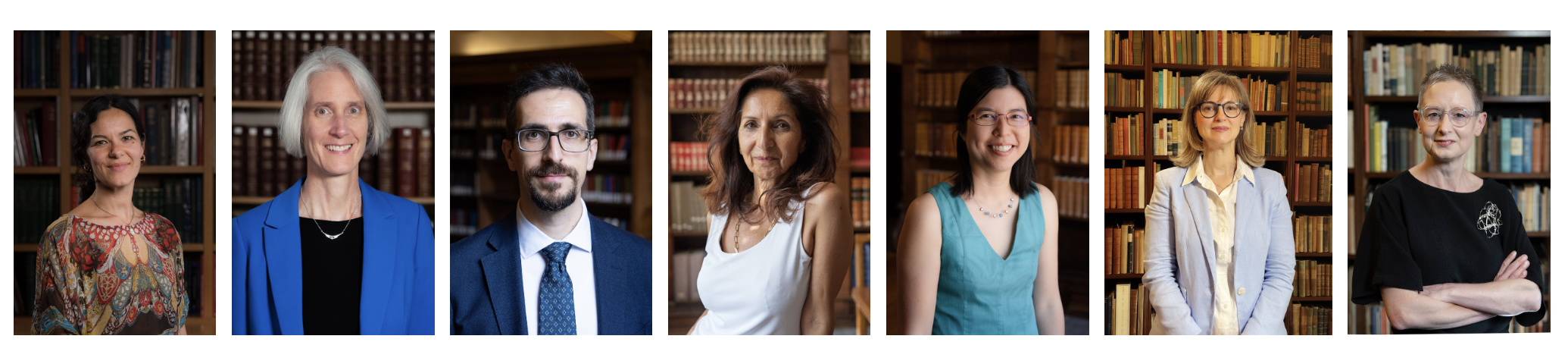
Along the way, you’ll also meet librarians and scholars from the UK and the US, who will share fascinating books, stories, and discoveries from their research and collections. They include Mélodie Doumy and Dr Karen Limper-Herz from the British Library; Dr Alessandro Bianchi, Yasmin Faghihi, Dr Irène Fabry-Tehranchi, Professor Laura Moretti, and Professor Orietta Da Rold from the University of Cambridge; Azusa Tanaka from the University of Washington; and Dr Eric White from Princeton University.

Behind the scenes, the course is supported by Shoko Matsuura from Keio University Press, together with Professor Keiko Okawa and Project Assistant Professor Alanur from Keio University. Be sure to follow the team members and look out for their comments and responses as you make your way through the course.
When you’re ready, click “Mark as complete” at the bottom of the page and move on to the next step.
Let’s start our journey!
Global Codex: Hidden Stories of Books Across Cultures

Global Codex: Hidden Stories of Books Across Cultures


