
Japanese traditional bindings
There are five main binding styles in traditional Japanese bookmaking
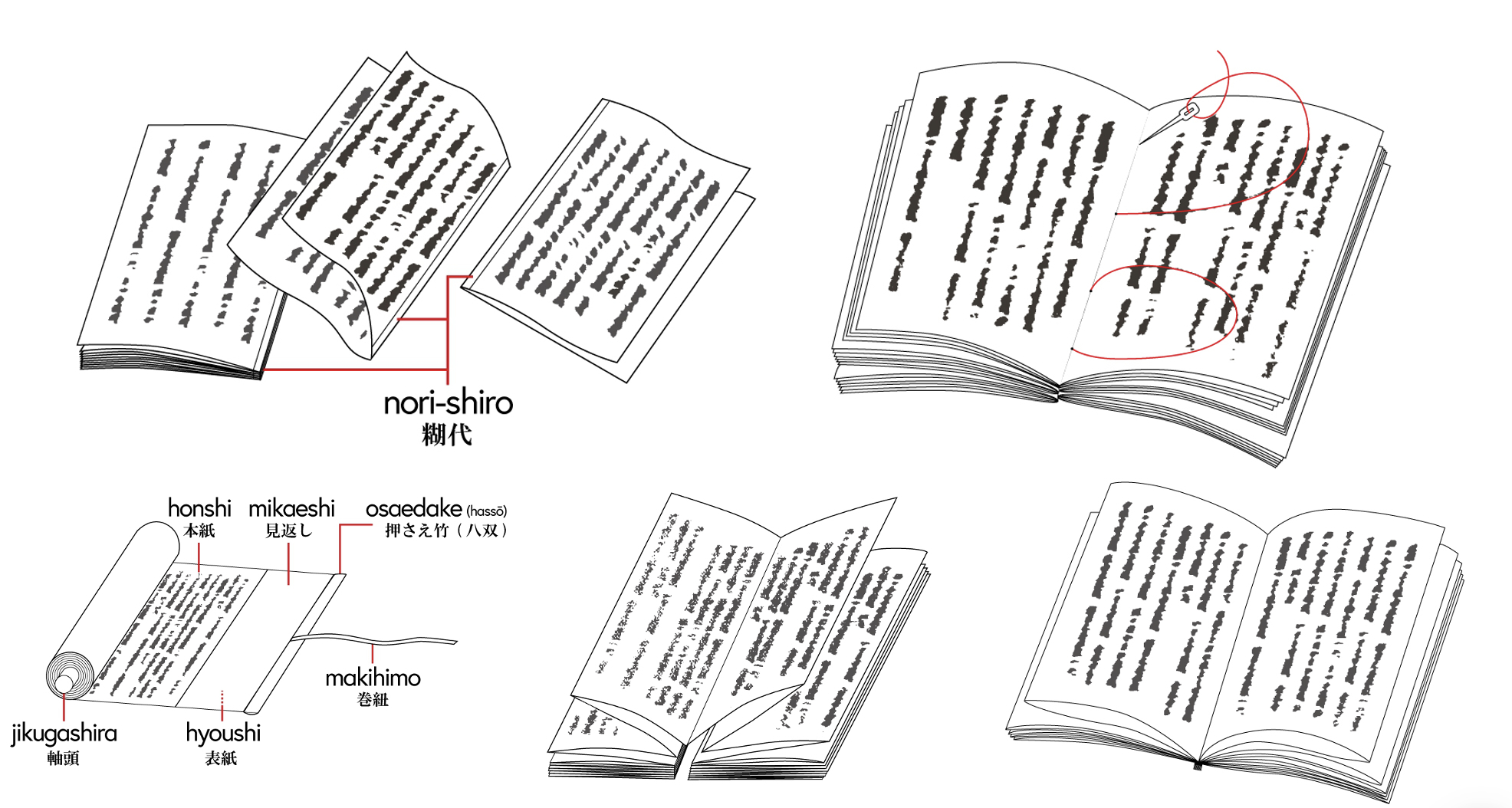 Top from the left: detchōsō (butterfly binding) and tetsuyōsō (thread binding)
Bottom from the left: kansusō (scroll), orihon (accordion binding) and fukurotoji (pouch binding)
Three of these — detchōsō, tetsuyōsō, and fukurotoji — are forms of the codex.
In the video, let’s take a closer look at two of them: detchōsō and tetsuyōsō.
Both are elegant, but they are also surprisingly fragile. Detchōsō is vulnerable to insect damage, while the sewing threads of tetsuyōsō often break.
So why did people continue to use these binding styles for so long, despite their weaknesses? To explore this question, we need to look beyond Japan and compare books from different parts of the world.
Books featured in the video
- Hokekyō tanji 法華単字. The Century Akao Collection, Keio Institute of Oriental Classics, Se 2324
- Hekianshō 僻案抄. Keio Institute of Oriental Classics, 092・To 25・1
Global Codex: Hidden Stories of Books Across Cultures
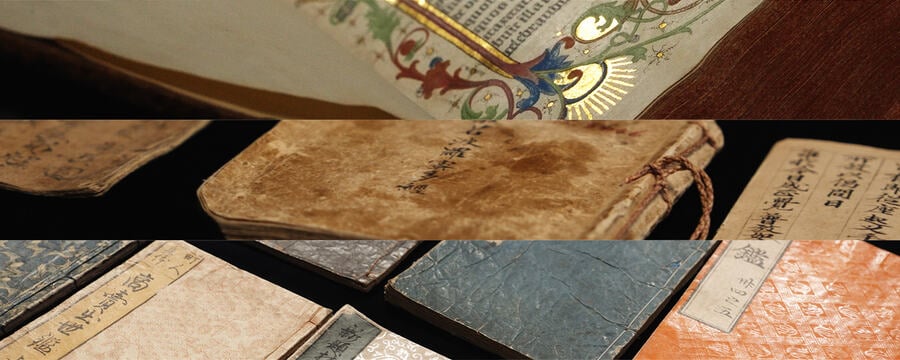

Global Codex: Hidden Stories of Books Across Cultures


