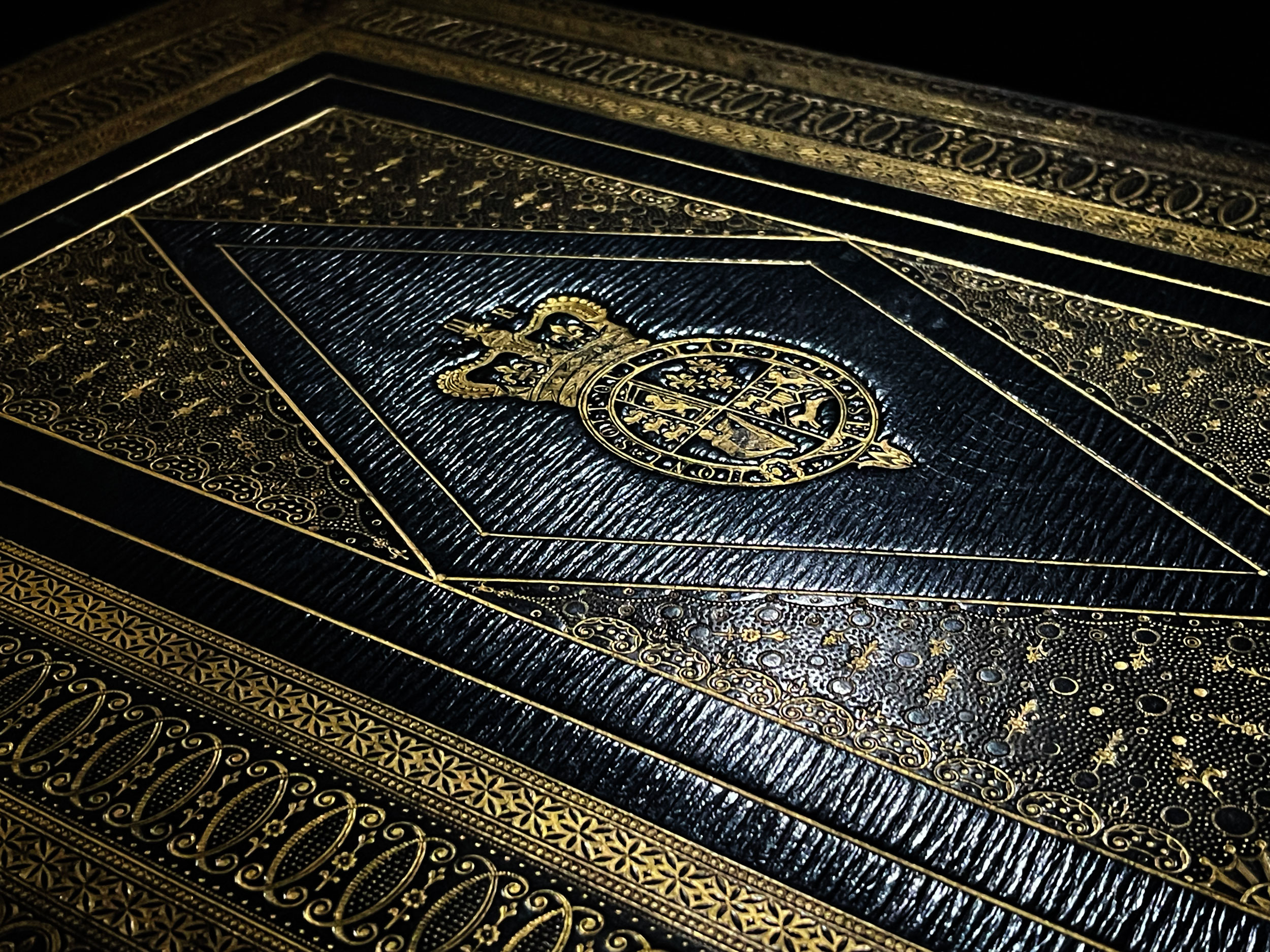
When books speak the joy of ownership
| What impressions have these feelings imprinted on books? What kinds of impressions traces have these feelings left on books themselves? |  |
Let us now explore books from different times and places that convey the joy of owning a book.
Books as physical objects
Books do more than just transmit knowledge. They also hold symbolic meaning—as signs of sacredness or learning—and they can be appreciated as works of art and craftsmanship. Because books are physical objects, people around the world have long felt affection and respect not only for the content within books, but also for the experience of owning them. Large books and lovely miniature books are both equally impressive.
Even today, many of you have probably given or received a book not just for what’s written inside it, but also for its appearance. Think back to the last time you gave or received a book as a gift. Wasn’t it wonderful to hold something that was both beautiful and meaningful?
Some of you may have written your name or made a mark inside your own books. Certain picture books even encourage this—for instance, some allow children to write their names on the back cover, and the popular American picture-book series Little Golden Book includes a designated space on the pastedown, saying “This little golden book belongs to…”, inviting the owner to write their name. You may also have picked up a book simply because the cover design caught your eye. If we feel this way today, imagine how much stronger these feelings were in earlier times, when books were far rarer and more precious.
Customising manuscripts
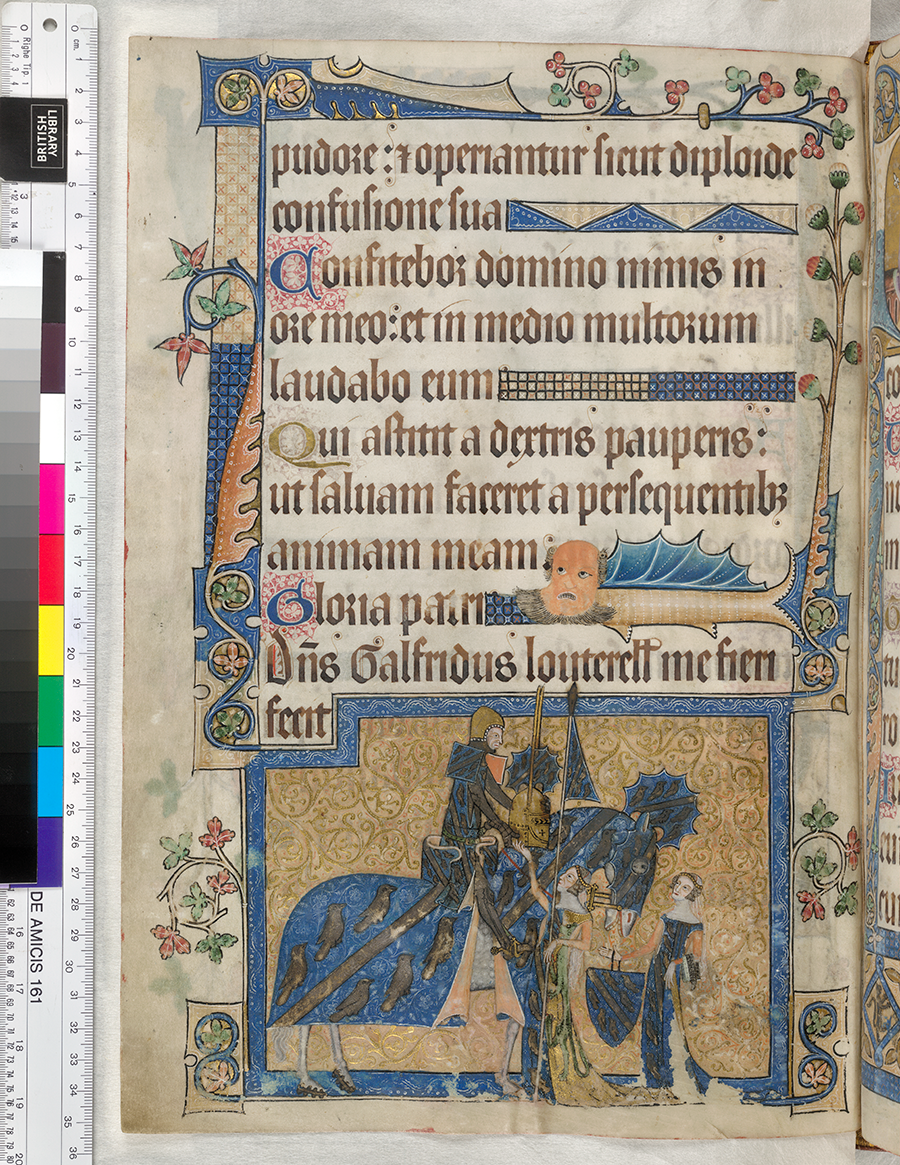
In the age of manuscripts, books were essentially made to order. The patron (the first owner) and the book producers would work together to create a detailed plan for the book’s production beforehand. There are many surviving examples where aristcratic owners had their family members or coats of arms painted into the book. For instance, in an illustration in The Luttrell Psalter (Fig. 1), we can see the patron, Sir Geoffrey Luttrell, painted with his coat of arms, alongside his wife and daughter-in-law. Their coats of arms are also included. Furthermore, the two-line text above the illustration explicitly states:
“D(o) m(inu)s Galfridus Louterell me fieri fecit”
(Sir Geoffrey Luttrell caused me to be made).
 ©British Library Board |
Fig. 1. The Luttrell Psalter. 1325-1340, British Library, Add. MS 42130 [1] Click here to take a closer look |
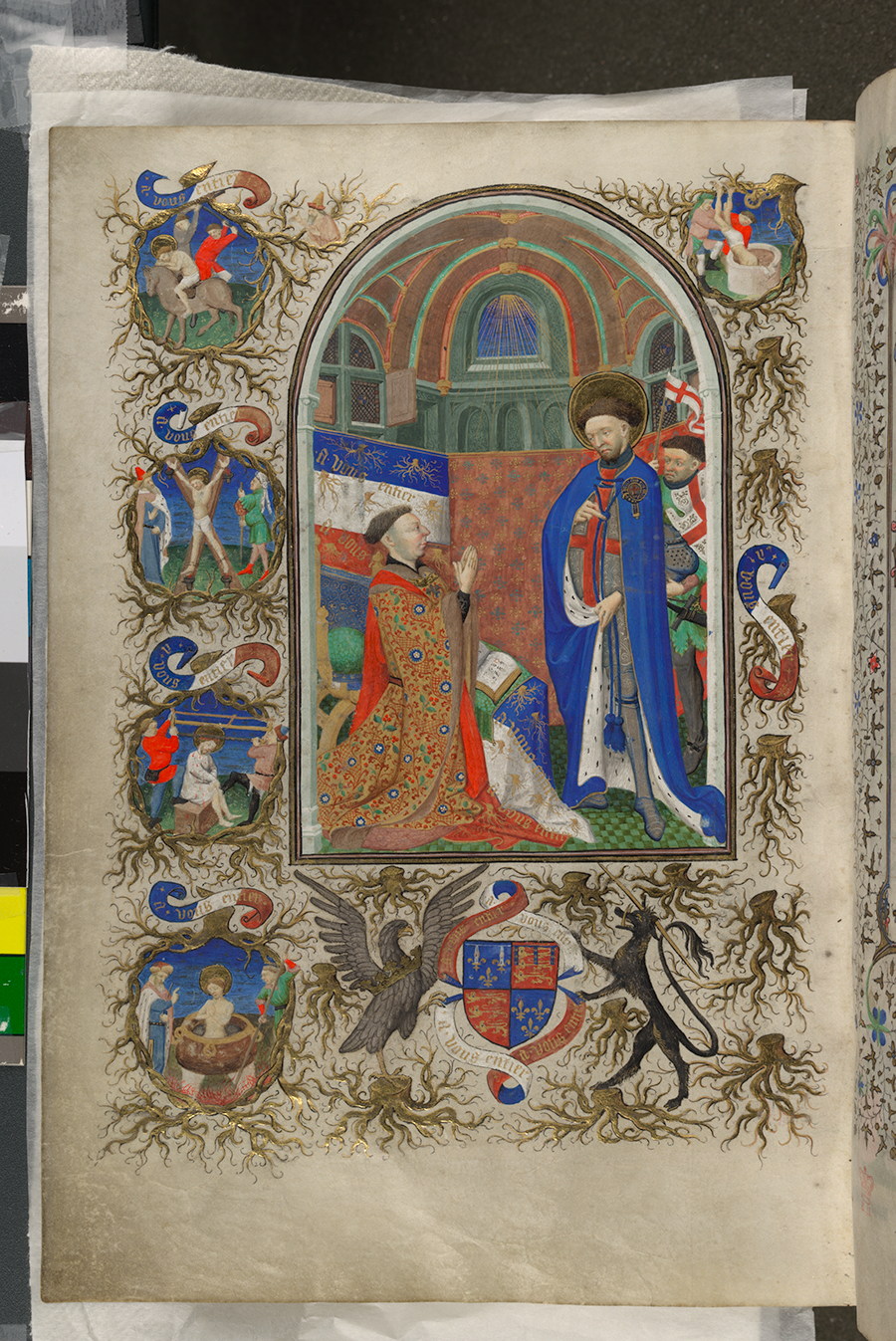
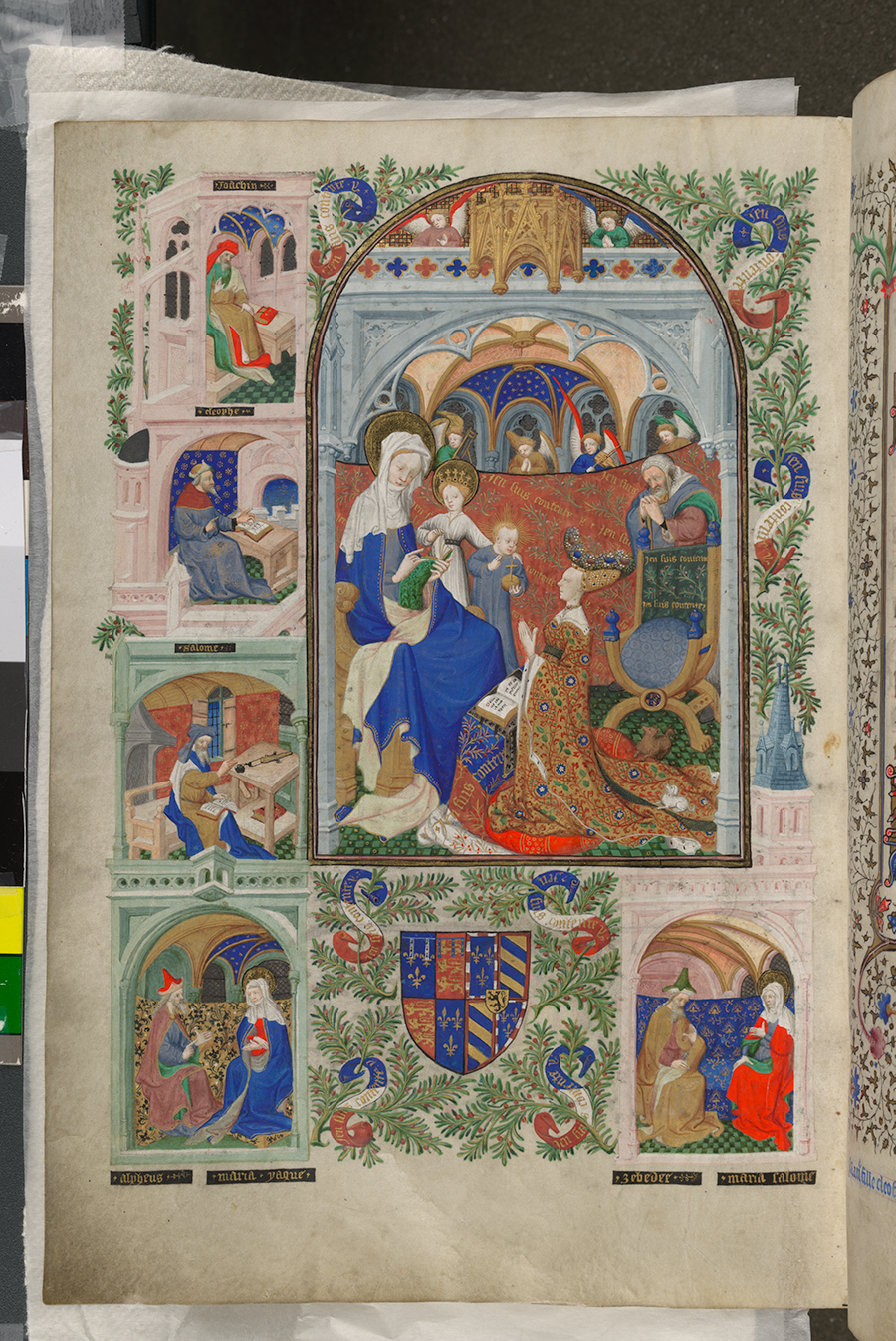
Another famous example is The Bedford Hours (Fig. 2). When John of Lancaster, Duke of Bedford, became the owner and gave the book to Anne of Burgundy as a wedding gift, new illustrations were added. These included portraits of John praying to St. George (Fig. 2, left) and Anne praying to St. Anne (right), as well as their respective coats of arms.
 ©British Library Board Click here to take a closer look |
 ©British Library Board Click here to take a closer look |
Fig. 2. The Bedford Hours. c. 1410-1430, British Library, Add. MS 18850, fols. 256v, 257v [2]
Insights from bookplates and signatures
The desire to leave a personal mark isn’t limited to manuscripts but also applied to printed books. An example is beautifully captured in the Keio copy of the Gutenberg Bible (Fig. 3). While its spine was repaired later, the rest of the binding dates back to the 15th century. The blind-tooled decoration—patterns pressed into the leather without gold—tells us it was bound in Mainz.
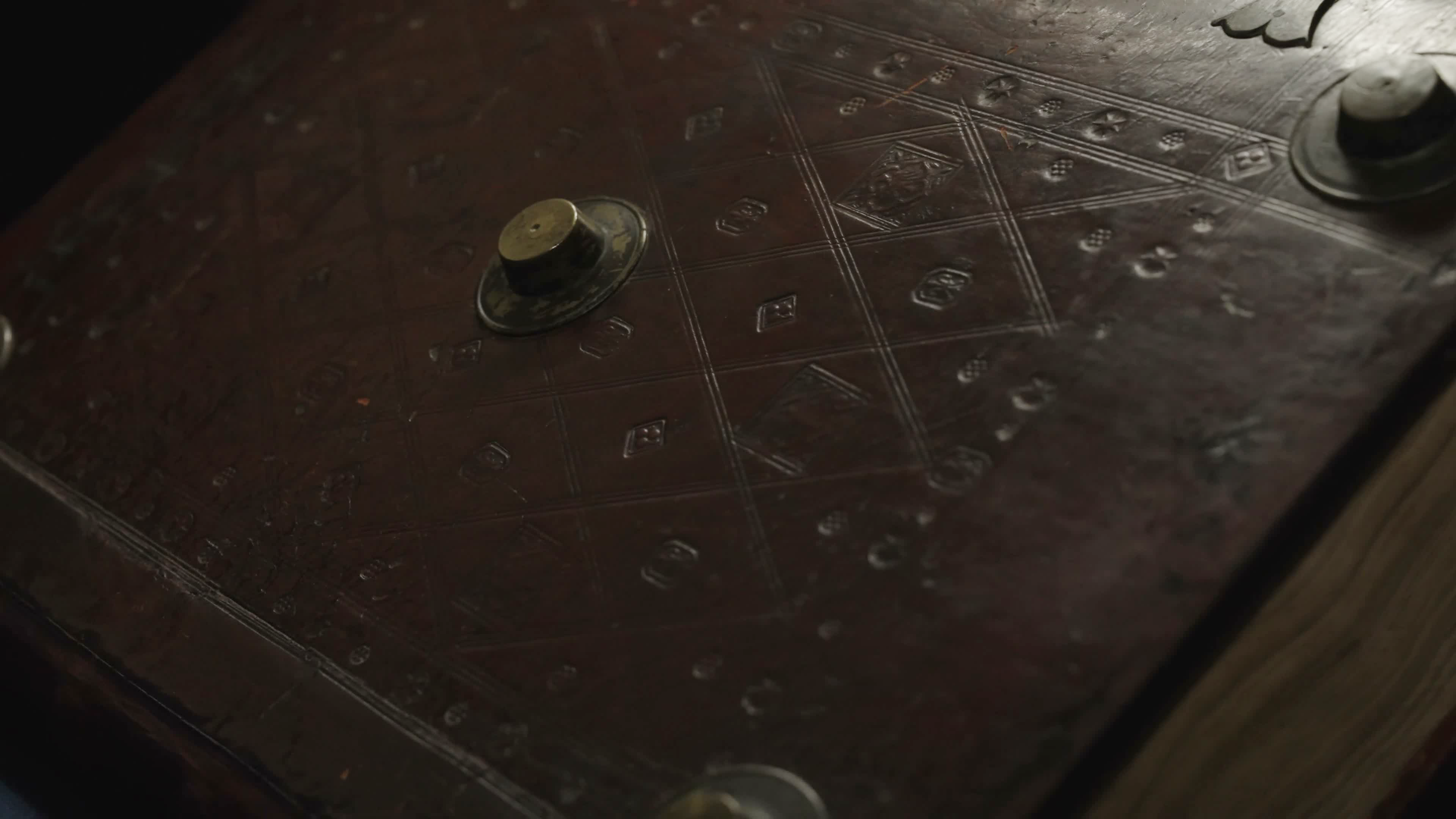
Fig. 3. Front cover of the Gutenberg Bible. Mainz, c.1455, paper copy, Keio University Library, no shelfmark [3] Click here to take a closer look
On the upper left corner of the front pastedown, we can see the signatures of its modern owners (Fig. 4). In order, they are the Earl of Gosford and Lord Amherst of Hackney in 19th-century Britain, followed by Dyson Perrins in the 20th century. Finally, we see the name of Estelle Doheny, the last private owner, who recorded her acquisition date as October 14, 1950.
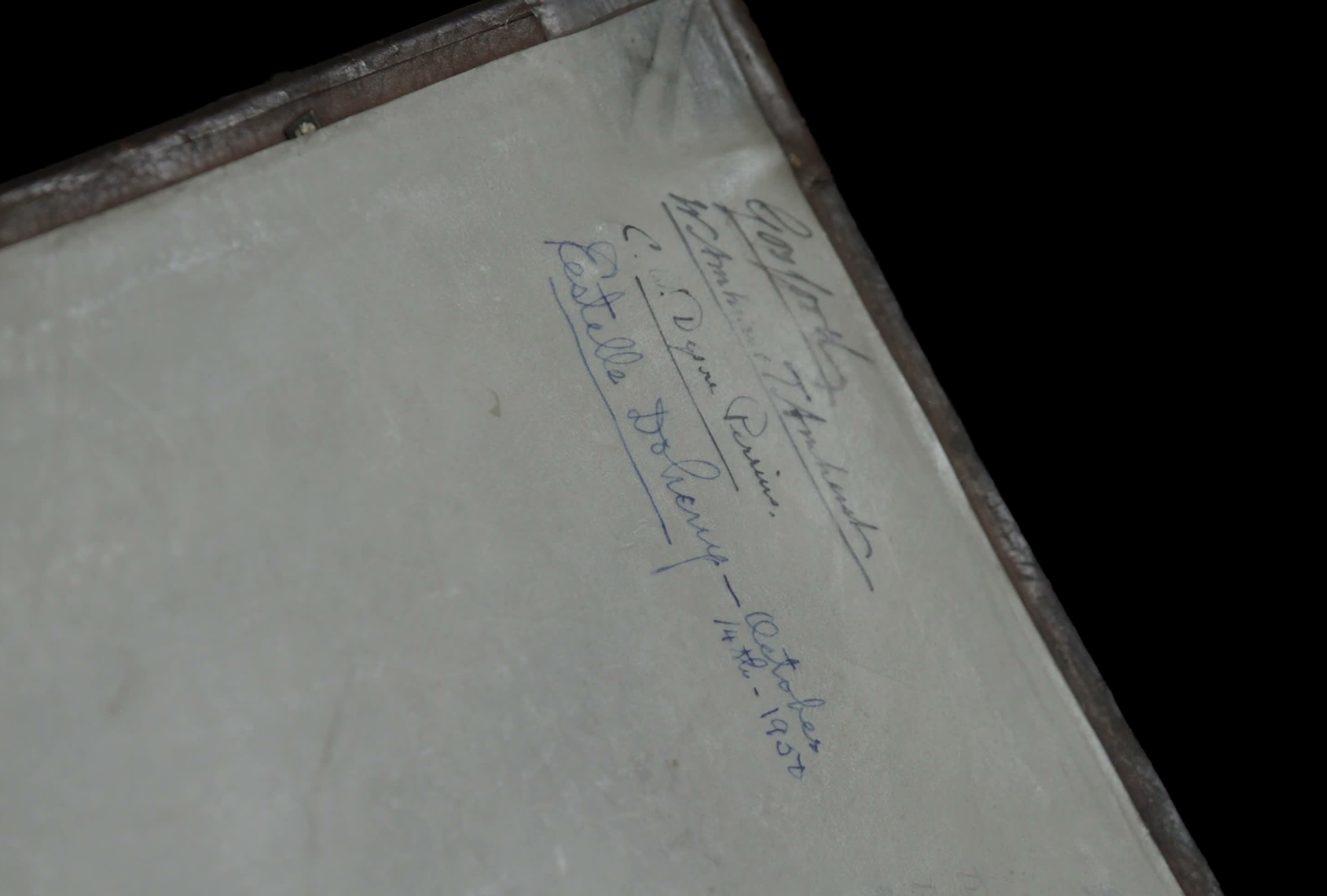
Fig. 4. Signatures on the Gutenberg Bible. Mainz, c.1455, paper copy, Keio University Library, no shelfmark [3] Click here to take a closer look
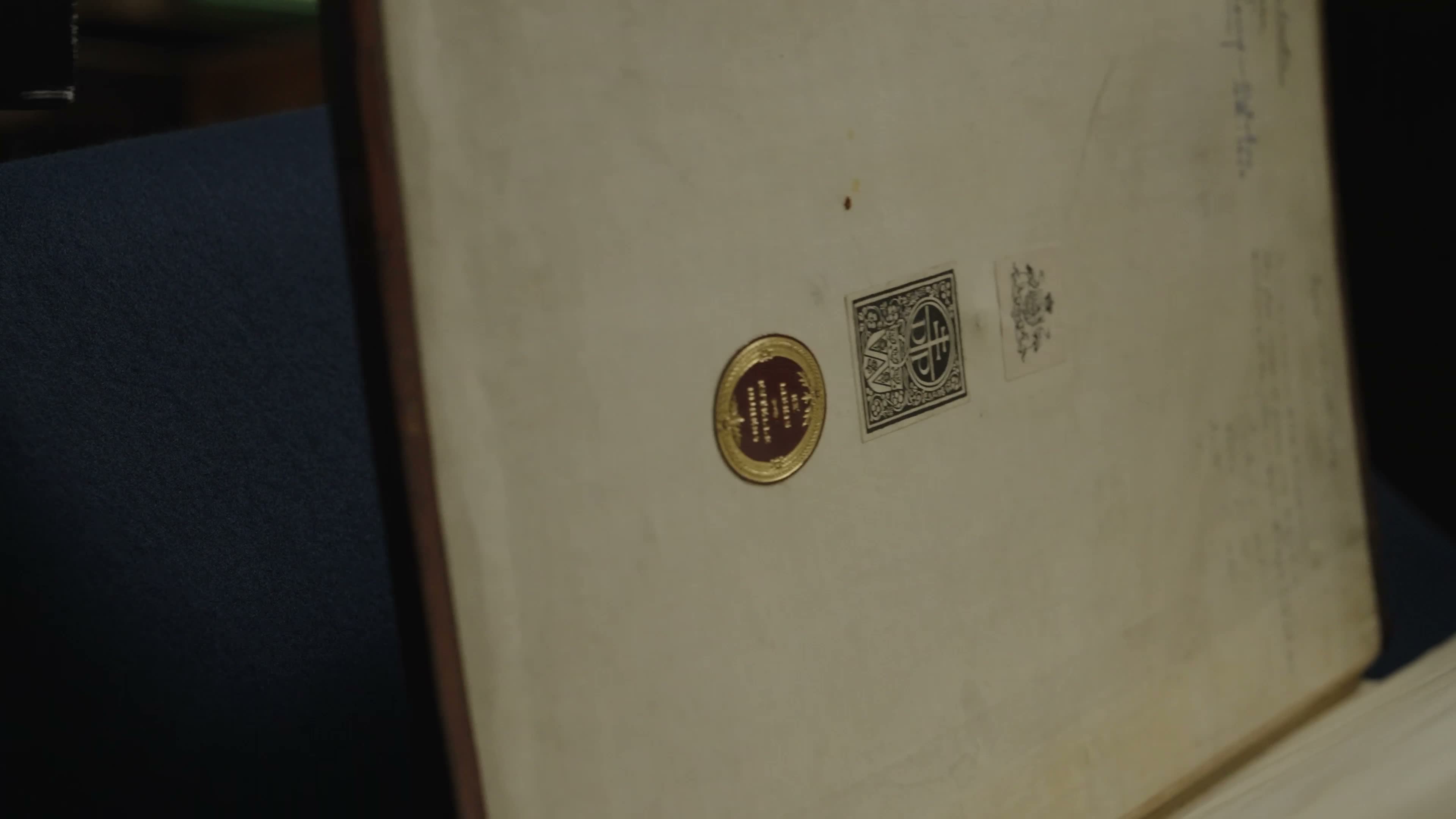
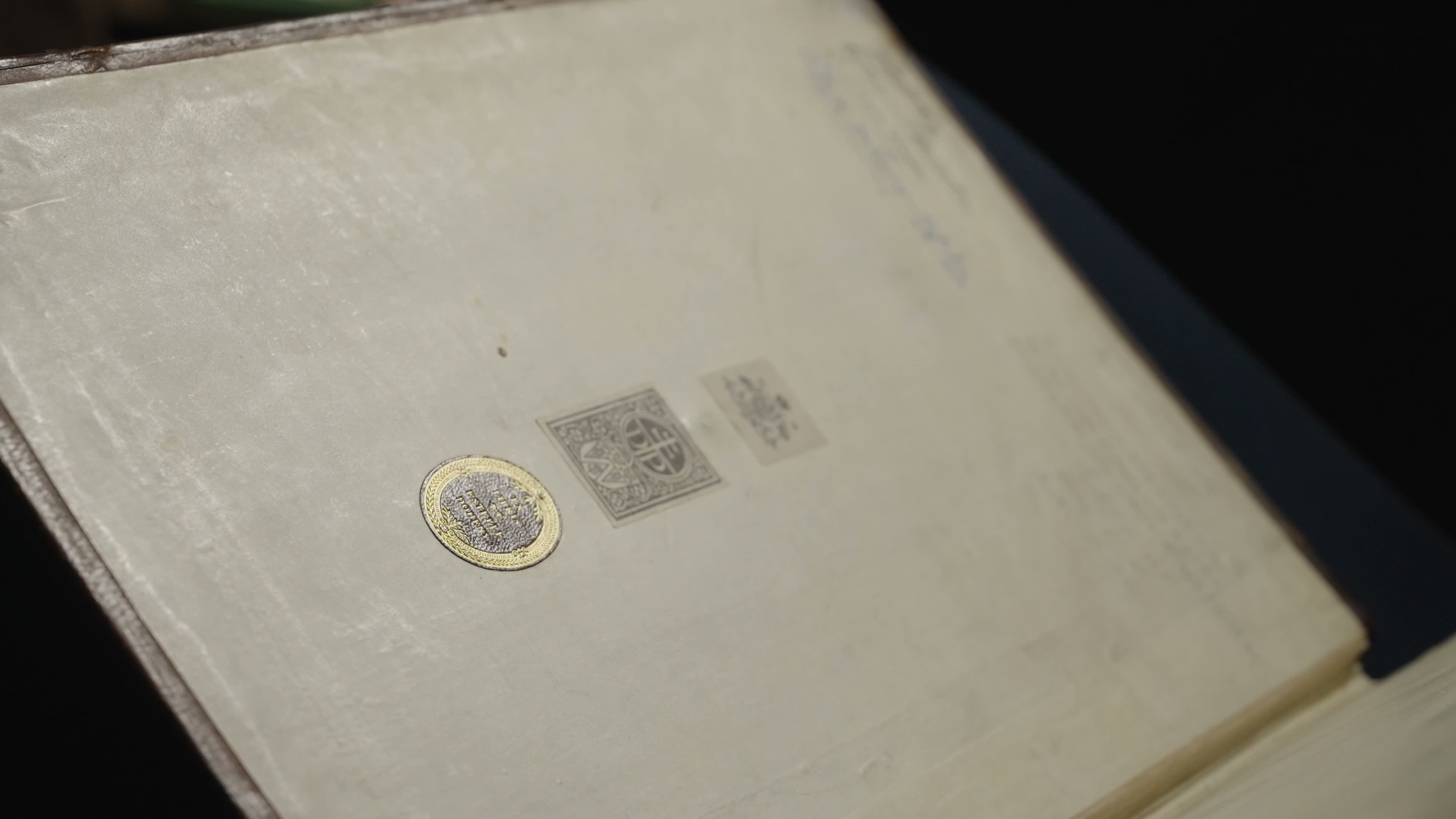
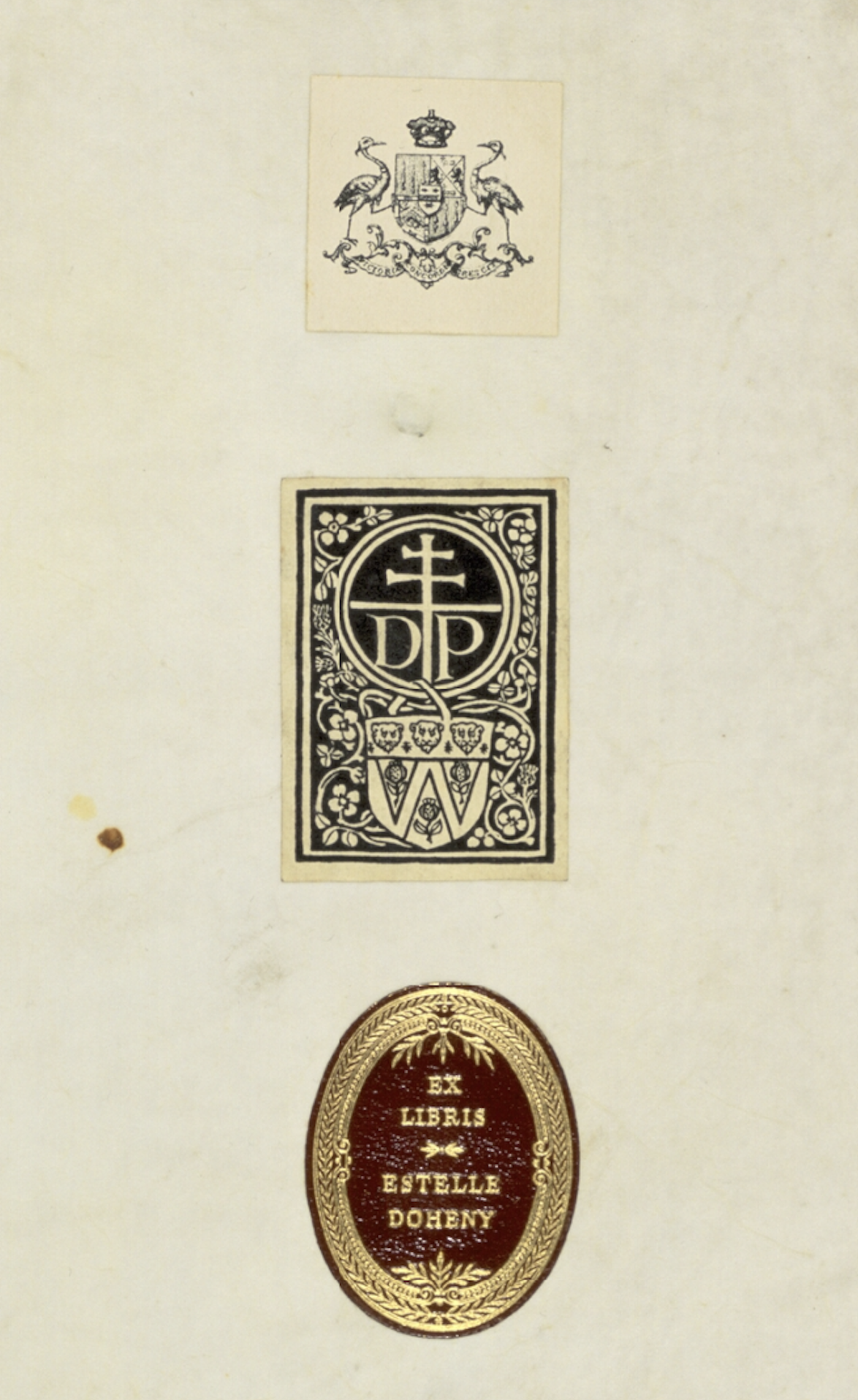
At the bottom center are three bookplates (ex-libris) (Fig. 5). Each is carefully designed, and the lower two—made of leather with gold tooling—are impressive works of art in their own right. They not only express the immense pride and joy of owning such a precious book, but also allow us to trace its journey across centuries from one collector to another, whether famous or unknown.
 Closer look |
 Closer look |
 Closer look |
Fig. 5. Bookplates on the Gutenberg Bible, Mainz, c.1455, paper copy, Keio University Library, no shelfmark [3] |
Insights from bindings
The British Library owns two copies of the Gutenberg Bible that look strikingly different from the Keio copy, and from each other. The “King’s Library” copy (Fig. 6) once belonged to King George III (1738–1820). It was presented to the British Museum in 1828 by George IV. Bound in elegant Morocco leather, the covers bear the Royal Arms of George III in brilliant gold tooling.
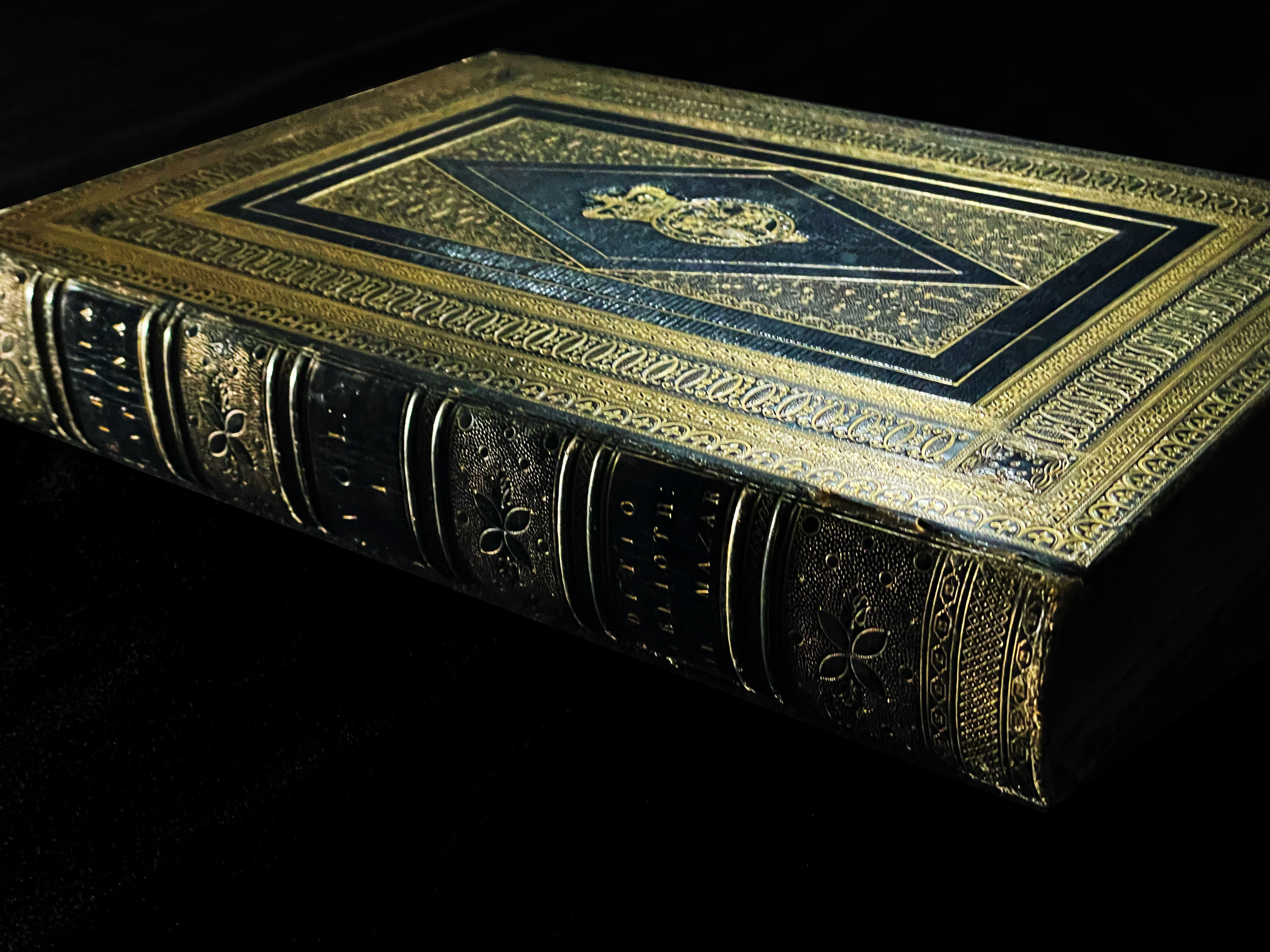
Fig. 6. The Gutenberg Bible. Mainz, c.1455, paper copy, British Library, C.9.d.3 [4]
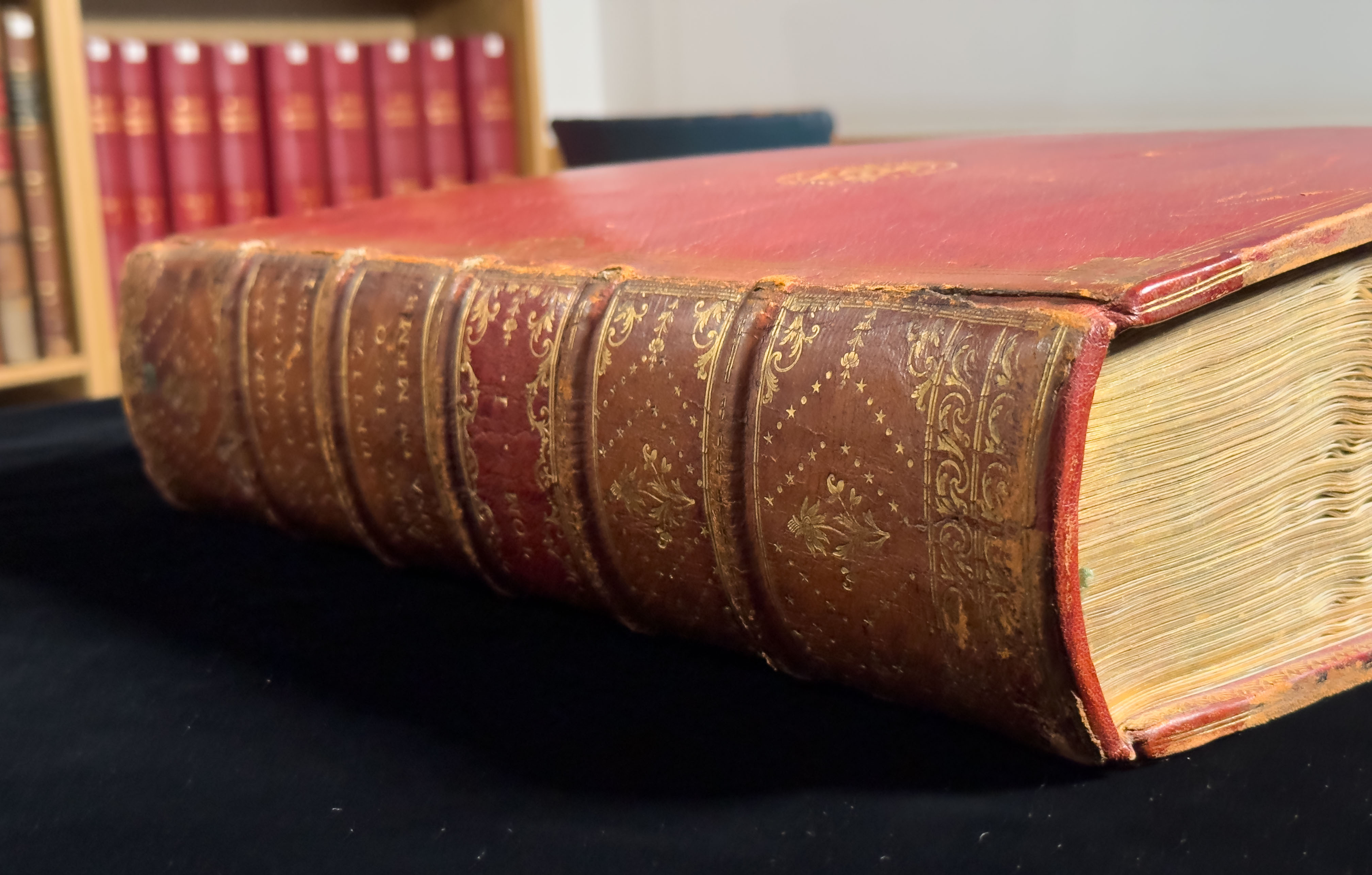
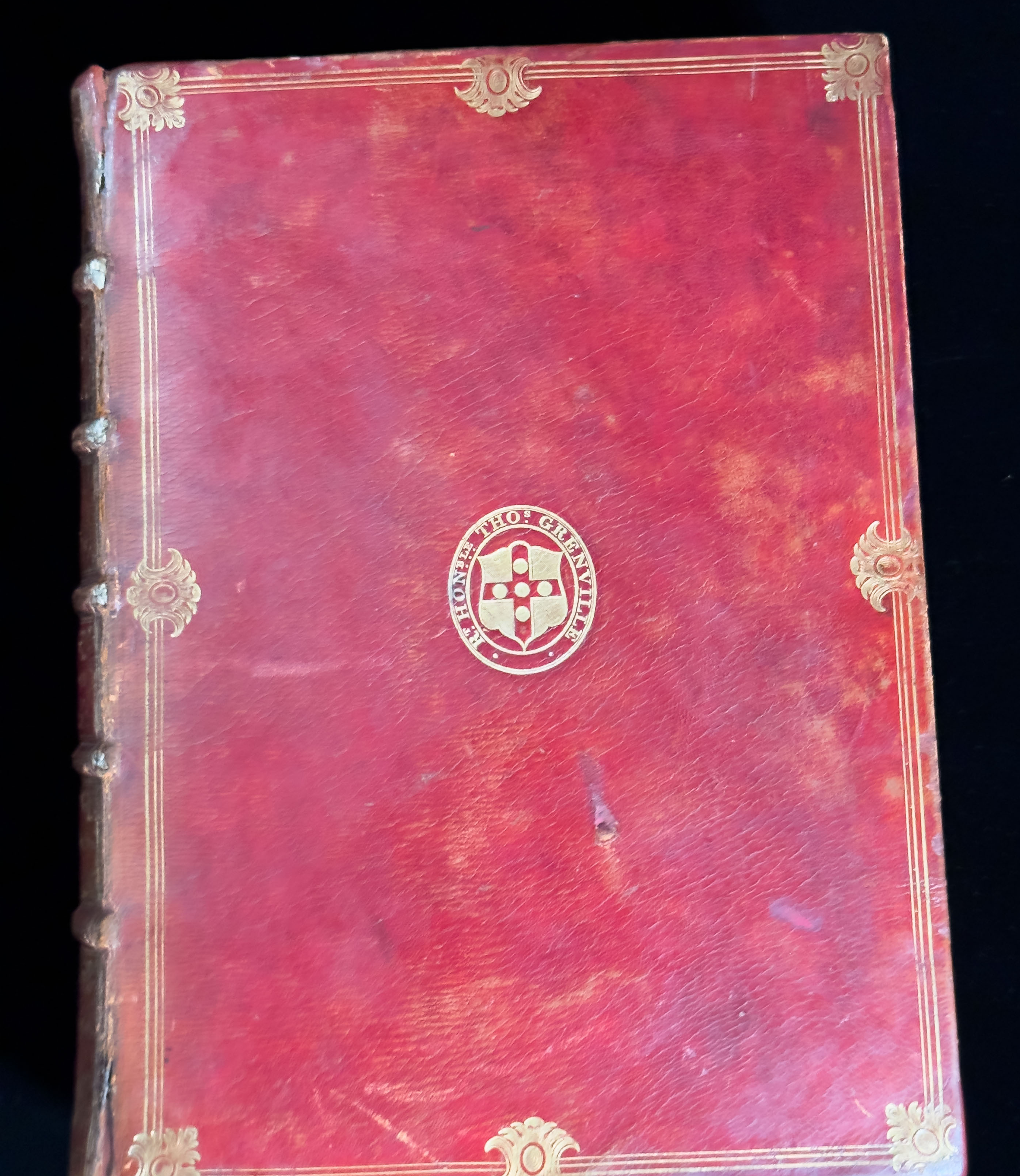
Another copy in the The British Library, the Grenville copy of the Gutenberg Bible (Fig. 7), was acquired at auction in 1817 by the politician Thomas Grenville. By the time he purchased it, the book had already been rebound in this red Morocco leather. However, he still made it his own by having his coat of arms stamped in gold at the center of the cover.
 Closer look |
 Closer look |
Fig. 7. The Gutenberg Bible. Mainz, c.1455, parchment copy, British Library, G.12226 [5]
Rebinding a collection in a uniform style was a common practice among bibliophiles. To own such a collection meant more than just having books; it was about creating a magnificent library in a grand mansion, with shelves lined by beautifully bound volumes. Imagine spending your time surrounded by such books—it must have been an enchanting space indeed. Such practices among bibliophiles served as markers of social status and cultural value.
From single volumes to private libraries
Beyond the joy of owning individual books, there is also a distinct pleasure in watching volumes accumulate on a shelf. Have you ever felt a sense of pleasure or satisfaction simply from looking at the rows of spines lined up on your bookshelf? As books continue to accumulate, they may eventually form a personal study library—or even a great institutional library. For example, the British Library houses the King’s Library Tower (Fig. 8), which displays the books collected by King George III. Its combination of beauty and practicality continues to attract and inspire visitors today.
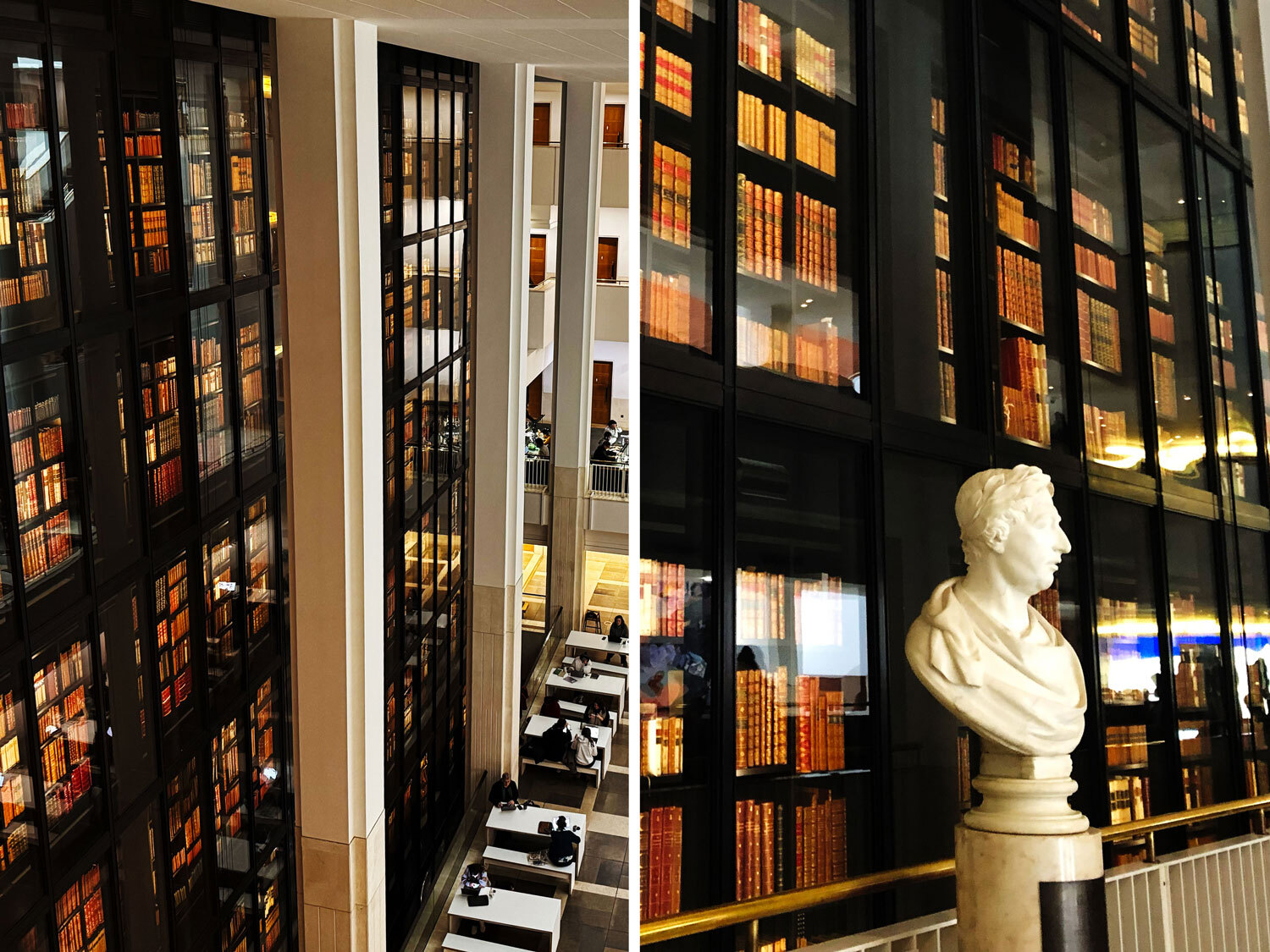
Fig. 8. King’s Library Tower in the British Library
Books featured in the article
Images for items 1 and 2 are reproduced by permission of the British Library.
- The Luttrell Psalter. 1325-1340, British Library, Add. MS 42130, fol. 202v
- The Bedford Hours. c. 1410-1430, British Library, Add. MS 18850, fols. 256v, 257v
- The Gutenberg Bible, Mainz, c.1455, paper copy, Keio University Library, no shelfmark
- The Gutenberg Bible. Mainz, c.1455, paper copy, British Library, C.9.d.3
- The Gutenberg Bible. Mainz, c.1455, parchment copy, British Library, G.12226
Global Codex: Hidden Stories of Books Across Cultures

Global Codex: Hidden Stories of Books Across Cultures