
Skills Literacy Framework
So far, you’ve explored how skills are already developing in everyday learning, and how different frameworks describe similar capabilities using different language.
The next step is making sense of this in a way that is usable for both you and your students.
This is where skills literacy comes in.
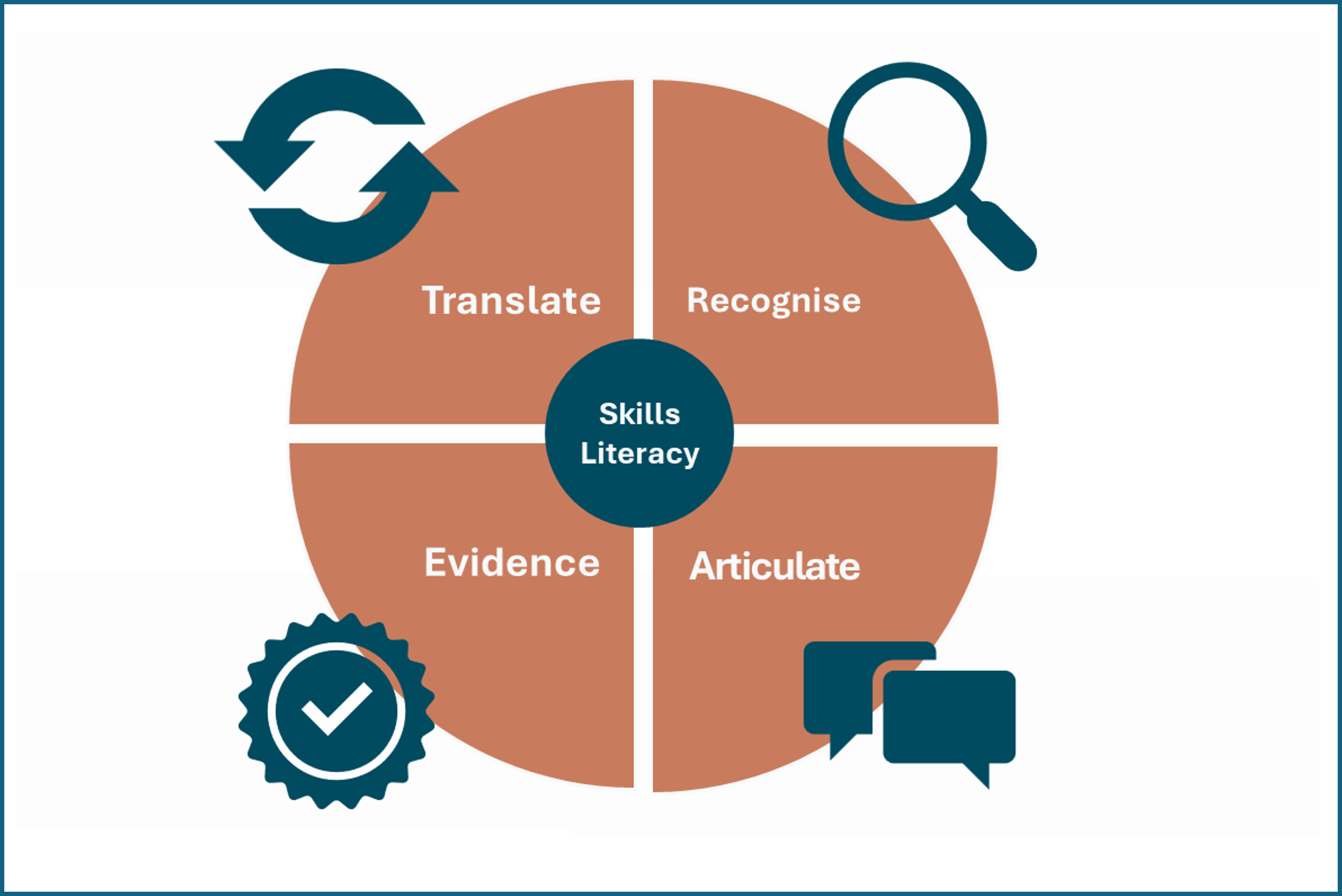
Skills literacy is the ability to recognise, articulate, evidence, and translate capability. It is not a new set of skills. It is a way of seeing, describing, and using what is already being developed.
Rather than focusing only on what students have studied, skills literacy helps shift the focus to what they can do, and how they can explain and apply that capability in different contexts.
Skills Literacy Framework
Like digital literacy or AI literay, as we move towards a skills based economy we need to develop the ability to understand and navigate this system. The focus is shifting from “what did you study?” to “what can you do?” So we need to get better at explaining what we can do.
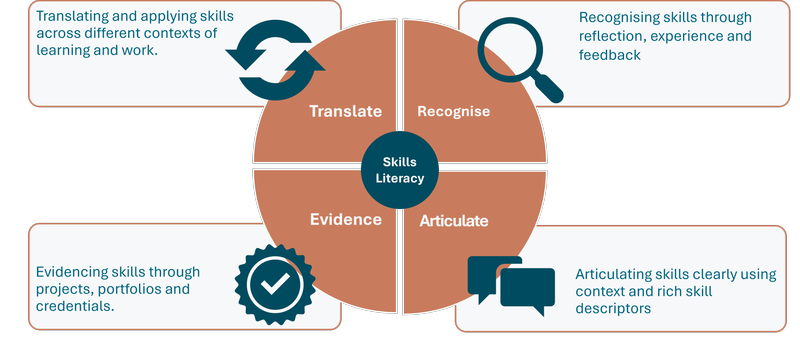
Skills literacy has four connected stages:
- Recognise: Noticing what is being developed through learning.
- Articulate: Being able to describe that capability clearly.
- Evidence: Showing what that capability looks like in practice.
- Translate: Adapting that language for different contexts, such as school, further study, or work.
Students are already developing capability through what they do and you are already teaching these skills. What is less consistent is everything that follows.
- They may not recognise what they are learning to do
- They may struggle to describe it
- They may not know what examples to use that show it
- And they may not know how to apply it in new contexts
Skills literacy connects learning to understanding, and understanding to use.
It allows students to move from:
“I completed the task”
to:
“I can explain what I did, how I approached it, and what I can now do as a result.”
A shift in focus
This is not about adding new content or creating additional workload. It is about making skills and capability more visible and more meaningful by:
- explicitly noticing what is already happening
- using clear and simple language
- helping students connect their learning across contexts
Lifelong Learning: Recognise and Articulate School Skills

Lifelong Learning: Recognise and Articulate School Skills





