
Useful Evidence – Jake and Aisha
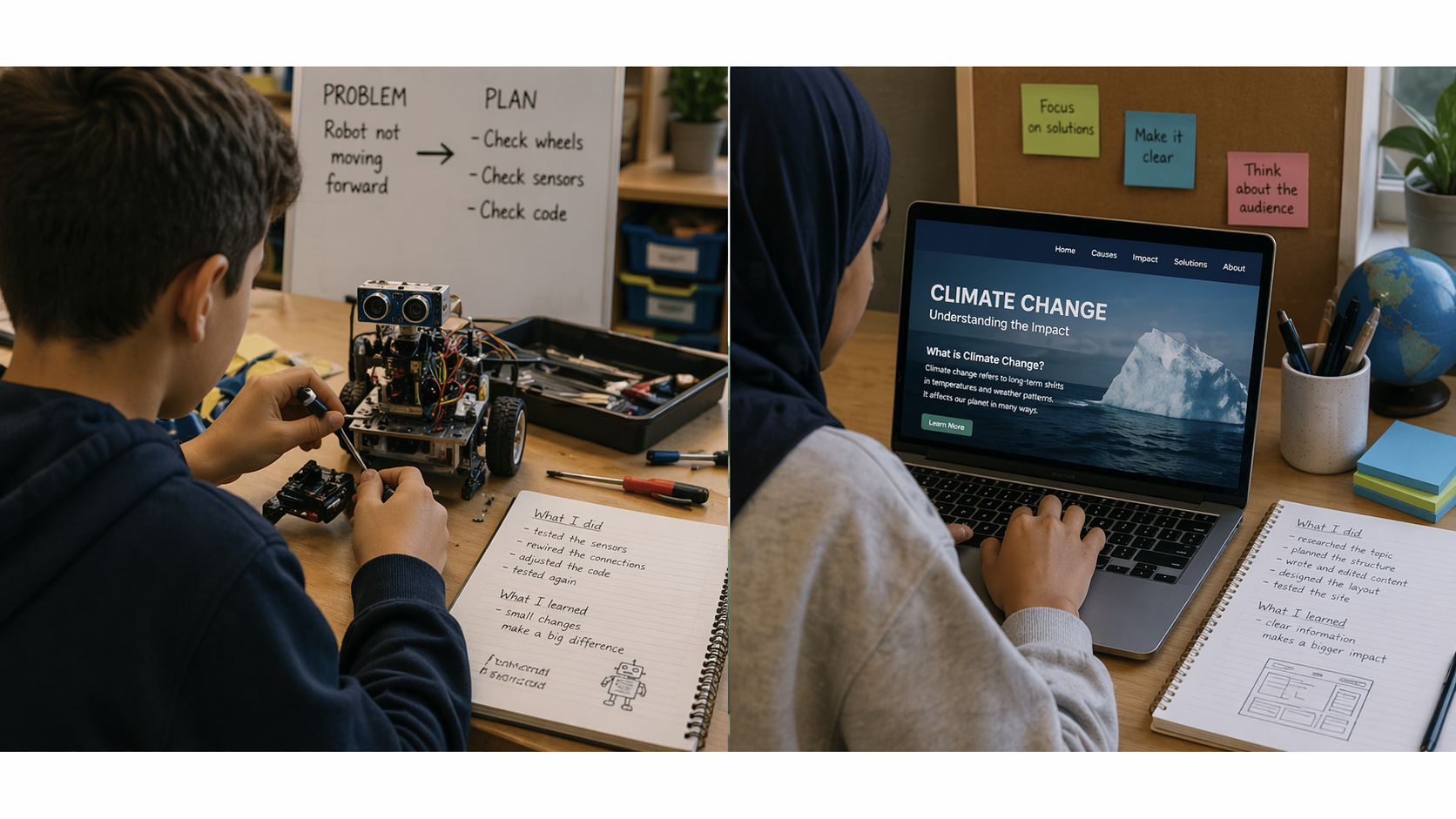
In previous steps, we explored how to make skills visible. In this activity, we take that a step further. Not just visibility, but usability. Because the way learning is described influences whether it can be understood, recognised, and used in other contexts.
Jake
Jake is preparing a short summary of his robotics project for a school portfolio.
Initially he writes, “I built a robot and completed the project.”
The teacher then uses the following prompts:
- What did you test or change as you worked on the project?
- What problems did you run into, and how did you respond?
- What decisions did you make to improve the outcome?
Jake then writes:
I built a robot and tried different ways to improve how it worked. When something didn’t work the way I wanted it to, I figured out what was wrong, tested a few different fixes, and made changes to the code and design until it moved and responded better.
Aisha
- Who was your website designed for?
- How did you decide what information to include and how to organise it?
- What feedback did you receive, and what changes did you make as a result?
I built an interactive website about climate change and organised the content for different audiences. I tested how people used it and made changes based on feedback to improve the layout and make the information easier to understand. When one of the interactive features wasn’t working properly, I fixed it using something I had learned at home when I do coding.
Aisha has learned many of these skills across different contexts. Describing her learning this way helps her connect those experiences and present a clearer, more credible picture of her capability.
From completion to capability
The second descriptions show how the work was approached and how Jake and Aisha made decisions and changed things to solve problems.
It provides detail that others can interpret and use. The description moves from a record of completion to evidence of capability.
Points to consider
Thinking about your own context, Where do your students want or need to provide evidence of what they have learned? You might consider:
- portfolios or reports
- assessments or feedback conversations
- applications, transitions, or subject choices
Lifelong Learning: Recognise and Articulate School Skills

Lifelong Learning: Recognise and Articulate School Skills





