
SkillSTAR – a simple method for turning tasks into evidence
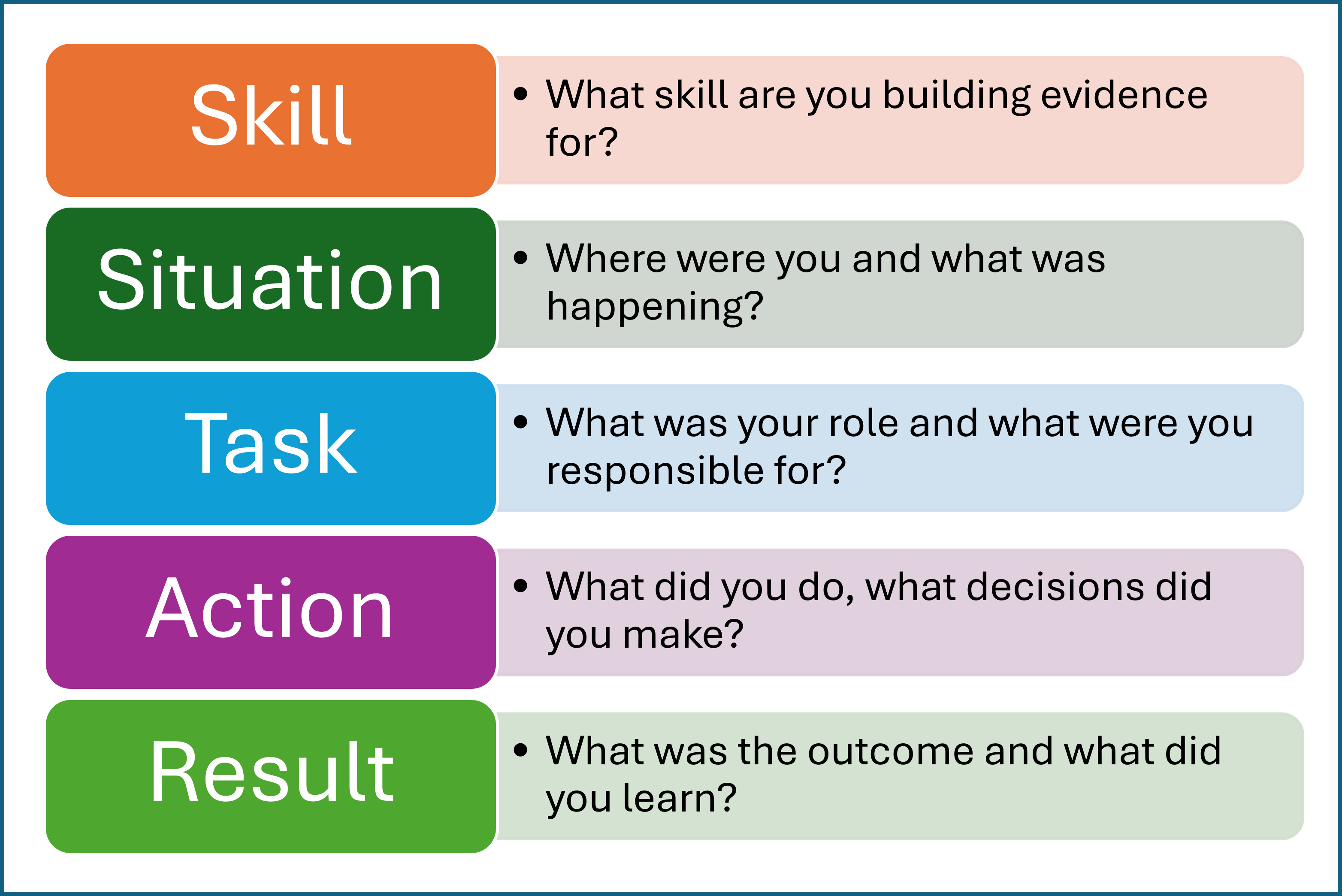
As we begin to think about how evidence becomes credible, it can be helpful to draw on a structure that is widely used beyond education.
You may have come across the STAR method, often used in job interviews to help people describe their experience in a clear and structured way. It stands for:
Situation – Task – Action – Result
This structure works because it helps move from a general claim to something more specific, grounded, and easier to interpret.
Reframing STAR for Skills Literacy
For our purposes, we can take this one step further. Rather than starting with the situation, we begin with the skill. This shifts the focus from simply describing an experience to clearly linking that experience to capability.
Skill – Situation – Task – Action – Result
What This Looks Like in Practice
Let’s return to our earlier example. The skill statement “I’m good at problem-solving”, names the skill, but doesn’t yet show how it is applied.
Using SkillSTAR
Skill: Problem-solvingSituation: While leading the rollout of a new learning platform, the project began falling behind schedule due to low user engagementTask: My role was to identify the issue and get the rollout back on trackAction: I analysed usage data, identified where participants were dropping off, and worked with the team to redesign the onboarding experience. We tested different approaches and adjusted the rollout planResult: As a result, completion rates increased, timelines stabilised, and the platform was successfully implemented across the organisation
This structure help us move from naming the skill to:
- showing how it is applied
- demonstrating the impact of that application
This is what shifts evidence from general description to something more meaningful.
Connecting to Usable and Credible Evidence
We can also see how this connects to the ideas we’ve been exploring.
Usable evidence helps someone understand what they can do:
- the situation
- the actions
- the outcome
Credible evidence goes further. It allows someone else to:
- trust that the capability is real
- see how it was applied in context
- and use that information to make a judgement
The SkilllsSTAR structure supports both. It ensures that:
- the evidence is clear and specific
- the context is visible
- the actions are grounded in real behaviour
- and the outcome shows impact
A Practical Tool for the Classroom
The focus isn’t teaching students interview techniques, it is about giving them a simple way to describe what they have done and connect it to what they can do. Over time, this helps students move from, “I completed the task” to “I can explain how I approached the task, what I changed, and what I can now do as a result”
For students in final years explaining how this approach can be used for interviews is a powerful way to link skills literacy to employment opportunities. It also highlights that capability is not just built through formal learning but also developed through all aspects of life.
Lifelong Learning: Recognise and Articulate School Skills

Lifelong Learning: Recognise and Articulate School Skills





