
Through this task you demonstrated…
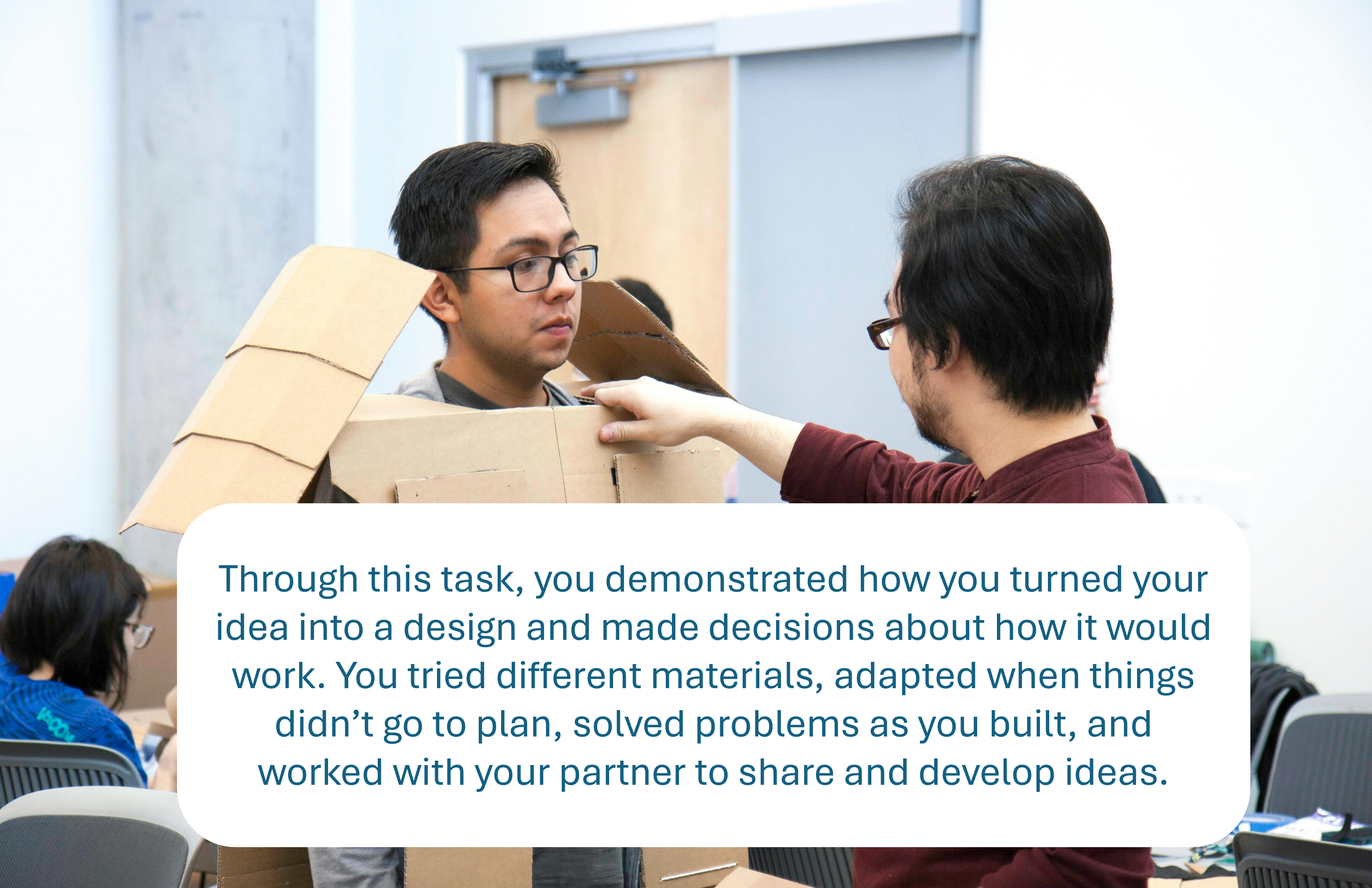
In the video, we went from describing the task to describing what the student actually did.
Using the scaffold: “Through this task, you demonstrated…”
It’s a subtle shift that makes the capability visible. But in practice, this is not always easy. When we start to write skills statements, it’s common to fall back into language that is either too broad or too technical.
For example:
“Through this task you demonstrated critical thinking”
“Through this task you demonstrated applying analytical skills”
These are accurate, but if you read them as a student, they don’t necessarily tell you what you actually did. This is where the shift from abstract to specific becomes important.
Think back to the example from the video. Instead of saying: “Demonstrated problem-solving”, we described what that looked like:
“Through this task you demonstrated testing different ideas, you noticed what wasn’t working, and adjusted your approach.”
Now the skill is something you can see, and if you can see it, chances are your students can start to see it.
Check your language
As you begin to write your own skills statements, it can help to pause and ask:
- Can I picture what the student is doing?
- Would a student recognise themselves in this description?
- Is this something that could be observed in their work or behaviour?
If the answer is no, the language may still be too abstract.
Keep it simple
It can also be tempting to make the language more formal or technical. But in most cases, simpler is better. You’re not writing a framework, you’re writing for a student. This is the translation step in skills literacy.
Sometimes students need support to move from general descriptions toward clearer explanations of what they actually did.
Simple prompts can help surface thinking, decisions, adjustments, and evidence of capability.
You might use prompts such as:
Recognise
- What skill were you using here?
- What part of this task felt easier than before?
- What did someone else notice you doing well?
Articulate
- This task showed that I can…
- A better way to describe what I did is…
Evidence
- What could you point to that shows this capability?
- What part of your work best shows your thinking?
- What example or outcome best represents this skill?
Translate
- Where else could you use this skill?
- What might this look like in another subject or context?
- How could this help outside the classroom?
These kinds of prompts help students move from simply completing a task to recognising, describing, and evidencing what they can do.
For a broader selection of prompts and sentence starters, you can explore the downloadable Reflection Prompts for Skills Literacy resource below.
In the next step we’ll put this into practice.
Lifelong Learning: Recognise and Articulate School Skills

Lifelong Learning: Recognise and Articulate School Skills





