Language contact in the EU
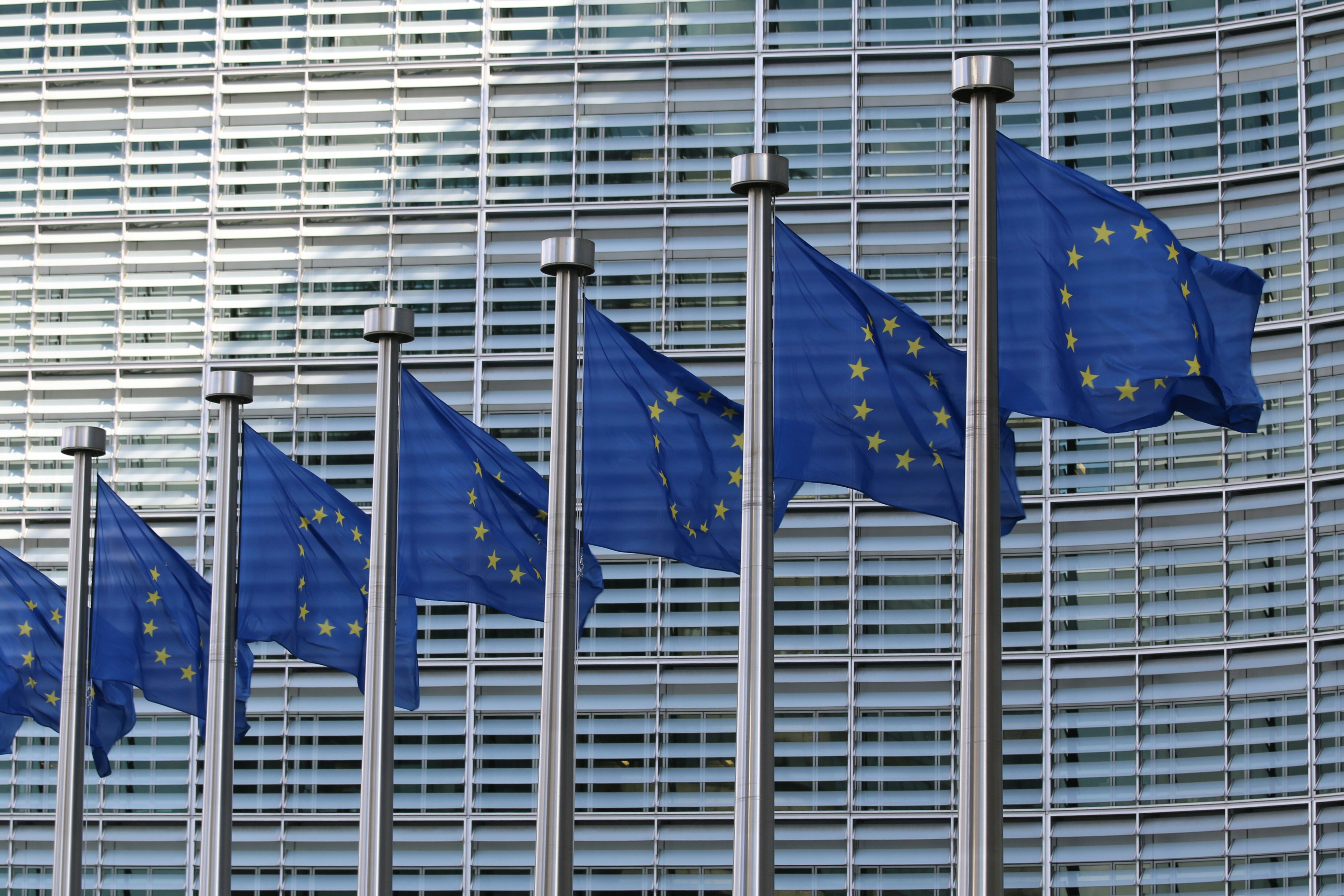
The European Union (EU) has 24 official languages, so it’s no wonder the corridors of the European Commission resonate with the hum of Hungarian, the melodies of Maltese and the buzz of Bulgarian. EU institutions are a hotbed of language contact and, while the Union’s primary role is political and economic, the daily meeting of languages within its walls wields considerable linguistic influence as well.
Although members of EU entities are permitted to speak any of the official languages, by far the most common are English, French and German. It’s no wonder, then, that French and German have had a particular influence on the type of English spoken in Brussels. This has led to the development of a new variety of English known as ‘Euro English’, full of technical jargon and some words and phrases that might sound a little odd to a first-language English speaker.
Consider the following statement from real EU documentation:
“This appropriation is intended to cover basic salaries of the staff, as listed in the attached table, based on the actual regulations and on the probable adjustments”. (Statement of revenue and expenditure of Cedefop, 2002)
“Normally, I will come at 1 o’clock”.
What does ‘normally’ mean here? Usually? Typically? Perhaps, but you’ve only asked her what time she wants to meet today. Why would she tell you what time she normally has lunch? In fact, it is more likely that what your colleague means here is that she should be there at 1 o’clock, assuming everything is normal and nothing changes. Again, this is likely the result of contact with French, in which the word ‘normalement’ means both ‘normally’ and ‘all being well’ or ‘in normal circumstances’. A first-language English speaker might find this odd or confusing, but the increased contact between languages in European institutions makes this usage perfectly acceptable in Brussels.
Jeremy Gardner, the senior translator of The European Court of Auditors calls these “misused” words (Gardner, 2013), but they could also be described as the emergence of a new variety of English, free from the constraints of any national standard. It is undoubtedly English, but other European languages are very much leaving their mark.
Language varieties don’t often come about this way, so it is difficult to predict the future of Euro English. The EU remains an important player on the world stage, so it is safe to assume that it will remain a key source of language contact for some time. After the United Kingdom left the European Union, there was speculation that English might become less dominant in Europe as it was now only official in two EU countries, namely Ireland and Malta. Perhaps this could lead to the formation of Euro German or Euro French. However, linguist Marko Modiano suggests that, rather than dying out, English has become a neutral option for speakers of other EU languages (O’Grady, 2017). Imagine a Spaniard and a Swede meet in Barcelona. Why give one person an advantage by speaking Spanish or Swedish, when instead they could both use their second language and keep themselves on an equal footing? If Modiano is right, it’s only natural that this form of English, influenced by patterns in other European languages, will continue to develop and maybe even become a dialect of its own.
References
Gardner, J. (2013). Misused English words and expressions in EU publications. European Court of Auditors. https://www.eca.europa.eu/other%20publications/en_terminology_publication/en_terminology_publication.pdf
O’Grady, C. (2017). After Brexit, EU English will be free to morph into a distinct variety. The Guardian, https://www.theguardian.com/science/blog/2017/sep/25/without-uk-influence-eu-english-will-be-free-to-morph-into-a-distinct-variety
Statement of revenue and expenditure of the European Centre for the Development of Vocational Training (Cedefop) for the financial year 2002 (2002/486/EC), 2002, Official Journal L 178, 109-154, https://eur-lex.europa.eu/legal-content/EN/ALL/?uri=CELEX%3A32002B0486