The return of pre-colonial languages
The post-colonial era has seen significant efforts to revitalise indigenous languages, many of which were suppressed or marginalised during colonial rule (McCarty & Nicholas, 2014). These revitalisation movements are often intertwined with issues of educational equity, self-determination and community well-being as language is considered essential to the collective identity of a community (Khawaja, 2021).
The impact of colonialism
Historically, colonial powers often portrayed indigenous languages as primitive or as “barriers to civilisation and modernity” (Khawaja, 2021, p. 3). In Canada, for example, residential schools actively attempted to eradicate indigenous cultures and languages, forcing indigenous children to integrate into the colonial culture (Khawaja, 2021). Similarly, in Côte d’Ivoire, French culture was imposed by devaluing local languages, justified by the fact that they had no written form and were therefore deemed incapable of communicating modern sciences (Aboa Abia, 2008). The suppression of indigenous languages had a considerable impact on their communities. For many, language loss meant the loss of cultural identity, personal identity and even poor mental health (Khawaja, 2021).
Despite these historical injustices, several indigenous languages have experienced significant revitalisation, with some achieving official status or surpassing colonial languages in their daily use.
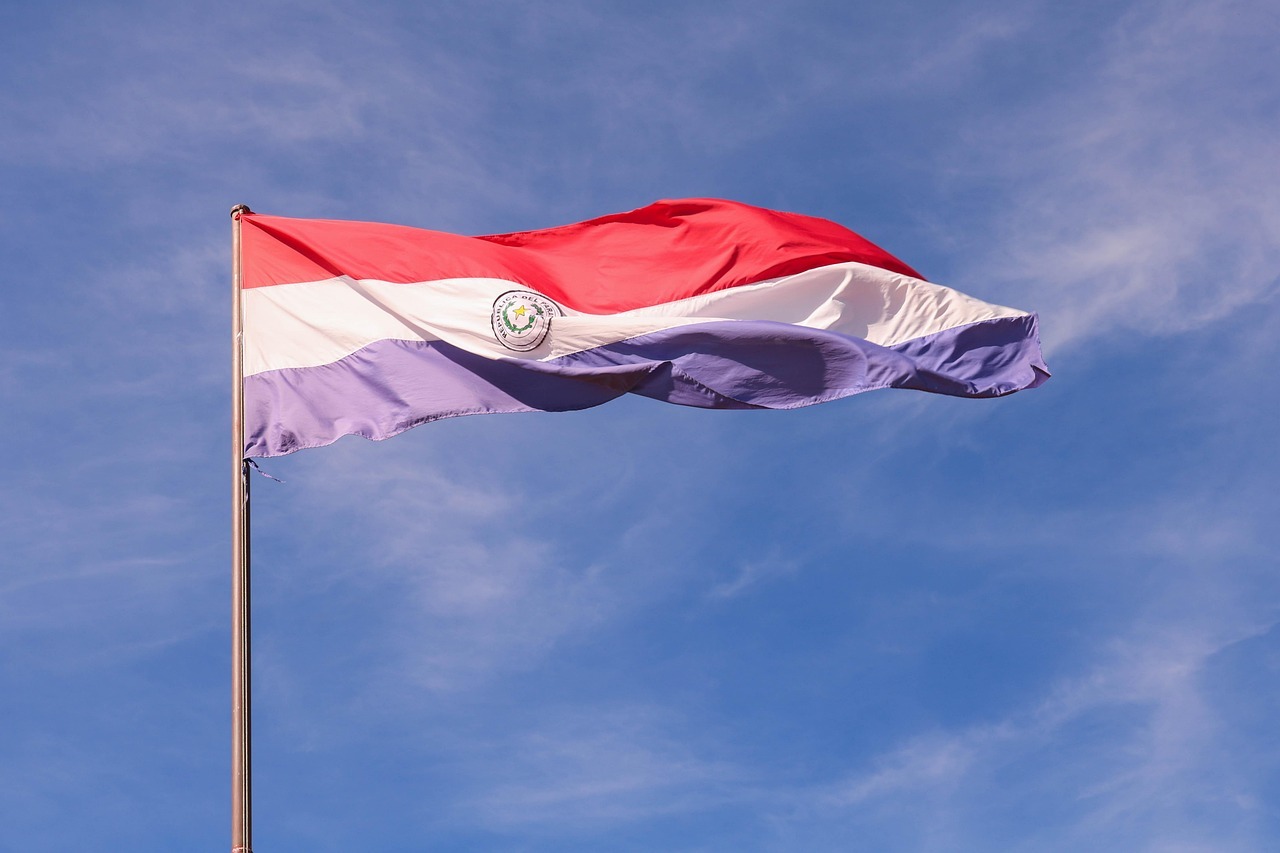
Guaraní in Paraguay
Guaraní, a language spoken by the majority of Paraguay’s population, faced two centuries of suppression, but has shown striking endurance. While Spanish was the sole language of education from 1870-1970, Guaraní remained the primary language of most children, with 88% of early-education pupils speaking little to no Spanish (Nickson, 2009). In 1992, the Paraguayan constitution designated Guaraní an official language alongside Spanish.
This was achieved more through social movements than the state. Farming organisations have long advocated for the use of Guaraní in campaigning and negotiations. Rural radio stations give poorer communities a voice by broadcasting in the language. Greater visibility on billboards and in shops has also helped to reduce stigma. These community efforts have translated into real, political change. In 1999, president González Macchi welcomed foreign visitors to the Latin America football championship in Guaraní and in 2008 the national anthem was sung in Guaraní for the first time at a presidential inauguration (Nickson, 2009). In 2003, the national prize for literature was awarded for the first time to a ballad in Guaraní and, two years later, a national prize for contributions to Guaraní music and popular culture was established (Nickson, 2009).
The resurgence of Guaraní is testament to its place as a marker of Paraguayan identity and demonstrates that two centuries of severe marginalisation cannot eradicate a language which is so deeply embedded in the psyche of a community.
Māori in New Zealand
In the 1960s, Māori, an indigenous language of New Zealand, was seriously endangered, but like Guaraní it has undergone a remarkable revitalisation.
Education played a crucial role in the revitalisation movement. Kōhanga reo or language nests were established in the 1980s, recruiting grandparents to teach Māori in pre-schools. This continued as 71 Kura kaupapa Māori or Schools of Māori philosophy were established, teaching only in Māori. Elsewhere, mixed Māori and English instruction has proven effective, with data suggesting that national examination attainment is higher for those taught in Māori for at least 51% of the time compared to their peers in English-language schools. (Spolsky, 2009).
The New Zealand government has also played a role in Māori’s resurgence, committing to “actively enable the survival of Māori as a living language” (Spolsky, 2009, p. 25). Funding has been allocated for Māori language services and a strategic plan was developed to revitalise the language as a “dynamic feature of everyday life” (p. 25). In 1987, the Māori Language Act made Māori an official language of New Zealand and established the Māori Language Commission. This marked a significant shift from earlier policies that encouraged the use of English and discouraged Māori in schools (Spolsky, 2009).
The future of indigenous languages
Revitalising previously suppressed indigenous languages is not a simple task. Chronic underfunding is a major barrier, with advocates around the world calling for increased financial support (Social Justice Australia, 2025; Law, 2025; Brant, 2022). Moreover, if indigenous communities are not involved in the development of language technologies, there is a greater risk of further marginalisation in the digital age (Khawaja, 2021). One of the biggest factors influencing language choices in some regions is the enduring perception that colonial languages are superior for economic success (Kouadio N’Guessan, 2008). However, the stories of Guaraní and Māori offer some hope. Their example shows that community-led initiatives, education and political will can bring languages back, even from the brink of extinction.
References
Aboa Abia, A. L. (2008). La francophonie ivoirienne. Enjeux politiques et socioculturels. Documents pour l’histoire du français langue étrangère ou seconde, (40/41), 163-178.
Brant, D. J. (2022). Revitalizing First Nations Languages: A Costing Analysis. https://afn.bynder.com/m/5053eb7d96b716de/original/Language-Revitalization-Report.pdf
Khawaja, M. (2021). Consequences and remedies of indigenous language loss in Canada. Societies, 11(3), 89.
Kouadio N’Guessan, J. (2008). Le français en Côte d’Ivoire: de l’imposition à l’appropriation décomplexée d’une langue exogène. Documents pour l’histoire du français langue étrangère ou seconde, (40/41), 179-197.
Law, S. (2025). Indigenous language program in northwestern Ontario threatened by lack of government funding. CBC. https://www.cbc.ca/news/canada/thunder-bay/matawa-language-program-potential-suspension-1.7521981
McCarty, T. L., & Nicholas, S. E. (2014). Reclaiming Indigenous languages: A reconsideration of the roles and responsibilities of schools. Review of research in education, 38(1), 106-136.
Nickson, R. A. (2009). Governance and the Revitalization of the Guaraní Language in Paraguay. Latin American Research Review, 44(3), 3-26.
Olawsky, K. J. (2020). Concerns over funding for Australian Indigenous languages – Key points. https://mirima.org.au/wp-content/uploads/2020/08/Concerns-over-Federal-funding-for-Australian-Indigenous-languages_RELEASE.pdf
Social Justice Australia. (2025). What Are Barriers to Education for Indigenous Australians? Social Justice Australia. https://socialjusticeaustralia.com.au/barriers-to-education/
Spolsky, B. (2009). Rescuing Maori: the last 40 years. In Peter K. Austin (ed.) Language Documentation and Description, vol 6. London: SOAS. pp. 11-36