Language and gender identity
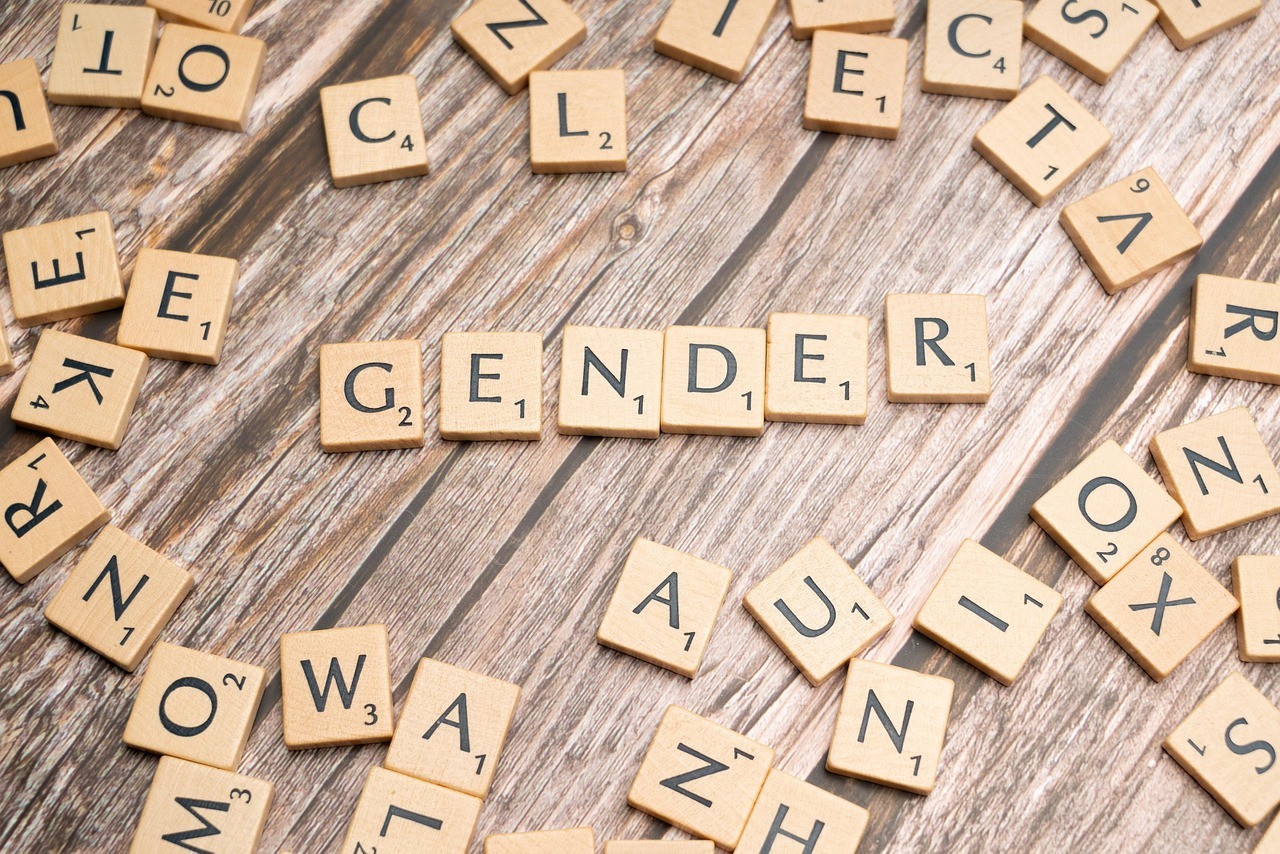
In gendered languages, nouns are classified into categories: masculine, feminine and, in the case of German, neuter.
This pervasive gendering can marginalise women and create barriers for individuals who identify outside the male/female binary. What efforts have been made to reduce these barriers and are they catching on?
French
Some purists consider the preservation of French “the quintessence of the French spirit” (Hord, 2016) (see step 2.4). However, language reforms have long been supported. In the 1980s, feminists in Quebec and France called for the feminisation of job titles to recognise women’s contributions to the workforce. It was only in 2019 that the Académie Française finally accepted these forms (Henley, 2019).
French is less accommodating to non-binary identities. In 2023, President Emmanuel Macron argued that the masculine form already serves as the neutral form (Le Monde, 2023). Nonetheless, the pronoun ‘iel’, a contraction of ‘il’ (‘he’) and ‘elle’ (‘she’), appeared in the early 2010s (Radio France, 2021) and is gaining traction. It was added to the online version of the Le Robert dictionary in 2021 (Le Robert, 2021) and some primary school textbooks have adopted inclusive language in France and Quebec (Alpheratz, 2018).
German
German has shown greater openness to gender-neutral language, perhaps due to a strong historical feminist language movement (Hord, 2016). Entgendern or de-gendering often involves the use of asterisks or colons to indicate that a word belongs to any gender (Nicholson, 2021). Some cities have even mandated gender-neutral language in official communications (Kolek, 2025). German airline Lufthansa has stopped using the expression ‘meine Damen und Herren’ (‘ladies and gentlemen’) and a gender-neutral Bible is in preparation (Nicholson, 2021).
Spanish
The Real Academia Española (RAE) has dismissed inclusive language as “artificial and unnecessary,” insisting that the masculine plural already serves an inclusive function (Benavides, 2020). Gender-neutral forms have nonetheless been proposed. In the 1990s, some started using -@ ending rather than a masculine -o or feminine -a. Rather than ‘amigos’ or ‘amigas’, people called their friends ‘amig@s’. The letter -x can do the same: ‘Latino’ or ‘Latina’ becomes ‘Latinx’. However, both are difficult to pronounce, so many choose the suffix -e instead which is much easier to pronounce (Benavides, 2020). ‘Amigo/a’ therefore becomes amigue and ‘Latino/a’ becomes Latine (Bonnin & Coronel, 2021).
This has been common in Argentina since 2018, with some magistrates and universities accepting its use. Although far from mainstream, it is spreading to other Spanish-speaking countries, suggesting that the RAE may one day eventually have to accept it (Benavides, 2020).
Italian
Italian faces even greater challenges as gender and number (singular/plural) are deeply tied to its vowel system. Like German, asterisks have been used to replace gendered vowels at the end of words: ‘tutt*’ instead of ‘tutto’ or ‘tutta’ (‘all’). However, this is also difficult to pronounce. Unlike Spanish, though, the -e ending cannot be used as this is a feminine plural ending in Italian. Some have proposed -u as it has no grammatical meaning, but it is not clear what the corresponding plural form should be. Others have suggested [ə] (schwa), the vowel in the second syllable of ‘enough’ (Naidu 2023). Though foreign to Italian and difficult to type, the limited number of vowels available may make schwa the only viable option.
The Accademia della Crusca asserts that Italian has two grammatical genders and does not support “forcing the language” to serve an ideology, even a positive one. The Accademia notes that language evolves organically and institutional interventions rarely have lasting effects (D’Achille, 2021).
Mandarin Chinese
Historically, Mandarin had one, gender-neutral third-person pronoun pronounced ta, meaning ‘he’, ‘she’ or ‘it’. The written form 他 combines one component meaning ‘person’ and another meaning ‘other’. However, in the early 20th century, a feminine version of the written form was introduced: 她, where the 女 component means ‘woman’. This was an institutionalised effort, taught in schools to promote gender equality. The originally gender-neutral 他 was now the masculine form.
This form is still the default, with younger people showing more masculine bias than older generations (Dong et al., 2023). However, some online writers are pushing back by using the romanised ta instead of characters to avoid gendered forms (Sluchinski, 2020).
In conclusion, grammatically gendered languages face inherent structural challenges in accommodating non-binary identities. While various strategies, including feminisation and the use of non-alphabetical symbols, have been proposed, their success often depends on public acceptance, institutional backing and the broader socio-cultural context. As we have seen, language can be used to foster a personal identity, but doing so outside of cultural norms often proves incredibly difficult.
References
Alpheratz, M. (2018). Français inclusif: conceptualisation et analyse linguistique. In SHS Web of Conferences (Vol. 46, p. 13003).
Baron, D. (2022). A brief history of singular “they.” OED. https://www.oed.com/discover/a-brief-history-of-singular-they/?tl=true
Bonnin, J. E., & Coronel, A. A. (2021). Attitudes toward gender-neutral Spanish: Acceptability and adoptability. Frontiers in sociology, 6, 629616.
D’Achille, P. (2021). Un asterisco sul genere. Accademia della Crusca. https://accademiadellacrusca.it/it/consulenza/un-asterisco-sul-genere/4018
Dong, M., Chen, R., & He, L. (2023). Gender bias in the Chinese epicene pronoun ta. Language Sciences, 97, 101543.
Henley, J. (2019) Académie Française allows feminisation of job titles. The Guardian. https://www.theguardian.com/world/2019/mar/01/academie-francaise-allows-feminisation-of-job-titles
Hord, L. C. (2016). Bucking the linguistic binary: Gender neutral language in English, Swedish, French, and German. Western Papers in Linguistics, 3(1).
Kolek, V. (2025). Teaching Non‐Binary German Language in the Czech Republic. Die Unterrichtspraxis/Teaching German.
Le Monde. (2023). Ecriture inclusive : Emmanuel Macron estime qu’« on n’a pas besoin d’ajouter des points au milieu des mots pour rendre la langue française lisible ». Le Monde. https://www.lemonde.fr/politique/article/2023/10/30/ecriture-inclusive-emmanuel-macron-estime-qu-on-n-a-pas-besoin-d-ajouter-des-points-au-milieu-des-mots-pour-rendre-la-langue-francaise-lisible_6197361_823448.html
Le Robert. (2021). Pourquoi Le Robert a-t-il intégré le mot « iel » dans son dictionnaire en ligne ? Le Robert. https://dictionnaire.lerobert.com/dis-moi-robert/raconte-moi-robert/mot-jour/pourquoi-le-robert-a-t-il-integre-le-mot-iel-dans-son-dictionnaire-en-ligne.html
Naidu, N. (2023). The Schwa As A Symbol Of Gender Inclusivity In Modern Italian. Linguatute. https://linguatute.com/the-schwa-as-a-symbol-of-gender-inclusivity-in-modern-italian/
Nicholson, E. (2021). Germany debates how to form gender-neutral words out of its gendered language. NPR. https://www.npr.org/2021/10/30/1049603171/germany-gender-neutral-language-german
Radio France. (2021). Le pronom “iel” est une affaire linguistique en cours. Radio France. https://www.radiofrance.fr/franceculture/podcasts/affaire-en-cours/le-pronom-iel-est-une-affaire-linguistique-en-cours-1515460
Sluchinski, K. (2020). A discursive pragmatic approach to the third person pronoun ta in Chinese computermediated communication. East Asian Pragmatics, 5(2), 247-277.