Case study: Spain
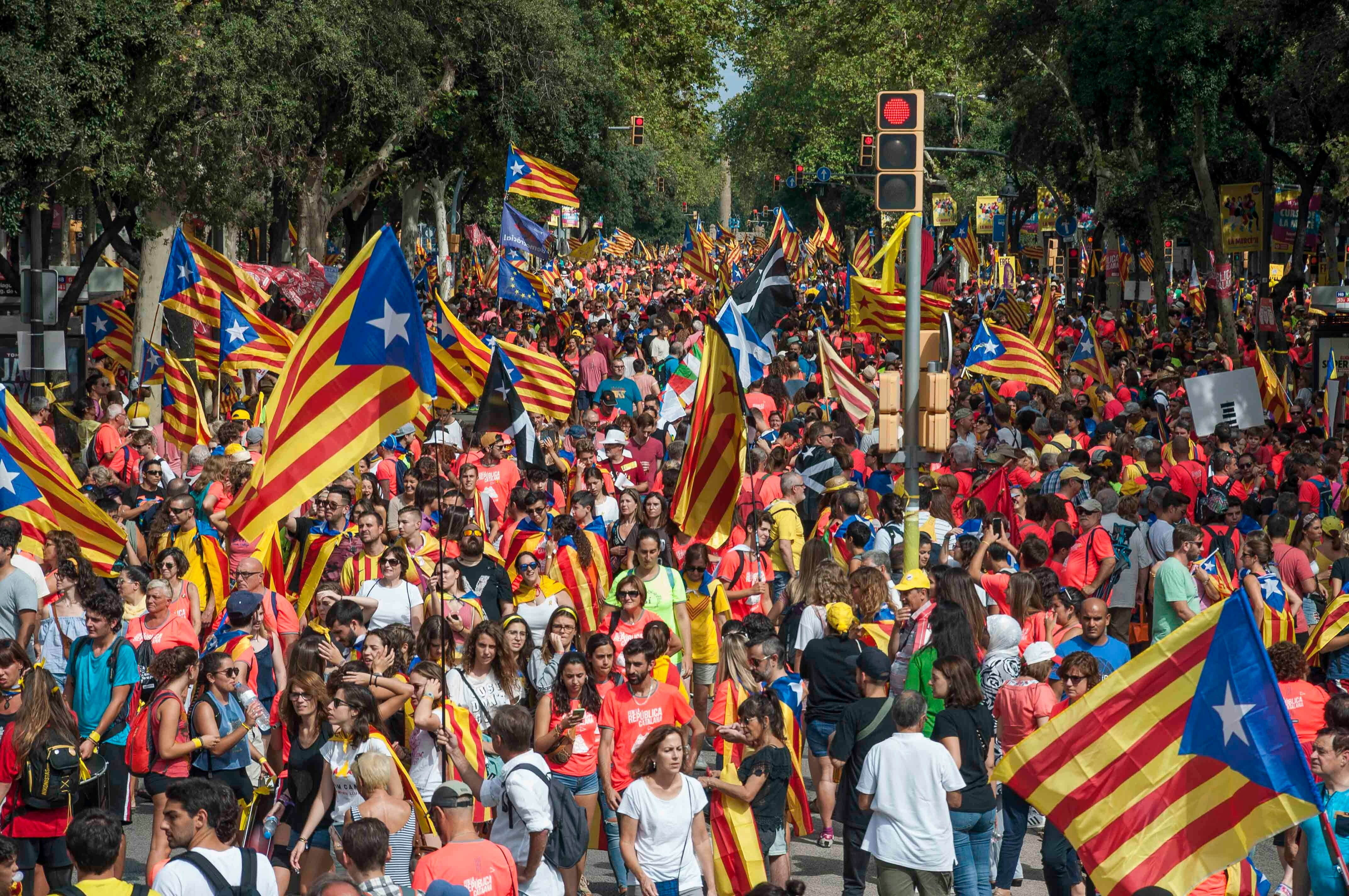
As well as being the birthplace of the world’s fourth most-spoken language (Ethnologue, 2025), Spain is home to many other languages.
While these linguistic differences contribute to Spain’s rich cultural diversity, they also play a key role in shaping political and societal divisions. Spain’s only nation-wide official language is Spanish (also known as Castilian), some languages, such as Catalan and Galician, are co-official with Spanish in regions where they are spoken and others, such as Aragonese and Asturian have no official status (Ciltan & Ciuciuc, 2023). The differing status of these languages frequently ignites regional disputes that reflect deep political and social divisions.
Catalan
Perhaps the most well-known case is Catalan which is official in three eastern regions of Spain. Described by Moseley (2010, p. 12) as “the safest minority language in Europe”, Catalan is a key part of Catalonian identity and was granted official recognition in the late 19th century. However, the strong promotion of Catalan by regional leaders, including its use as the primary language of instruction in schools, has been criticised for potentially undermining the status of Spanish and fostering Catalan nationalism. Gorenko (2022) argues that the fierce promotion of Catalan:
“…runs counter to the principles of the European Charter for Regional or Minority Languages, since the programme has been carried out to the detriment of the official language” (p. 47).
In this sense, the unity of the entire nation is felt to be threatened by a particularly strong form of linguistic protectionism.
Basque
The importance of language is made clear when we examine the case of Basque. Spoken by just 35% of the population (Bitong, 2017), Basque is a language isolate, unrelated to any other language in the world. Despite locals’ positive attitudes towards Basque, it is perceived as difficult to learn and supporters of the region’s independence fear that those who don’t speak it will be alienated (Mann, 2017). In stark contrast to the Catalonian example, it seems that the endangered status of the Basque language has curbed the independence movement to such an extent that it does not present the same threat as Catalonian nationalism.
Galician
Similarly, while the Galician language has lower prestige than Spanish, Catalan or Basque it is viewed favourably in the region (Ciltan & Ciuciuc, 2023) and it has been suggested that the poorer economic status of the region may be behind the relatively low support for independence (Mann, 2017). Galicians are more likely to move away to find work opportunities and therefore have a more positive attitude towards internal and external immigration. Despite the linguistic border between the Galician population and the rest of Spain, its culture reduces the potential for an even harder border.
Political tensions
In the Spanish government, language can be a particularly divisive tool. In 2023, Basque, Catalan and Galician were granted official parliamentary status, meaning MPs could now address congress in any one of these languages. This led to criticism from the conservative People’s Party and a walkout by MPs from the far-right party Vox (Jones, 2023). Similarly, in 2025, Madrid’s regional president and member of the People’s Party, Isabel Díaz Ayuso, walked out of a conference in Barcelona when Basqe Country president Imanol Pradales began speaking in Basque. She only returned once the Basque and Catalan speeches were finished (Escudé Macià, 2025).
Spain’s diverse linguistic heritage, while culturally enriching, remains a potent source of division. The historical dominance of Castilian and its status as the only nationwide official language often translates into friction with Spain’s autonomous communities. The ongoing struggle for linguistic and cultural recognition in Spain demonstrates just how deeply language is embedded in Spanish identity and how it continues to create borders between people, even those who live under the same national flag.
References
Bitong, A. (2017). The mysterious origins of Europe’s oldest language. BBC. https://www.bbc.co.uk/travel/article/20170719-the-mysterious-origins-of-europes-oldest-language
Ciltan, A. L., & Ciuciuc, V. E. (2023). Attitudes towards minority and non-official languages in Spain. Bulletin of the Transilvania University of Brasov. Series IV: Philology and Cultural Studies, 105-112.
Escudé Macià, O. (2025). Language tensions erupt at regional presidents’ conference in Barcelona. Catalan News. https://www.catalannews.com/politics/item/spanish-pm-king-felipe-vi-and-regional-leaders-arrive-in-barcelona-for-high-level-conference
Ethnologue. (2025). What are the top 200 most spoken languages? The Ethnologue 200. https://www.ethnologue.com/insights/ethnologue200/
Gorenko, G. M. (2022). The Sociolinguistic Situation in Spain: The Protection of Language and Nation. The Russian Journal of Cultural Studies and Communication, 1(1-2), 42-51.
Jones, S. (2023). Spain grants Basque, Catalan and Galician languages parliamentary status. The Guardian. https://www.theguardian.com/world/2023/sep/19/spain-grants-basque-catalan-and-galician-languages-parliamentary-status
Mann, S. (2017). Why is Catalonia the Spanish region pressing hardest for independence? El País. https://english.elpais.com/elpais/2017/07/18/trans_iberian/1500398661_788275.html
Moseley, C. (Ed.). (2010). Atlas of the World’s Languages in Danger. UNESCO.
Ranson, D. L., & Quesada, M. L. (2018). The History of Spanish: A Student’s Introduction. Cambridge University Press.