
How to start telling your story
- What do I hope to achieve by sharing my story? Do I want to highlight a gap in the health care I received or an area that needs more research?
- Who is the audience for my story? Am I prepared for their reactions to my story?
- Are there parts of my story that should not be shared? This question is particularly important for caregivers to answer when they are sharing medical and personal information that does not belong to them.
If you are at the point where you want to start crafting your story, this infographic has some great tips to get you started:
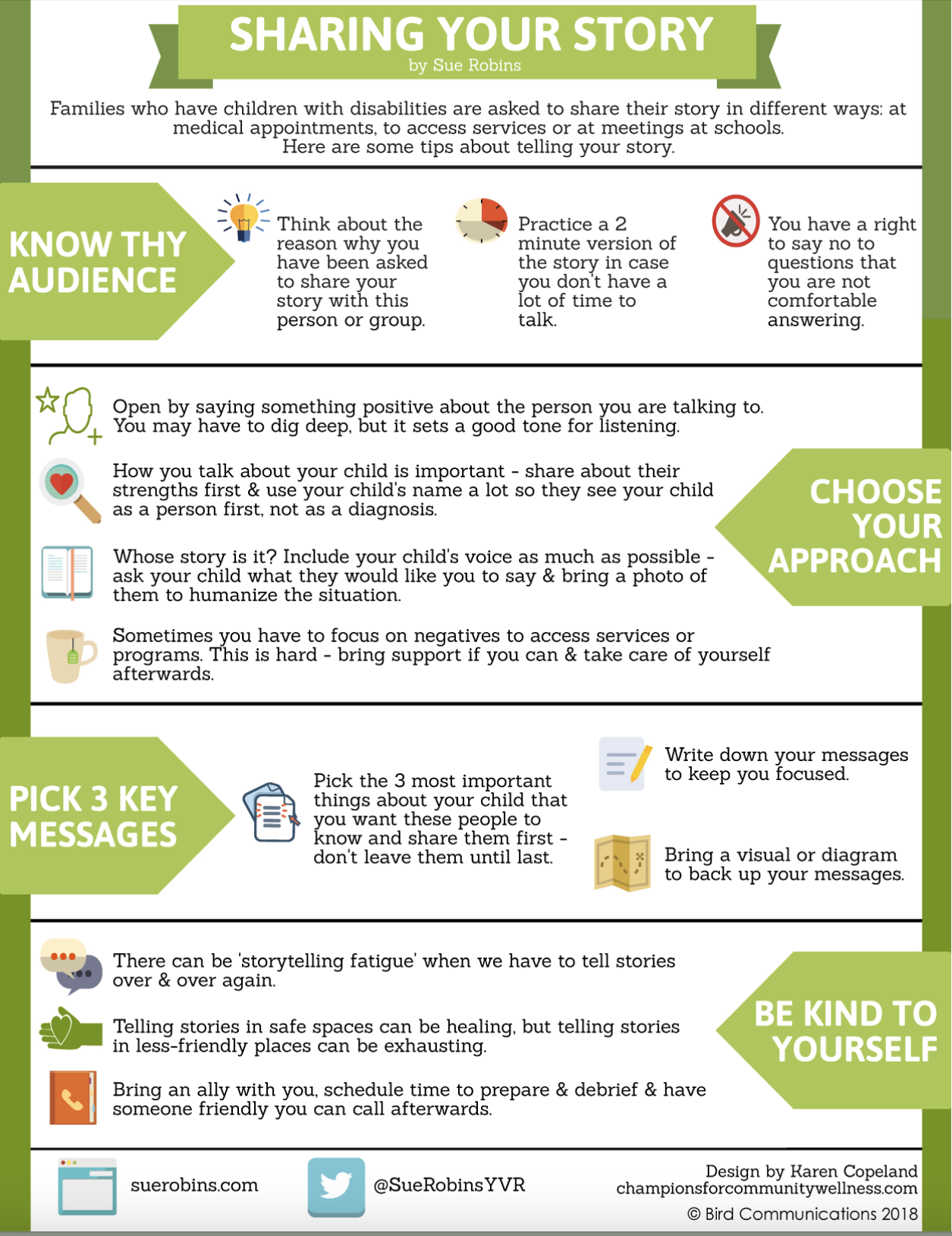
Source
You have the right to ask about how your story will be used. Is it being incorporated in a structured way that helps support changes to policy or identify gaps in research? You should be asked to tell your story for a specific purpose, beyond inspiring an audience.
Remember that you also have the right to say no and to stop sharing your story if the emotional labour is too heavy or if you are unsure about how your lived experience will be presented to the world. You do not owe anyone your story.
Additional resource: In your own time, you may find it helpful to hear how other patients have navigated sharing their stories and taking care of themselves (60 minutes video).
The Power of Patient Advocacy in Genomics: Influencing Research, Clinical Practice and Decision Making


The Power of Patient Advocacy in Genomics: Influencing Research, Clinical Practice and Decision Making





