Home / Healthcare & Medicine / Clinical Research / The Power of Patient Advocacy in Genomics: Influencing Research, Clinical Practice and Decision Making / Case Study: impact on decision-makers

Case Study: impact on decision-makers
Impact on decision-makers at institutional, regional and national levels
Case study Rupesh Mishra
Case study Rupesh Mishra
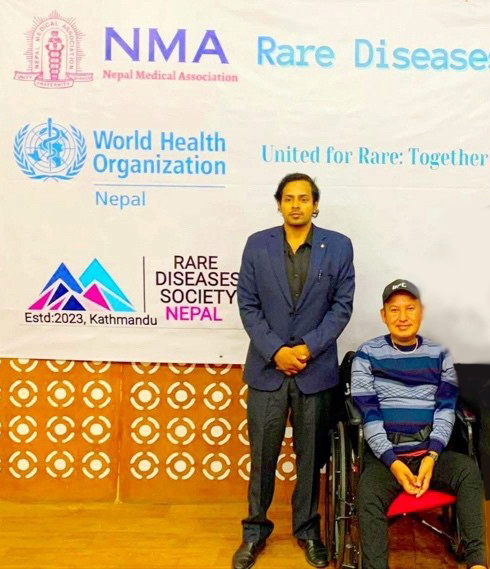
© Photo by Lara Jameson
Patient advocates can influence policy for better patient care, as we offer a unique perspective grounded in real life experiences. Our voice articulates the needs of the population that we champion.
In this interview, learn how Dr Rupesh Mishra, a clinical geneticist and an active member of Rare Diseases Society Nepal, partnered with fellow patient advocates in the rare disease community and influenced policy in Nepal. His experiences illustrate the value of partnership between genomics professionals and people affected by rare disorders.
How did you get into genomics and what is your role now?
My interest in genomics was sparked during my medical studies, as I became fascinated by the genetic basis of complex diseases. This led me to pursue a Master’s in Clinical Genetics. Currently, I serve as a Clinical Geneticist and Head of the Molecular Laboratory at Civil Service Hospital, Nepal. I oversee molecular diagnostics, involving different types of genetic testing, to support accurate diagnoses. Additionally, I work to promote genomic literacy among clinicians and patient advocates, aiming to integrate genomics into clinical practice and advance personalized medicine in Nepal.
You’re very active in the Rare Diseases Society Nepal – how did that begin?
The Rare Diseases Society Nepal (RDSN) was founded in response to the urgent need for advocacy, awareness, and support for individuals affected by rare diseases in Nepal. It emerged from a collective effort of patients, parents, healthcare professionals, and advocates who recognized the lack of diagnostic services, treatment options, and public understanding surrounding rare conditions. The founders shared a vision of an inclusive healthcare system that ensures no one is left behind, aligning with global efforts for equity in health.
Key figures in the society’s foundation included those with firsthand experience in public awareness campaigns, clinical care, and research. Their involvement in both national and international rare disease networks strengthened RDSN’s foundation and mission.
Can you tell us a bit more about RDSN?
RDSN aims to improve the lives of those affected by rare conditions by promoting early diagnosis, increasing access to care, providing psychosocial support, and driving policy advocacy. It also encourages research and collaboration to close gaps in care and knowledge.
Since its inception, RDSN has grown into a central hub for education, community support, and healthcare guidance, playing a key role in shaping national health strategies and training initiatives related to rare diseases in Nepal.
How has partnership with patient advocates made a difference to your work in genomics?
A major challenge I faced as a clinical geneticist in Nepal was gaining national and international recognition for rare diseases as a public health issue. Despite encountering many patients with undiagnosed or misdiagnosed conditions, rare diseases were not prioritized in healthcare policies. Genetic services were minimal, funding was limited, and awareness among health authorities was lacking.
The turning point came when I joined the Rare Diseases Society Nepal (RDSN) and began working closely with patient advocates. Many of them were parents or individuals directly affected by rare diseases. Their personal stories brought life to the data I had long been presenting, transforming statistics into human experiences that policymakers could relate to. Together, we launched awareness campaigns, media outreach, and policy discussions that centered both science and lived experiences. Advocates played a key role in translating complex genetic concepts into compelling narratives that resonated with the public and decision-makers alike.
What was the impact?
The impact of this partnership was powerful. Our unified advocacy efforts drew the attention of regional health networks, and for the first time, Nepal’s rare disease burden was acknowledged in WHO South-East Asia consultations. At the national level, the Ministry of Health began engaging with the issue, initiating early steps toward newborn screening, the development of a rare disease registry, and inclusion of genetic services in public health planning.
Patient advocates were central to this transformation. Their voices brought authenticity and urgency that data alone could not convey. They turned isolated clinical observations into a unified movement for change. By joining forces, we bridged the gap between science and society, connecting data with emotion, and policy with lived reality.
Ultimately, their involvement helped open doors that had long remained shut. They elevated the visibility of rare diseases, reshaped the national dialogue, and created a more inclusive path forward for rare disease care in Nepal. Their impact continues to be felt across research, policy, and community support.
Is there a patient advocate whose work has particularly inspired you?
I’d like to pay tribute to my late collaborator and friend, Nirmal Khadka. Nirmal was a pioneering advocate for rare disease patients in Nepal and the visionary founder of the Rare Diseases Society Nepal (RDSN). Living with muscular dystrophy himself, a (debilitating) genetic condition that left him paralyzed in all four limbs, Nirmal turned his personal challenges into a powerful drive to improve the lives of others. Early in his journey, he recognized the several gaps in awareness, medical care, and support systems for rare disease patients in Nepal, which inspired him to take an action rather than accept the fate.
He first established the Muscular Dystrophy Organization Nepal (MDON), which offered education, psychosocial support, and physiotherapy services to patients and their families. His efforts later expanded with the founding of RDSN to advocate for all rare disease communities. Under his leadership, RDSN became a key platform for awareness campaigns, such as the 2024 World Rare Disease Day walkathon in Kathmandu. Nirmal also pushed for greater government investment in genetic testing and specialized medical training to enhance diagnosis and treatment across the country.
Internationally recognized, Nirmal collaborated with organizations like CureDuchenne, the Indo-US Organization for Rare Diseases and Rare Diseases International (RDI). His untimely passing in early 2025 left a lasting void, but his legacy lives on through the continued work of RDSN, which carry forward his vision of inclusive care and dignity for every rare disease patient in Nepal.
Thank you
We are very grateful to Dr Mishra for sharing his experiences, and for explaining the significant impact of his late colleague, patient advocate Mr Nirmal Khadka.
Reflection
Dr Mishra mentions numerous impacts of patient advocates on his genomics experience. Which one is most striking to you, and why?
© Wellcome Sanger Institute
This article is from the online course:
The Power of Patient Advocacy in Genomics: Influencing Research, Clinical Practice and Decision Making

Created by
This article is from the free online
The Power of Patient Advocacy in Genomics: Influencing Research, Clinical Practice and Decision Making





