
The challenge of student motivation
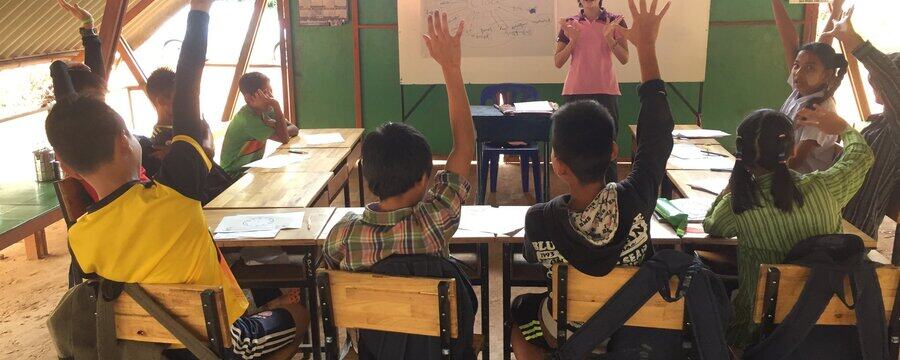
The video shows that even when teachers and students are living in displacement, learning can still be enjoyable. Teachers can help make school a positive and fun place for everyone.
When families are displaced, children lose their usual routines. They may miss many days of school, lose contact with their friends, and find it hard to concentrate on lessons. Some children experience trauma (strong emotional distress after difficult or violent experiences). Others may have lost parents or family members in war or conflict.
The teacher in this video understands that her students face many problems outside school. She makes it part of her work to listen when children want to talk and to help them feel heard. She also encourages other students and teachers to notice when someone needs support and to show compassion (kindness and understanding for others).
These are some of the techniques she uses to help her students:
- Develops a trustworthy bond with the students
- Gives extra care and attention to her learners.
- Organises group activities.
- Plays Social and Emotional Learning (SEL) games – activities that build emotional awareness, teamwork, and communication.
- Sings songs together.
- Uses flashcards for group learning.
- Includes outdoor games.
Teachers can also use social approaches to manage these challenges. For example:
- Support peer learning, independent study, and collaborative activities (when students learn from and with each other).
- Manage disruptive behaviour by setting clear classroom rules and involving students in creating them.
- Praise good behaviour, noticing when students are kind, focused, or helpful. This helps build a positive classroom environment.
- Work together with families when needed to understand the causes of a student’s difficult behaviour, as shown in the video, and to encourage positive habits.
- Work collaboratively with colleagues to enhance students’ learning.
As mentioned in the video, while it is often important to share relevant information about students who are struggling in learning, not all personal information should be disclosed. Consider your local context and cultural norms, and exercise professional judgment when deciding what to share. Information shared should support colleagues in understanding and assisting the student, while information that could undermine trust or confidentiality should be kept private.
Exercise
Open the document called Learn, Choose, Use from The Inclusive Education Foundation. You can find it in your Downloads folder. Look for ideas that might be useful in your teaching situation.
Go to the Contents list on page 5. Choose one strategy that could help with the kinds of challenges you have experienced. Try to match one or two methods from the document with one or more of your own classroom challenges. For example, you may use the activities described in the “Strategies to Motivate Students” section (pages 13–16) to enhance student motivation. Write a short description of one challenge you have faced. Post this in the Padlet. In your post:
- Describe the challenge.
- Explain what you did to deal with it.
- Say whether you found any helpful methods in the Learn, Choose, Use document that could also work for this challenge.
Read what other teachers have written about their challenges. Add your own comments to their posts. These shared ideas will help you create your ePortfolio document for this activity.
Over to you
Share how you have supported students with low motivation in your own teaching. What new ideas have you learned from this step? Have you discovered any new ideas from the video, the resources, or from reading other people’s posts on the Padlet?
Transforming Learning in Conflict and Crisis Settings

Transforming Learning in Conflict and Crisis Settings


