
Content designer
Content designers are the people responsible for creating, visualising and formatting content on websites and pages in a way that everyone can understand.
Content is more than just the words you read on a website – it covers everything on the page, including things you may not even notice. This includes page titles, image captions, meta-text, images or animations, formatting, and much more.
Content designers are responsible for ensuring users are shown appropriate content in the right place, at the right time, and in the best format. They start working on content in discovery, which involves working closely with user researchers and other members of the team.
What do content designers do?
Content designers ensure that information is clear and easy to understand. Good content design is about giving people the information they need, at the point they need it, in the right format.
Content designers are responsible for ‘shaping’ the content which means how information is laid out, broken down and appears in the correct places. Content refers to the way content is presented, not just what the text says.
In government, content designers follow accessibility standards and adhere to the GOV.UK style guide.
This ensures that all text content is clear, helpful, and written in plain English, which means avoiding jargon or technical language, long sentences, or high-level vocabulary instead of simple words. This is to ensure that everyone can understand it, including people with cognitive disabilities such as dyslexia or those who do not speak English as a first language.
Content designers can sometimes be thought of like translators. If you work in a field like software development, then you can probably have a conversation about technical details and understand all the jargon and vocabulary of the field, but not everyone can. Content designers are able to ‘translate’ the technical language into something that everyone can understand.
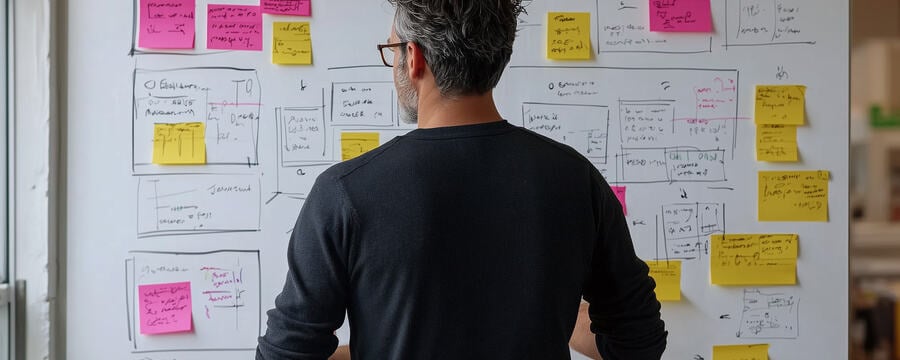
Content designers work across the design and development process, creating new content or conducting content audits to review what already exists. They use content mapping to plan what users see at each step of a journey and also test content using methods such as usability testing, A/B tests, and readability checks.
It is also very important for content designers to think about accessibility and ensure that their content is compatible with assistive technology, such as screen readers, or can be reformatted, such as when a user needs to zoom in or use a different screen size.
Working with a content designer as a user researcher
As a user researcher, your role is to discover what your users need, how they interact with services, and where they encounter problems or barriers.
A content designer can use these findings to improve how the user receives content and information throughout their journey on the service. Together, you can help users complete tasks more easily and with less frustration.
Content designers need to know what users say, how they behave, and how they are receiving the content. In usability or A/B testing sessions, user researchers will show users different versions of content to determine what works best. Your observations, user quotes, and usability findings all contribute to the creation of clear and useful content for the user.
When users misunderstand labels, help messages, or questions, it could be that the interface of the service could be reformatted, but the content designer can also rewrite or restructure content. As we said above, content is not just text – it includes images, links, and menu options, and all of these need to be clear, accessible and understandable for the users.
It is important to remember that while content should be regularly reviewed and updated based on insights from user research and also direct user feedback, content should never be changed without a good reason for doing so. Unless it is directly related to a user need or to a specific finding from research or feedback, changing content could have a negative effect on how the service functions.
This is why user researchers and content designers need to work closely together across the life cycle of the service.
If you would like to know more about content design and the content designer role, Government Campus UK has a course here on FutureLearn – Content Design in Government: Getting Started.
User Research in Government: Developing Further

User Research in Government: Developing Further


