
Service designer
Service designers design the end-to-end journey of a service, which includes online and offline channels.
Joined up, cohesive services help a user complete their goal and government deliver on policies.
As we learned in Week 1, not everyone is willing or able to use digital services, so they need offline alternatives. Even people who are comfortable with digital services will occasionally need to send physical copies of documents or call someone on the phone for advice, so all of these aspects must be considered as part of the user journey through the service.
User confidence is affected by more than just the digital interface – clear next steps and better communication help users feel more in control.
What does a service designer do?
Service designers focus on the full journey a person takes to complete a task, which includes everything that happens before, during and after a user interacts with a government service.
Service designers consider digital tools, phone calls, letters, face-to-face contact, policies, and back-end systems, and how all of these combine to create a complete service.
Similarly to business analysts, service designers map out how things currently work (the “as-is” journey) and create designs for how they could work better (the “to-be” service), considering every channel the user might need to interact with and every role involved.
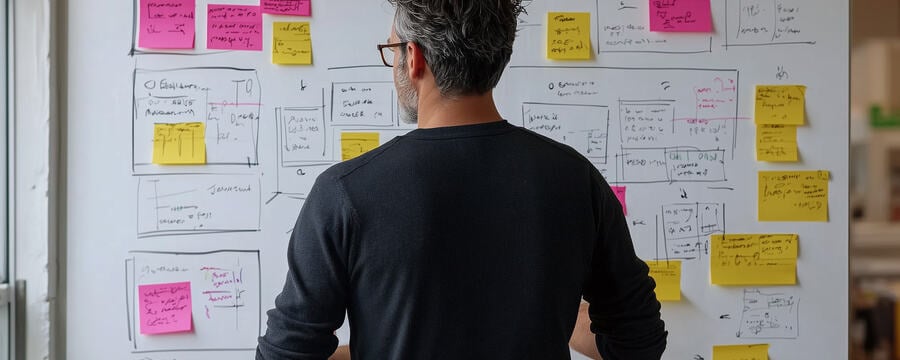
Service designers often lead co-design workshops, bringing together stakeholders, users, and team members to work together to solve problems. They use service blueprints, journey maps, and ecosystem maps to show the big picture.
Service designers rely heavily on user research and policy analysis to guide their decisions. Their concepts, prototypes, or new journey ideas need to be tested across different channels to make sure they work for all users, not just digital ones.
Working with a service designer as a user researcher
Service designers work to improve the whole user journey, across online and offline channels. They rely on user research to understand people’s needs and experiences so that they can design joined-up, effective solutions that meet the needs of all users.
Service designers need to understand whether users can follow the journey that they have designed, especially when it comes to moving between online and offline steps. They value the insights you can provide into what is working and what needs to be improved – you can help identify the pain points, missed steps and broken links in the service journey.
User researchers and service designers test and learn together. You share what users say, feel, and do, while the service designer incorporates this into improvements to the full journey across different systems and channels.
User researchers and service designers also balance user expectations with policy and operational limits.
User research can uncover problems about how services are delivered or understood, while the service designer can help to manage user expectations about what is possible from a service while still delivering something that works.
User Research in Government: Developing Further

User Research in Government: Developing Further


