
Agile – a recap
As we learned in our introductory course, agile is a flexible and adaptable project management methodology.
Agile involves breaking a project down into distinct phases – discovery, alpha, beta, live and retirement – and focusing on continuous improvement through short periods of work, known as sprints. During each sprint, the focus is on iterating, or incrementally improving, a product or service based on testing, user research and feedback.
This process goes in cycles. Each phase of the service life cycle contains multiple sprints, which will continue until the team is happy with their progress and can move on to the next stage.
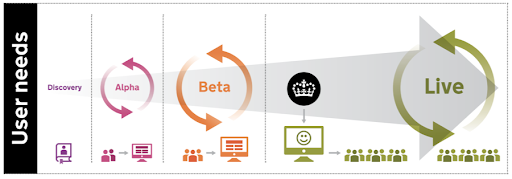
Agile is simultaneously a structured process and very flexible. The point is that each sprint is not long enough for the team to make significant progress on the ‘wrong’ thing, as the team holds regular meetings to assess progress, identify blockers, and discuss what went well, what went poorly, and what should be done during the next sprint. These meetings are called agile ceremonies.
There are 4 main ceremonies: * sprint planning * daily stand up * sprint review and sprint retrospective, which are very similar but have two distinct purposes
We will learn more about ceremonies step 5.11.
In the next few steps, we will explore the key responsibilities of user researchers during each agile phase.
User Research in Government: Developing Further


User Research in Government: Developing Further





