Case studies: data sharing
In this step, we will focus on sharing data and using shared data in our case studies
In our Klebsiella case study, the success of this investigation hinged on the availability of publicly shared genomic data. The study itself generated 236 genomes and merged these with 415 publicly available genomes to create the global dataset. Without access to genome sequences from multiple countries and healthcare systems, researchers could not have reconstructed the global phylogeny of ST258/512 or distinguished between imported and locally expanded clones.
If we look at the Microreact data for the whole dataset (Figure 1) vs the data only generated in the study (Figure 2) we can see that all the non-Europe data comes from the public domain, as well as all samples before 2013.
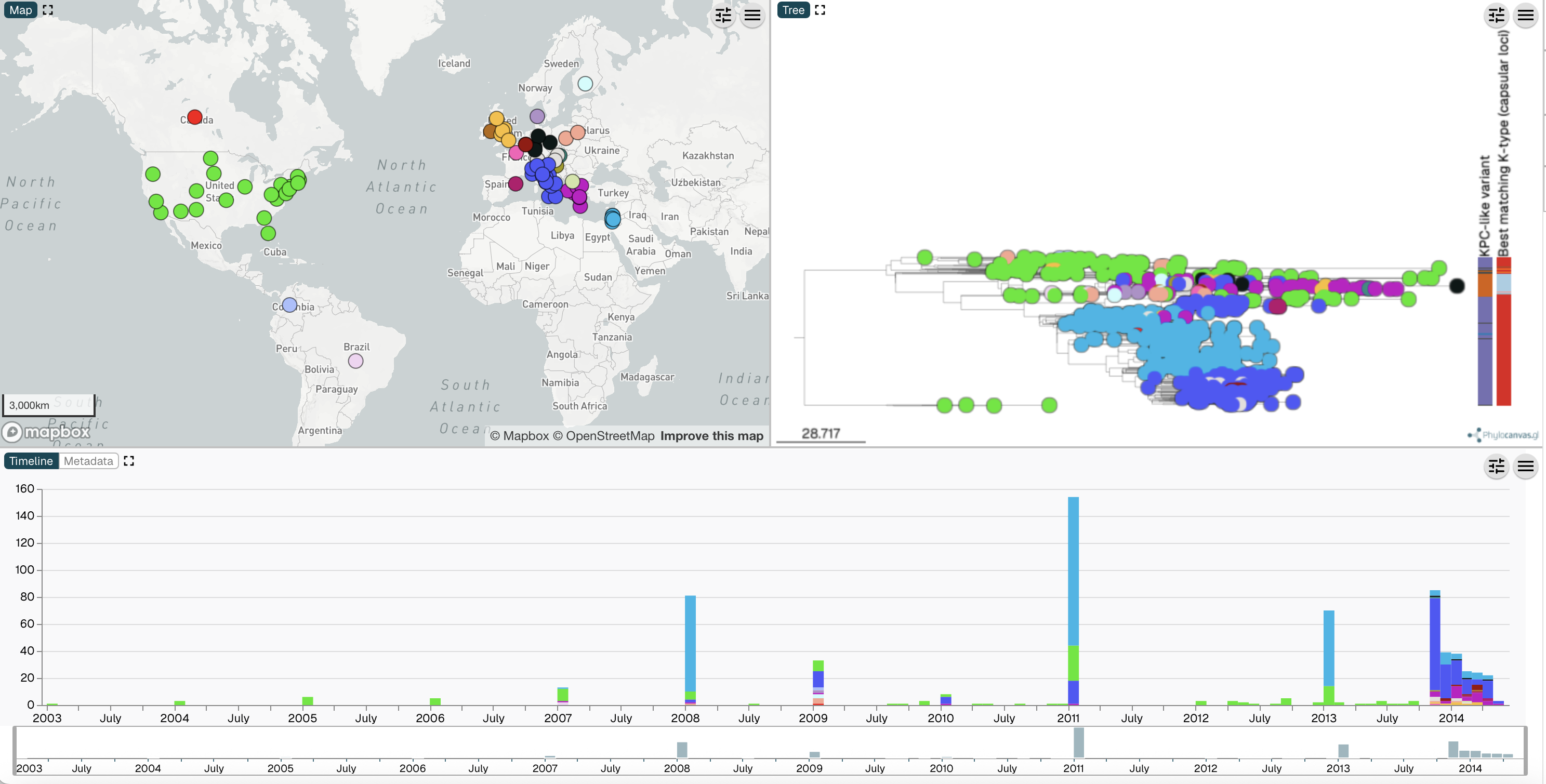
Figure 1. Microreact dashboard view of all the data in the ST258/512 phylogeographic analysis (https://microreact.org/project/EuSCAPE_ST258/bbafcc1c). We can see the data is spread from 2003 to 2014 and in both Europe (the focus) and other nations.
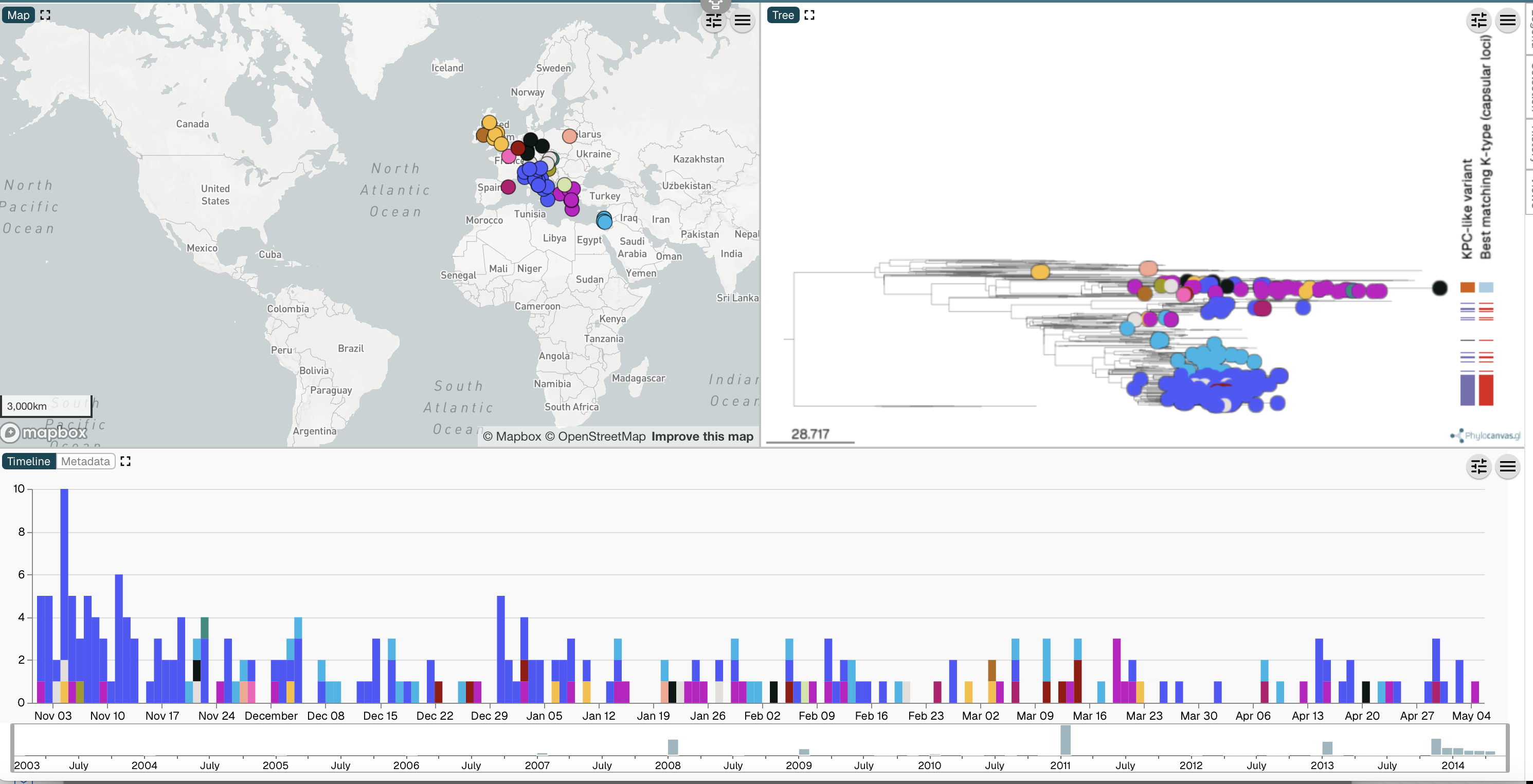
Figure 2. Microreact dashboard view of only the EuSCAPE data generated in the study for the ST258/512 phylogeographic analysis (https://microreact.org/project/EuSCAPE_ST258/bbafcc1c and type ‘euscape’ in the filtering bar at the top). We can see the data is now only spread from 2013 to 2014 and only from Europe.
Shared genomic data also enabled the detection of both conserved resistance mechanisms and regional variation in plasmid content and mobile genetic elements. It also allowed researchers to validate findings, repeat analyses, and contribute to a shared understanding of AMR dynamics. Public databases transformed fragmented, localized observations into a coherent global narrative, demonstrating how data sharing accelerates scientific discovery and enhances global public health preparedness. The authors also shared 1717 genomes sequenced in this study (see supplementary table 4 of the paper) alongside phenotypic resistance data for others to use in their own work, and improve the AMR genotypic-phenotypic databases.
In our Acinetobacter baumannii study the authors combined their extensive sequenced genome collection with publicly available isolates from Fiji, India, Australia and New Zealand sequenced during a similar time period (Figure 3). By adding these additional countries, it was apparent that there are many inter-country transmissions of AMR strains throughout the years. Such insights (i.e. the main finding of the paper) would not have been possible if limited to the sequenced isolates from the study alone.
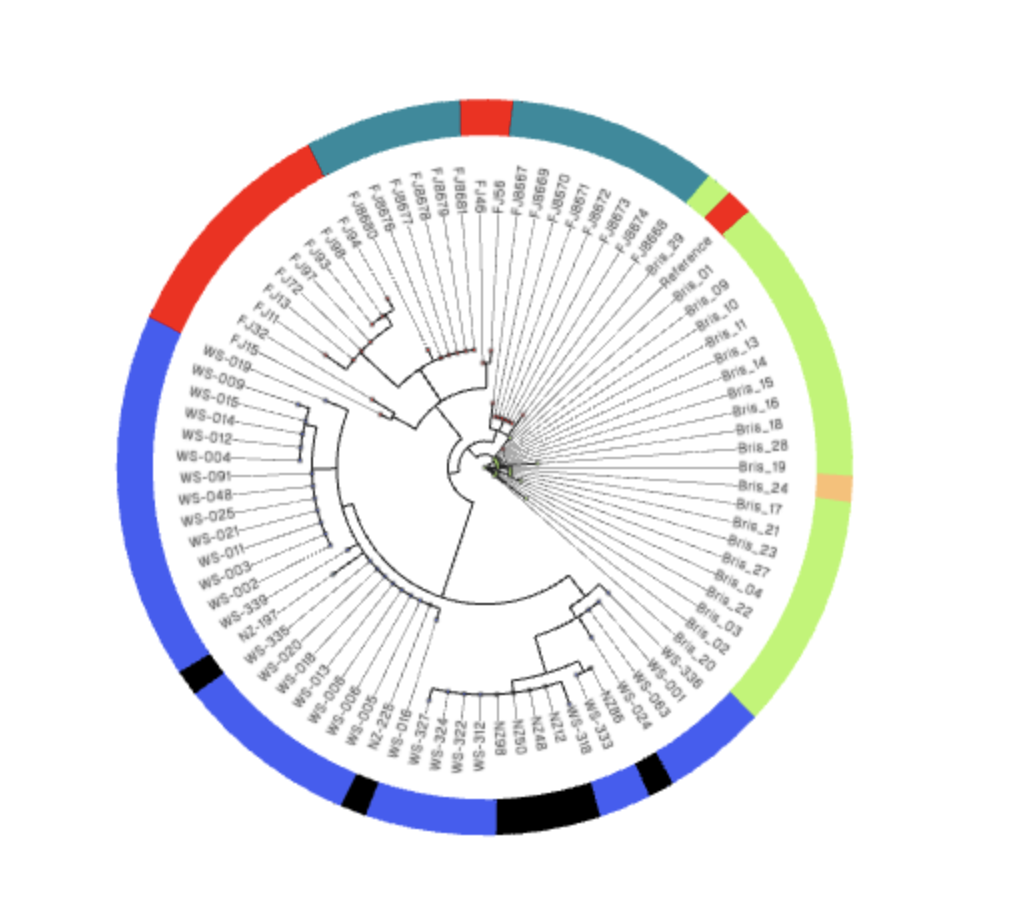
Figure 3. Phylogenetic tree of the isolates from the Oceania study, coloured by country (Red: Fiji (this study); Teal: Fiji (other study); Blue: Samoa; Black: New Zealand; Green: Australia), generated by Microreact (https://microreact.org/project/rDbNkT7KGdDm5FpMEnGRN5-oceania-crab-st2). Only the red and blue isolates were sequenced within the study; all others were public data.
Antimicrobial Databases and Genotype Prediction: Data Sharing and Analysis


Antimicrobial Databases and Genotype Prediction: Data Sharing and Analysis