
Direction

The EFQM Model provides a framework for organisations that wish to be outstanding. Outstanding organisations are very clear about who they need to serve.
Anyone who has an interest in the organisation is defined as a stakeholder. Outstanding organisations take the time to identify who their stakeholders are. They also take the time to find out what are the needs and expectations of their stakeholders. Stakeholders could include customers, employees, shareholders, government, suppliers and the local community.
The Direction pillar covers all of the activities that relate to defining the purpose of the organisation, the direction it wishes to take and the type of culture it wants. These activities are underpinned by a good knowledge and understanding of the organisation’s stakeholders.
The Direction pillar is broken down into two parts, known as criteria:
- Purpose, vision and strategy
- Organisational culture and leadership
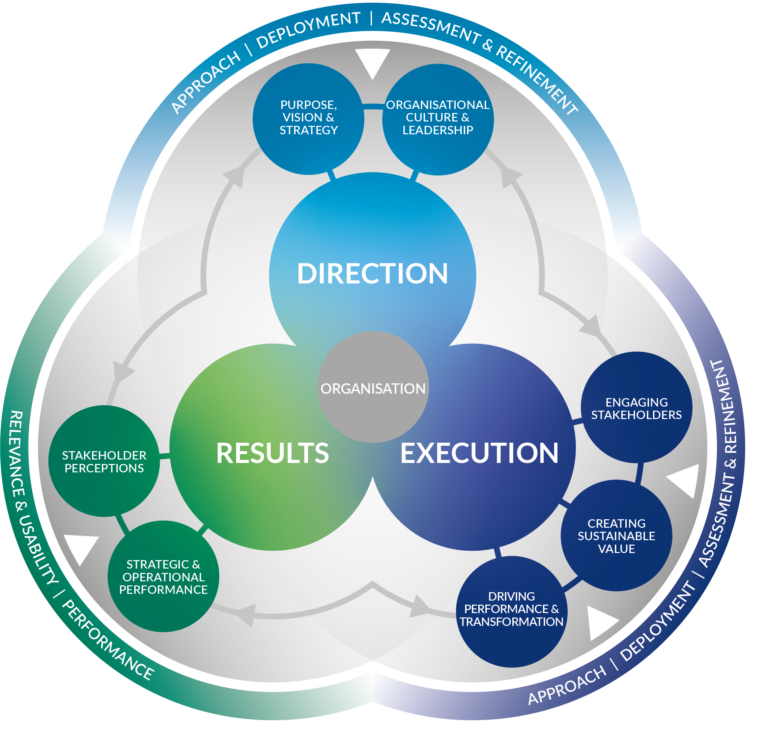
Click here to see a larger image of the EFQM Model
Which of the following activities do you think fall under the Direction pillar? Remember, the main focus of this pillar is on defining the nature and direction of the organisation.
- Agreeing the purpose of the organisation
- Developing the strategy or writing the business plan
- Marketing the products
- Developing a set of organisation values
- Publishing the annual financial report
- Creating the right environment for everyone to share ideas
Explain your answers in the comments. You can then check your answers against the answer sheet in the Downloads below.
Drive Business Improvement with the EFQM Model


Drive Business Improvement with the EFQM Model





